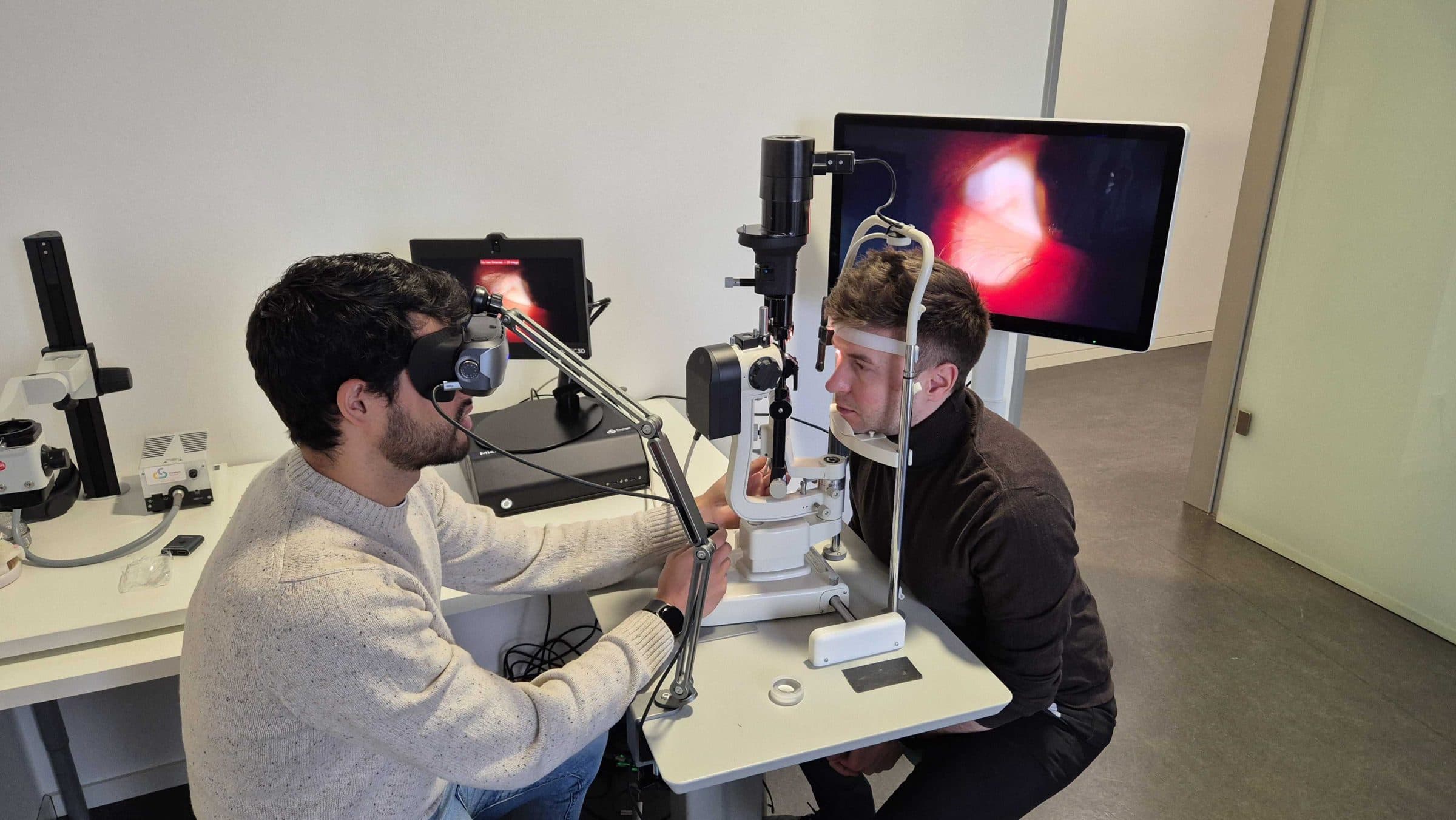

What distinguishes Custom Surgical from classical medtech competitors is its consistent platform approach. Rather than developing individual devices only, the startup based in the MTZ (Munich Technology Center) is building an integrated infrastructure of hardware, data management, and AI for ophthalmology.
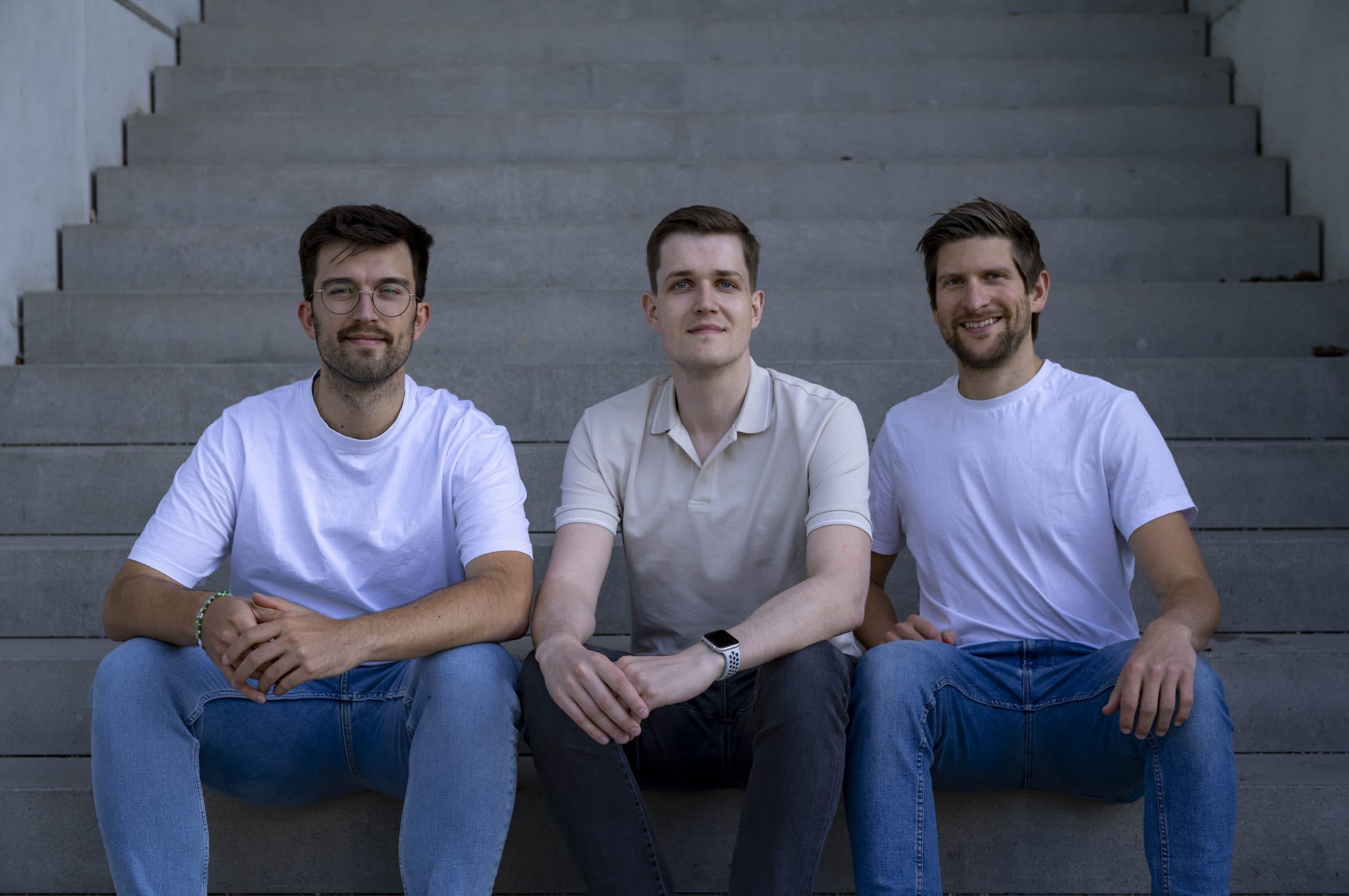
The company was founded by Federico Acosta. The Colombian came to Munich around eight years ago to study at TU München. There, together with his co-founder Fernando Benito, he laid the foundation for Custom Surgical. Today, the startup addresses a structural problem in the global health market: growing demand for ophthalmological diagnostics meets a shortage of specialists.
The solution approach could involve partially shifting diagnostic processes from purely physician-led work to AI-supported analysis.
Three stages: from hardware via cloud to AI diagnostics
Custom Surgical’s technology is based on a three-stage model:
1. Digitalization of existing microscopes
In the first step, the startup addresses the reality in practices and clinics: many ophthalmological devices are analog or only partially digital.
With products like the “MicroREC” or “MicroREC 3D”, existing microscopes can be digitalized without much effort. The solutions are designed as plug-and-play systems and can be installed in less than a minute according to the company – without specialized technical knowledge.
One example is an optical system that connects smartphones directly to microscopes, enabling image and video recording.
2. Cloud-based data platform
A proprietary cloud platform stores and structures the captured data. According to the company, it is GDPR- and HIPAA-compliant and serves as a central repository (a digital storage location that structures research data or software files archivally and makes them accessible) for image and video data.
For physicians, this brings several advantages: surgical and diagnostic data are automatically organized and collaboration with colleagues worldwide is significantly simplified. Content can also be easily used for research, teaching, and documentation. At the same time, comprehensive data storage provides additional legal protection.
3. AI to support diagnosis
Based on this data foundation, Custom Surgical is currently building its AI platform. The goal is to automatically detect pathologies and support physicians in making diagnoses.
Globally, the number of patients is growing faster than the number of trained ophthalmology specialists. AI is meant to help close this gap and make diagnostics more efficient.
3D visualization changes training and surgical processes
With the new product “MicroREC 3D”, the startup is additionally bringing a 3D component to ophthalmology. Instead of looking through classical eyepieces, physicians use 3D glasses to digitally follow procedures.
This has several effects:
- better ergonomics during operations for the surgeon
- real-time transmission for training or remote support
- improved training through realistic depth perception
Especially in complex procedures, such as retinal or glaucoma surgeries, spatial vision is critical – an area where classical 2D systems reach their limits.
Focus on accessible digitalization instead of high-end devices
A central part of the growth strategy is positioning as a cost-effective alternative to completely new digital microscopes. After all, state-of-the-art devices from established manufacturers are often expensive and difficult to integrate. Custom Surgical instead focuses on modular extensions to existing infrastructure.
“Physicians don’t have to buy a completely new system – they can digitalize their existing devices,”
explains Head of Growth Giuliana Menezes in an interview with Munich Startup.
In addition to ophthalmologists, this technology also addresses smaller and medium-sized clinics, veterinarians, and the fields of neurosurgery, ENT, and endodontics as target groups.
Competition: startup meets medtech giants
Custom Surgical operates in a market dominated by major players like ZEISS, Leica, or Alcon, some of which already collaborate with the startup or invest in it. At the same time, the company faces high regulatory requirements such as FDA and ISO certifications, lengthy approval processes, and lower brand recognition compared to established providers. Nevertheless, the team sees exactly these conditions as an opportunity to move faster with more flexible and software-centric solutions and to clearly differentiate itself in competition.
Munich as a location for medtech and AI development
The Munich location plays a central role for Custom Surgical: founding team Federico Acosta and Fernando Benito met at TU München. Today, the company benefits from the local ecosystem through access to research and talent and proximity to established medtech companies. Custom Surgical also enjoys support from networks like Werk1 and the Munich Technology Center.