
PITCH & PEOPLE Episode 52: InGemeinschaft
Start a shared flat at 90? Why not! Housing shortage meets loneliness: Munich-based social impact startup InGemeinschaft connects people who have spare living space with apartment seekers – across generations. On Pitch & People, Anne Hufnagel explains why she lives in a flatshare with a 60-year-old, how InGemeinschaft has already arranged over 80 housing partnerships, and why the startup is now looking to expand nationwide.


A 90-year-old takes in a young single mother and her child. An Afghan mathematics student moves in with an elderly gentleman. Instead of living alone, the two play chess together. What sounds like unusual flatshares is the business model of Munich startup InGemeinschaft. The team has arranged more than 80 such home-sharing partnerships within 14 months. On Pitch & People, Anne Hufnagel, co-founder of InGemeinschaft, shares how she aims to tackle the housing shortage and loneliness, and why she is living in a shared flat again herself.
When Strangers Become Flatmates
Germany is facing a housing shortage. At the same time, millions of older people live alone in houses and apartments that have long become too large for them. Two problems, one idea: Why not bring together people who have space with those desperately looking for a home?
This is precisely where InGemeinschaft comes in. The Munich startup uses its platform to arrange co-living partnerships between people of different generations. It’s not just about a spare room. It’s about trust, shared interests, and the question of whether two people are truly a good match.
To do this, the platform matches preferences, lifestyle habits, and interests. Potential roommates can then connect and get to know each other in person. The startup verifies identities, assists with contracts and insurance, and remains a point of contact even after move-in.
How diverse such living arrangements can be is illustrated by a story that particularly moves Hufnagel: a 90-year-old Munich resident from Neuhausen took in a young single mother with her small child. The mother had previously struggled to find affordable housing. Today, three generations live under one roof.
For Hufnagel, this example shows what InGemeinschaft is really about: creating living space without building new homes, while bringing together people who enrich each other’s lives.
Anne Hufnagel lives her own startup idea
The entrepreneur knows from personal experience what living in an intergenerational shared apartment feels like. When she moved from Cologne to Munich, she consciously decided against living in an apartment of her own. Instead, she moved in with a 60-year-old woman.
Her two daughters, twins, are now studying in Cologne and Mainz. This marked the start of a new chapter in life for Hufnagel. Living alone was simply out of the question for her.
“Why should I sit in an empty nest?”
However, living together also comes with its challenges. In the morning, both have to coordinate in the shared bathroom. And when Hufnagel does the dishes or cleans the kitchen, everything occasionally ends up flooded. Her roommate certainly doesn’t hesitate to comment on that.
Yet it is precisely this mix of closeness and independence that the entrepreneur appreciates. Both lead their own lives, but cross paths regularly. A quick chat over coffee, a shared conversation in the evening – without the obligations of a romantic relationship or family.
Hufnagel also wants to dispel a societal prejudice. While flatshares are taken for granted for students, they are often still seen as unusual later in life.
“Why do I have to live alone at 70?”
For her, communal living is not a makeshift solution, but a conscious choice for a different lifestyle.
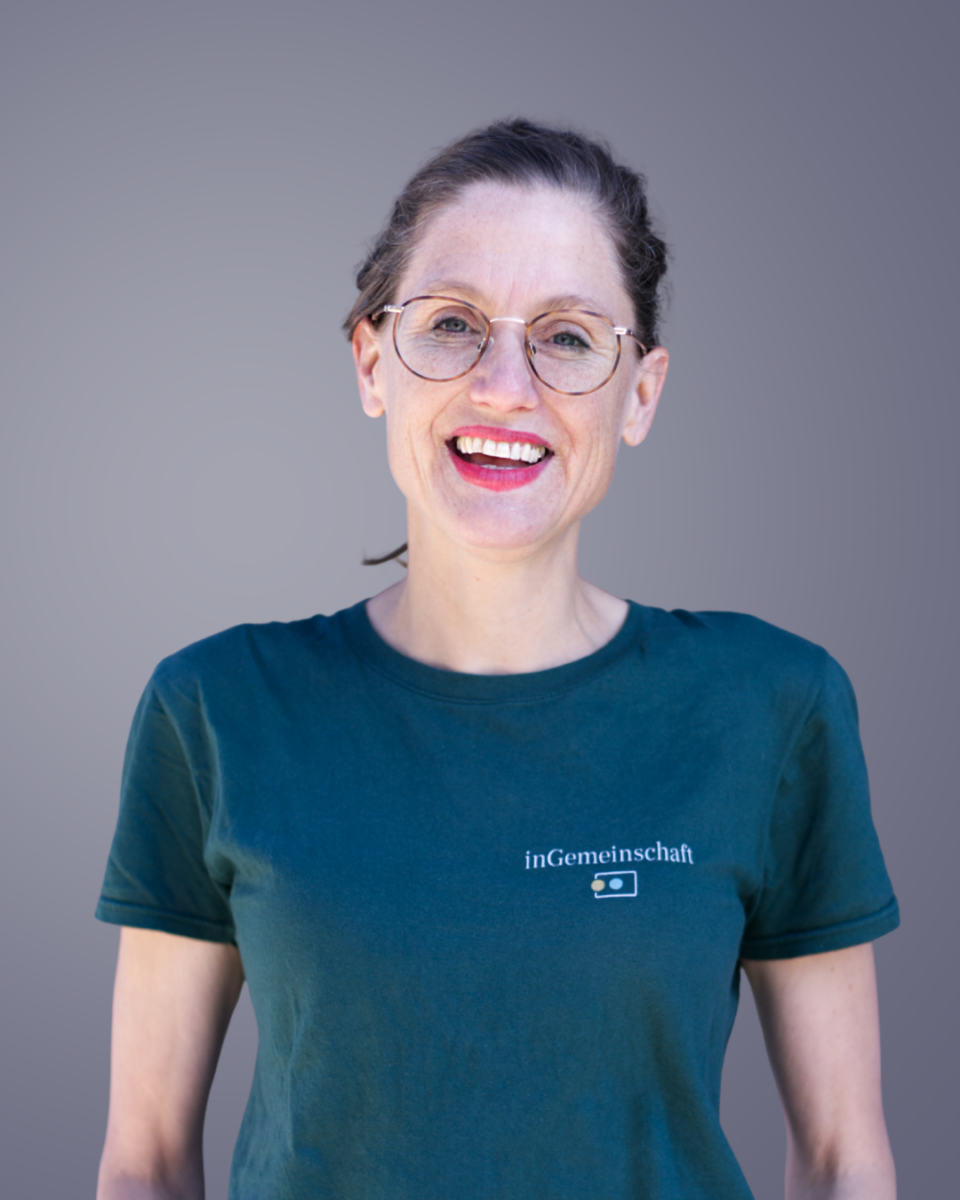
Anne Hufnagel is co-founder of the Munich-based social impact startup InGemeinschaft. Before that, she worked for many years in the media industry, particularly in licensing and film production. She also gained experience with her own mediatech startup. The Cologne native moved to Munich for InGemeinschaft, where she herself lives in an intergenerational flatshare. With the startup, she aims to create affordable housing, reduce loneliness, and establish communal living across age boundaries.
More than 80 housing partnerships – but not yet a profitable business
As compelling as the social concept sounds, the business challenge is just as substantial. InGemeinschaft must prove that personal support and economic growth can go hand in hand.
So far, the startup has brokered more than 80 living partnerships in Munich. In two of those cases, living together didn’t work out. In those situations, the team supported the parties involved in dissolving the living partnership.
InGemeinschaft earns money through a one-time placement fee. When a match is successful, the landlord pays half a month’s sublet rent. For example, if a room costs 500 euros a month, the startup receives 250 euros.
However, this model is not yet sufficient to cover running costs. Funding from the Federal Ministry for Economic Affairs is currently supporting the company. In the long term, a combination of placement fees and partnerships with municipalities is intended to sustain the business model.
Because municipalities also stand to benefit: they can make better use of existing living space, create affordable rooms, and counteract loneliness at the same time.
Hufnagel sees this as an opportunity to build an economically viable business as well. To achieve that, however, InGemeinschaft needs to grow significantly, she reveals in the videocast.
From Munich across Germany
Munich serves as a test market for InGemeinschaft. Here, the team continues to refine its processes, gather experience, and expand its network. Initial activities are also underway in Berlin and Cologne. Interest from other municipalities is strong. The startup is already in dialogue with more than 60 cities. Within the next 18 months, the team plans to launch six additional pilot projects.
This is no longer just about major cities with extremely high rents. Smaller municipalities are also exploring how they can make better use of living space and protect older people from social isolation.
Yet expansion poses a challenge: The team currently consists of just two and a half people. At the same time, it needs to broker new housing partnerships, hold discussions with municipalities, further develop the platform, and raise capital. That is why InGemeinschaft is preparing a financing round. Hufnagel is particularly interested in social impact business angels and family offices looking to achieve a social impact alongside a financial return.
The challenge remains to maintain personal contact despite planned growth. After all, it is precisely this trust that sets InGemeinschaft apart from an ordinary housing platform. Hufnagel therefore does not simply want to arrange as many rooms as possible. She wants to encourage people to rethink their current living model.
The 90-year-old from Neuhausen and her two new flatmates show what that can look like. Three generations, one house, and a living partnership that might never have come about without InGemeinschaft.