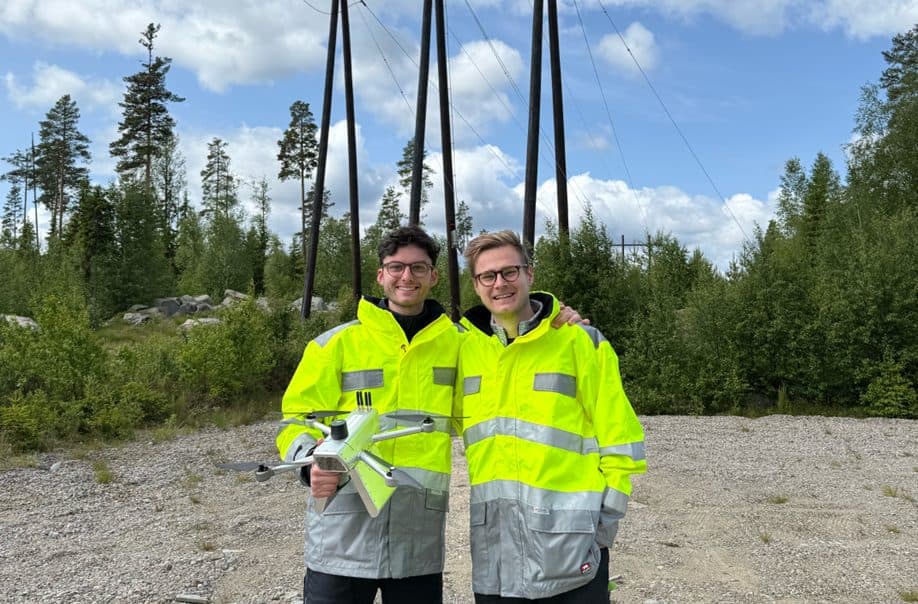

Munich Startup: What does your startup do? What problem are you solving?
Lauritz Weil, Co-Founder of Nomadic Drones: We develop autonomous drones that position themselves directly in power grids and operate there permanently as flying sensor platforms. Unlike classic inspection drones, they don’t just launch occasionally – they remain in continuous operation thanks to a self-developed charging system that enables charging directly on the power lines.
The problem: power grids are currently extremely analog. Sensors, live data, and continuous monitoring are lacking. Many operators are essentially flying their networks blind, which leads to costly outages, delays, or in the worst case, wildfires.
Our solution brings real sensors into the field for the first time without requiring new infrastructure to be built: our drone docks directly on power lines, autonomously covers routes, continuously delivers usable data, and charges itself in the process.
Munich Startup: But that already exists, doesn’t it?
Lauritz Weil: Classic inspection drones or occasional camera flights – yes, those exist.
But an autonomous system that is permanently integrated into the grid, flies regularly, charges itself directly on the power line, and functions as a sensor platform – that doesn’t exist yet.
Our goal isn’t just inspection, but a new level of grid transparency without additional pylons, without new sensors, and without constant human intervention.
From the USA to Munich
Munich Startup: What’s your founding story?
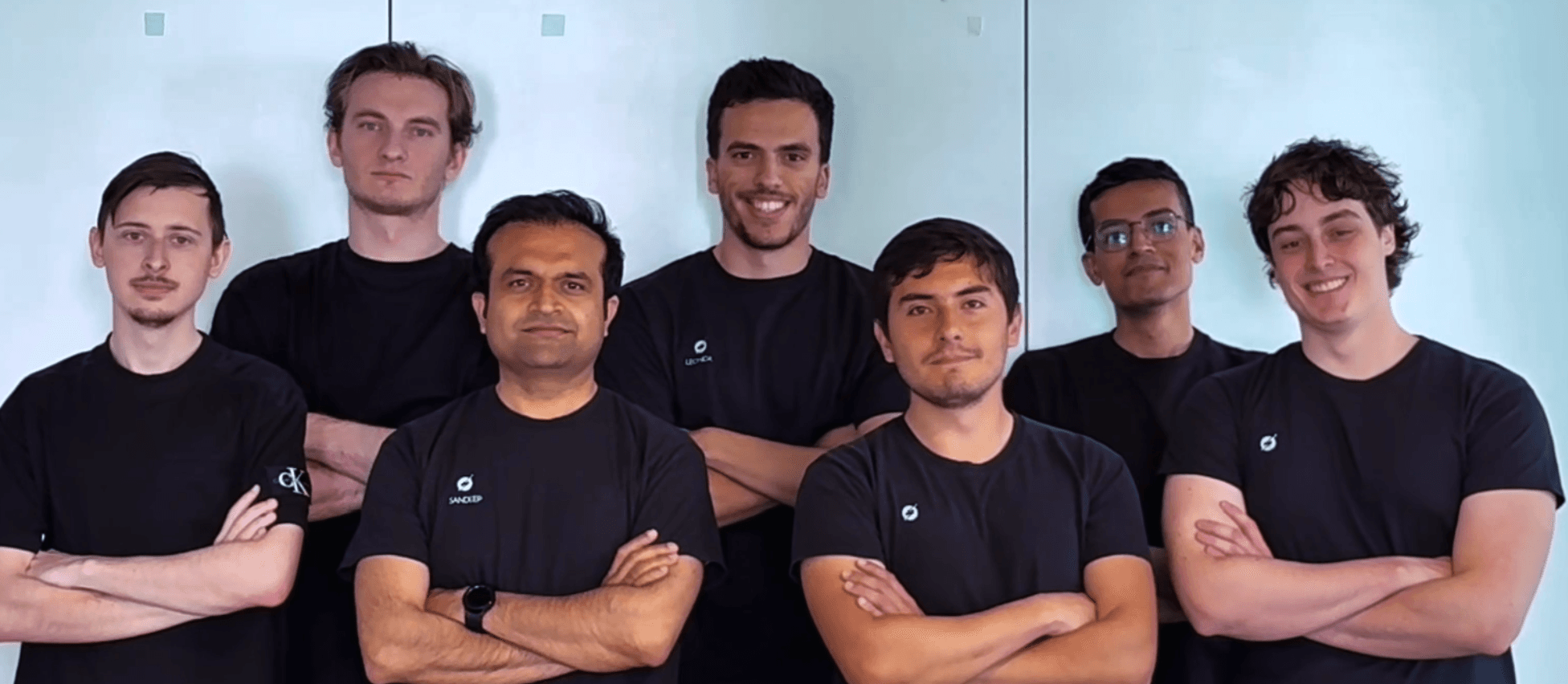
Lauritz Weil: My co-founder Andreas Moldskred and I met in 2023 during a year abroad at UC Berkeley. We share a passion for technology and bring backgrounds in robotics, energy, and autonomous systems. While Andreas had initial ideas for automated line inspection, I contributed experience from manufacturing and electronics. Before we started technical development, we conducted over 100 conversations with grid operators, linemen, authorities, and other startups. The feedback was clear: “If you really pull this off, people will need you.”
We then began building the first prototypes, developing algorithms, and filing initial patents. This was followed by founding the US company, completing a pre-seed financing round, and eventually moving the team to Munich to further develop the technology through pilot projects with grid operators.
Munich Startup: What have been your biggest challenges so far?
Lauritz Weil: Clearly: building hardware and software while financing it at the same time is demanding. Many investors shy away from complex technology, especially when you’re in an early phase. Regulatory requirements are also significant – from flight regulations to safety issues to energy infrastructure. Plus, you don’t just have to develop the product; you also have to engage with very conservative industries, build trust, explain, validate.
Still, that’s often helped us move forward because there was genuine interest and we got early feedback on what’s needed.
Munich Startup: Where do you want to be in one year, where in five years?
Lauritz Weil: In one year, we want to have successfully completed several pilot projects – with autonomous flights, stable data collection, and real relief for grid operators.
In five years, we see our system as an integral part of infrastructure with a network of autonomous drone platforms that regularly survey critical grids and help prevent outages, damage, and wildfires. The vision: a flying sensor that understands the grid and helps grid operators act faster and smarter.
Excellent conditions in Bavaria’s state capital
Munich Startup: How have you experienced Munich as a startup location so far?
Lauritz Weil: Very positively. For robotics, hardware, and engineering, Munich is one of the best locations in Europe. We have access to excellent talent, strong industrial partners, and an ecosystem that truly understands deeptech. At the same time, building a strong engineering team here is significantly cheaper than in the Bay Area – that’s exactly why Munich is extremely attractive for deeptech and hardtech startups with major initial engineering requirements.
What surprises many: Europe has often been easier from a regulatory perspective. Particularly in the drone sector, the EU is currently among the most progressive regions in the Western world. Working with power grid operators in Germany and Norway has also been very pragmatic and straightforward. That’s one of the reasons we decided to build engineering and product development here in Germany.
Munich is also excellently connected and offers direct flights around the world – extremely valuable for us. This way, we can build an international team here that brings German engineering into product development while also addressing the American market. Our goal is to scale to the US market with this combination, and we’re starting first test flights in California soon.
Munich Startup: Hidden champion or shooting star?
Lauritz Weil: Perhaps somewhere in between. Many people don’t really have the power grid on their radar – yet it’s one of the most complex and reliable systems ever created. The more you look into it, the clearer it becomes how impressive this infrastructure really is. With the energy transition, increasing volatility in the grid, and growing risks from extreme weather or attacks on critical infrastructure, the importance of robust sensors and intelligent systems will grow. That’s exactly where we come in. Our drone not only helps technically; it also makes the topic visible. That creates attention and opens doors to discuss solutions that might otherwise be overlooked.