
A year ago, Munich-based startup Talos announced together with the Max Planck Society that it would rebuild the animal observation program Icarus 2.0. Now the idea has become a concrete space project: Talos has formed a European partnership with Bulgarian satellite manufacturer Endurosat to realize its own satellite constellation. The initiative is supported by the Federal Ministry for Research, Technology and Space Travel and the German Space Agency at the DLR.
The first operational satellite, named Raven, is already in production and is scheduled to launch in the first quarter of 2026. Four additional satellites are planned to follow by the end of 2026 or early 2027. Once fully deployed, the system will deliver up to five datasets daily on animal movements worldwide, providing the foundation for research on biodiversity, migration, and global ecosystems.
Raycho Raychev, founder and CEO of Endurosat, says:
“We are excited to enable the development of space-based infrastructure that provides critical data on the state of wildlife and biodiversity. This project impressively demonstrates how space data can help address the most pressing challenges facing our planet.”
From cooperation to constellation
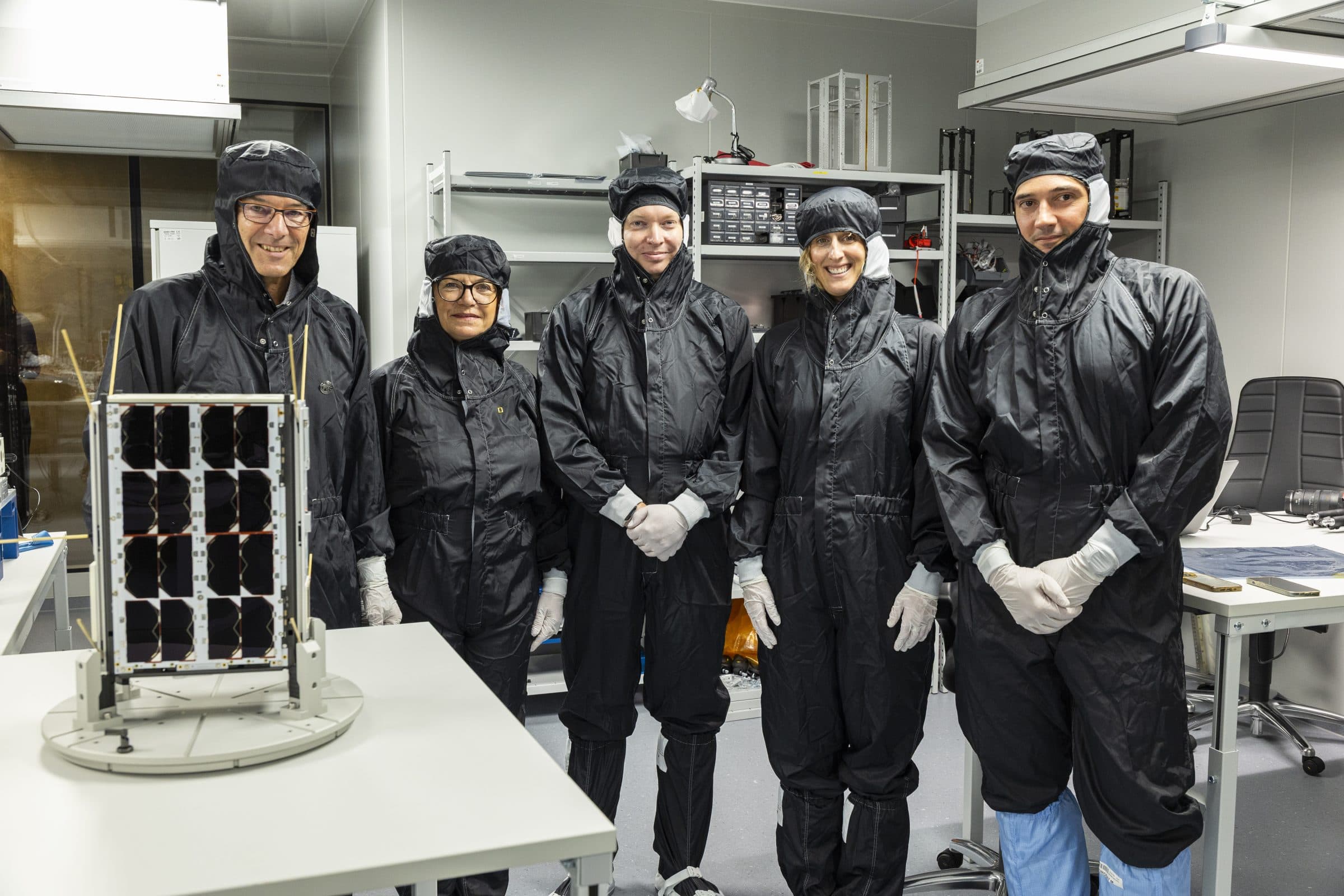
While 2025 focused on signing the cooperation agreement, 2026 marks the transition into the operational phase of the project. Following a successful technology test in November 2025, construction of the satellite fleet has now begun. The first “6U CubeSat” – barely larger than a shoebox – is currently being manufactured in Sofia. It receives data via software-defined radio from tiny transmitters attached to animals. These measure location, temperature, humidity, pressure, and acceleration.
Talos is responsible for mission planning, operations, and development of animal tracking technology. Endurosat provides the satellite platform and operates the network of ground stations. Scientific leadership rests with the Max Planck Society, while the National Geographic Society provides additional support and aims to make the technology accessible to researchers through its global explorer network.
Gregor Langer, co-founder and CEO of Talos, emphasizes:
“This is European innovation at its finest: A Bulgarian manufacturer and a German startup join forces for a global research project. With our first satellite’s imminent launch, Icarus 2.0 is transitioning from vision to reality.”
European perspective and global reach
With Icarus 2.0, a fully European system is being created to replace the original Icarus project, which operated on the International Space Station ISS until 2022. The war in Ukraine had ended collaboration with the Russian space agency. Now an independent European satellite constellation ensures the continuation of research.
Unlike the 2025 version, the project today is no longer merely a scientific vision but an industrially and institutionally backed space program. The integration of Endurosat marks the transition from bilateral research cooperation to a European technology partnership. Icarus 2.0 is thus evolving from a research concept into a functional “internet of animals” – a global network that makes animal and environmental data from orbit available in real time.