
Munich Startup: What problem does your solution address?
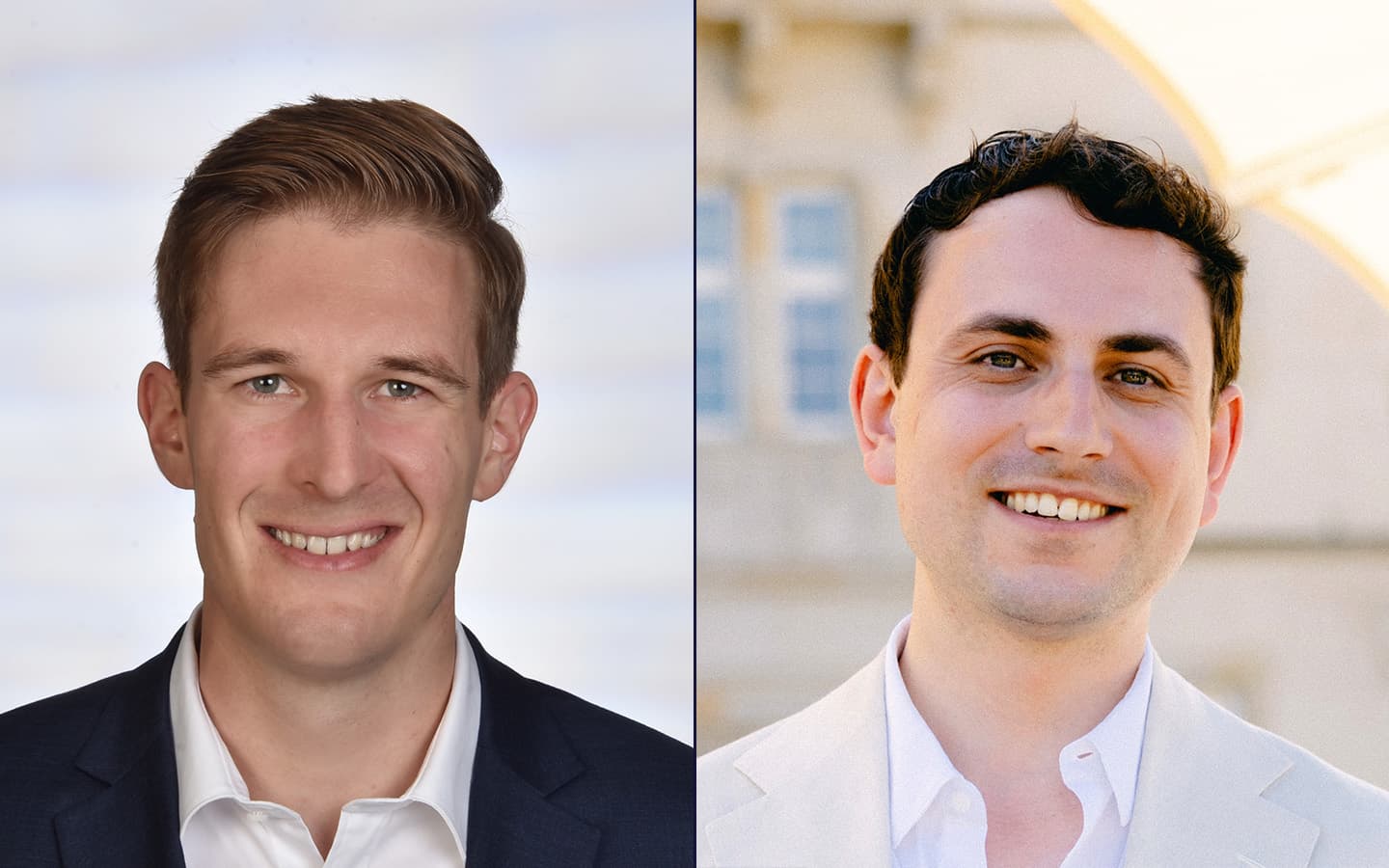
Florian Hüttner, Co-Founder: Global meat consumption continues to rise dramatically. At the same time, today’s meat production is based almost entirely on an ancient system: the animal. This system is increasingly hitting ecological, ethical, and economic limits.
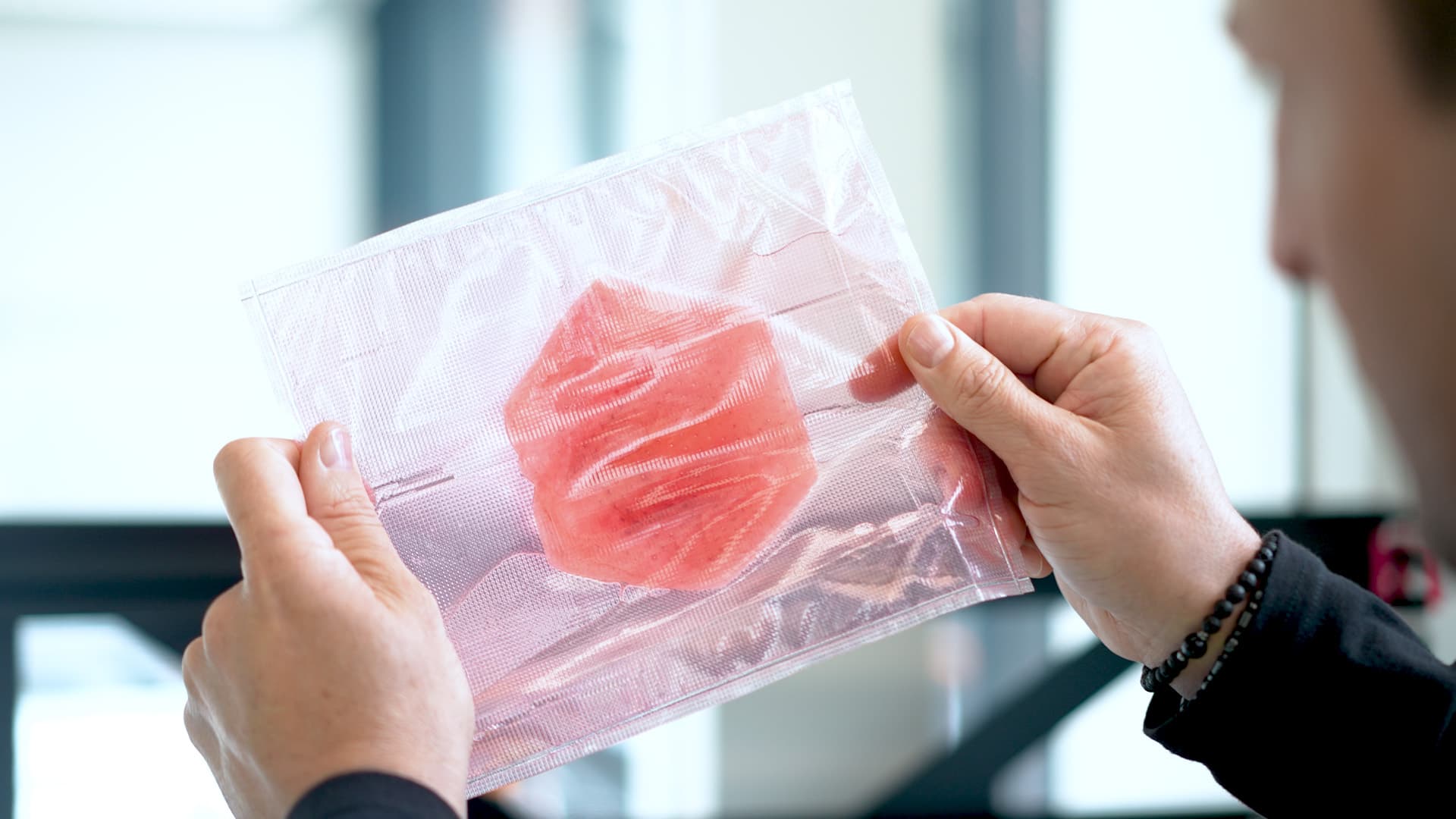
That’s why we’re developing an automated production platform for real animal muscle – real meat without animal farming and slaughter. Our approach is not meant to completely replace classical meat production in the short term, but rather to gradually supplement and relieve it. The key point is that we’re not just producing cell mass, but functional muscle – exactly the tissue that meat biologically is. In the long term, we see this as a new form of industrial muscle production that can function as automatically and standardized as other modern production systems – and not just for animal muscle.
Munich Startup: What can only you do today?
Florian Hüttner: To the best of our knowledge, we are the only company worldwide that has produced contracting skeletal muscle from pigs from pluripotent stem cells. This proves that real animal muscle – real meat – can fundamentally be produced without an animal.
Particularly important: we haven’t just delivered a scientific proof-of-concept, but have already produced real products together with an industrial meat producer. Together with the Hans Kupfer Group, we integrated our cultivated muscle into hybrid sausages and have already replaced 20 percent of slaughtered meat today – without noticeably changing the product in taste, texture, or processing. This shows for the first time that real cultivated muscle can be directly compatible with existing industrial production lines.
Decades of research as a starting point
Munich Startup: What triggered the founding?
Florian Hüttner: The origin lies in decades of research in tissue engineering at the University of Göttingen’s medical school. There, functional muscle tissue was originally developed for medical applications. At some point, the central question arose: if you can produce real functional muscle in the lab, why shouldn’t you also be able to produce real meat from it?
At the same time, it became clear that many companies in the cultivated meat space had focused very early on scaling and grand visions, even though the scientific foundation was often not fully solved or not solved at all. Our approach was therefore different from the start: first produce real muscle, scientifically sound and reproducible, only then talk about scaling.
Munich Startup: Was there a moment when you thought about giving up?
Florian Hüttner: Yes, of course. We were founded practically at the peak, or rather at the turning point, of the hype around cultivated meat. Many investors had previously invested enormous sums in companies that were built primarily on visions and pitch decks. When the technical challenges became visible, sentiment shifted across the entire market. This also made it significantly more difficult for scientifically deep-rooted companies. The problem is: when other companies have burned hundreds of millions of dollars, investors often don’t initially care much whether someone has actually achieved a scientific breakthrough.
Yet we view our results as a genuine milestone. We’ve shown that functional animal muscle from pluripotent stem cells is possible. Something like that can’t simply be accelerated with capital. We often say: you can’t simply catch up 30 years of research with money.
Automated production of animal muscle targeted
Munich Startup: What would you recognize in a year that you’re on the right path?
Florian Hüttner: In a year, we would recognize that the industry has consolidated further and only a few technologically truly relevant companies remain. Our next major milestone is the automated production of animal muscle. We are currently working intensively on this, particularly on AI-powered process control and automation. If we can demonstrate that real muscle can be produced in a standardized, reproducible, and increasingly automated manner, that would be the decisive proof for us that our approach works. It would be equally important to have the right long-term partners and investors on board who understand that this is a deeptech topic with a long-term horizon.
Myriameat was founded in 2022 and develops technologies for producing real animal muscle tissue from pluripotent stem cells. The company emerged from the scientific environment of the University of Göttingen’s medical school and builds on more than 25 years of research in tissue engineering and stem cell biology. Myriameat was founded by Florian Hüttner together with scientific co-founders from Göttingen, including Wolfram Zimmermann and Malte Tiburcy. Recent scientific successes include the development of deer muscle cells from pluripotent stem cells – an important step toward cultivated venison.
Munich Startup: Would you found again in Munich and why?
Florian Hüttner: It depends. Munich was initially a logical founding location for us. I myself live in Bavaria, and Munich has a strong international reputation as an innovation and technology hub. At the same time, Myriameat’s scientific and operational base is clearly in Göttingen. That’s where our lab environment, our scientific roots, and the technological expertise the company was built on are located.
In general, Bavaria and especially Munich have a very strong startup and deeptech environment with excellent universities, networks, and support structures. We also had good contacts with various players from this environment. However, from our experience, much depends strongly on the specific technology field and timing. In the venture capital environment, hype cycles often move very quickly. When a topic is already considered “burned” in the media or by investors, it becomes difficult for technologically strong companies too – even if they demonstrate real scientific progress. That’s exactly what we experienced in our industry. Many well-known investors and big names invested enormous sums during the early hype phase. When it became clear how complex the technology actually is, the entire sector was viewed much more critically.
In our view, this had less to do with Munich as a location and more with the general market phase. Our timing was certainly challenging in that regard. Nevertheless, we continue to believe that Germany and especially Bavaria provide a strong environment for technology-driven companies – especially when thinking long-term.
Biotechnology takes time
Munich Startup: Bootstrapping or venture capital?
Florian Hüttner: Both have advantages and disadvantages. We are not a classical retail or software company, but rather work on complex biological production, process development, and new industrial infrastructure. That requires time, research, and capital. At the same time, the industry has learned in recent years that you can’t simply scale biotechnology like software. Many companies were oriented very early toward rapid growth and large-scale expansion, even though the technological foundations were not fully solved.
Therefore, in our view, it’s not about as much capital as possible, but rather the right partners. Particularly important are long-term thinking investors, family offices, or strategic industrial partners who understand that deeptech and biotechnology development involves different time horizons and different challenges than classical software models. In the end, it’s not the speed of financing that determines success, but whether the technology truly works scientifically and industrially.