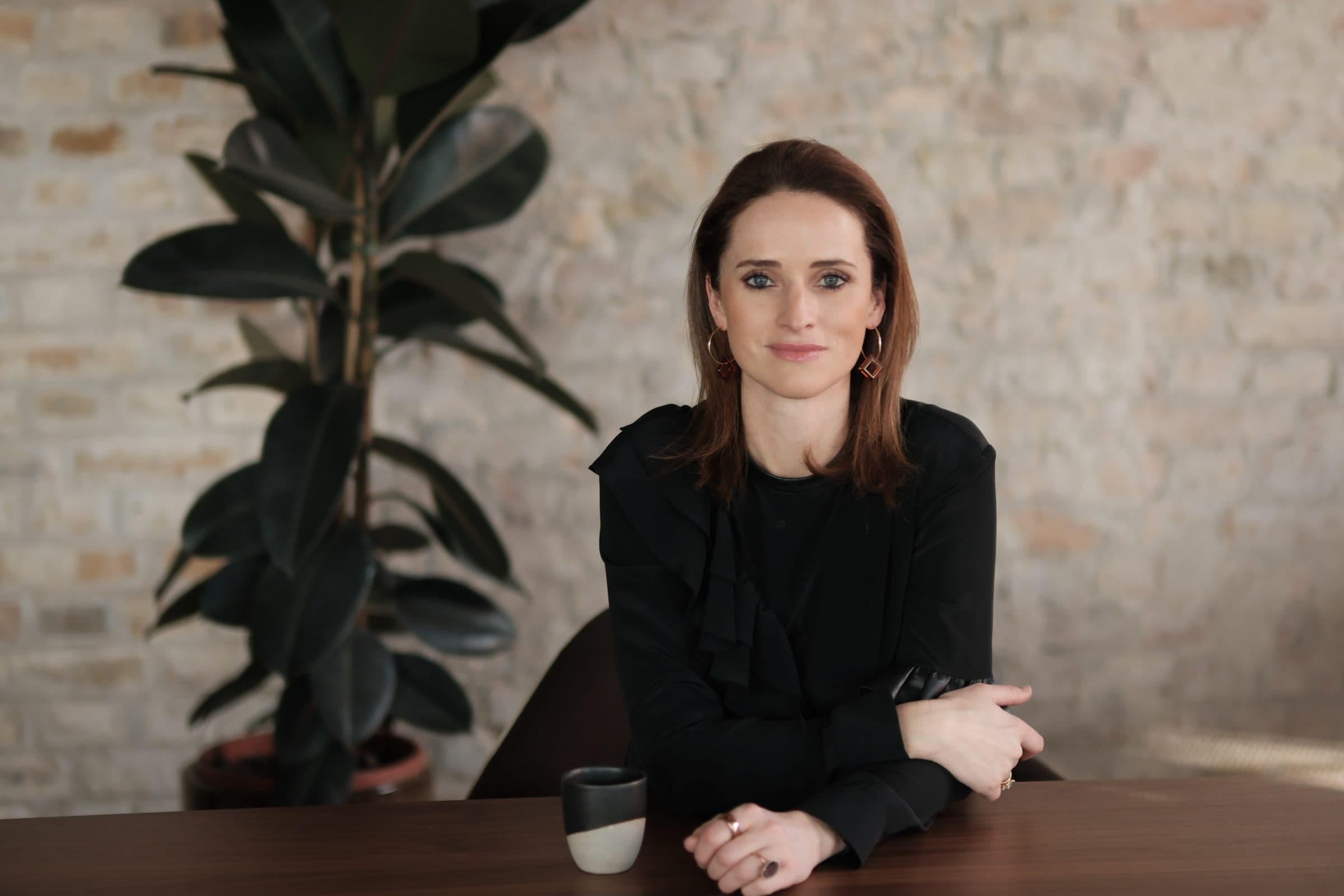

Munich Startup: Quick introduction: Can you briefly sketch out how your professional journey began?
Verena Pausder: After studying business administration, I first went into the insurance industry – a secure job, but I quickly realized: this isn’t my world. I wanted to build something of my own. My first attempt was a salad bar. It sounded like a good idea, but unfortunately it wasn’t – at least not economically. But I learned incredibly much from that: about entrepreneurship, about failure, and above all about how important it is to draw the right conclusions from mistakes. In 2012, I founded Fox & Sheep, with the vision of bringing digital education to children in a playful way. That was my entry into the tech and education world.
Munich Startup: Speaking of Fox & Sheep: What inspired you to work in the tech and education industry? And how do you generally see the role of technology in early childhood education?
Verena Pausder: I wanted children to grow up in a digital world where they not only consume but actively participate creatively. Education starts early, and technology is not the enemy but the tool. The question is not whether children should engage with technology, but how. It’s about responsible use and fostering digital competencies early on.
Digital competency, adaptability, and creativity
Munich Startup: Your company Ada Learning focuses on digital education – in your opinion, what skills should people learn in the future to be successful in the job market?
Verena Pausder: The world is changing rapidly and we need three things: digital competency, adaptability, and creativity. Anyone who can program today understands how our world works. But it’s equally important to learn new things, think critically, and be innovative, to understand AI and not just be able to apply it. Lifelong learning is one of the key competencies people should have today.
Munich Startup: What trends do you see coming in the digital education space over the next few years? Which technologies or approaches are you particularly curious about?
Verena Pausder: AI will revolutionize education. Personalized learning paths, adaptive teaching methods – these are no longer visions of the future but developments already happening now. At the same time, we need to ensure that technology improves education rather than replacing it. It remains a question of balance: high-tech, but with humanity.
Munich Startup: Let’s return to the topic of founding: What would you have liked to know before your first startup?
Verena Pausder: That failure is part of it. And that not everyone will immediately believe in your idea – but that’s not necessary. What matters is that you stick with it, learn, develop further, and never give up.
Munich Startup: What was one of your most difficult moments in your founding journey and how did you handle it?
Verena Pausder: When I decided after 12 months to pull the plug on my first startup and liquidate the company. We didn’t manage to get the startup off the ground, part of the investor money had been spent, that was a very difficult moment that felt anything but good.
Munich Startup: In a time when many startups are struggling with challenges like a shortage of skilled workers and financing gaps, what concrete measures do you consider necessary – also in your role as chairwoman of the German Startup Association – to make startups in Germany successful and competitive in the long term?
Verena Pausder: With the Startup Association, we published an innovation agenda last fall that focuses on several key measures to keep startups in Germany competitive long-term. A central point is improving financing options, particularly through increased venture capital support to better assist founders in the growth phase. On the skilled worker shortage, we need to rely on modern immigration law that allows qualified workers from abroad to come to Germany more quickly and easily. An important step would also be to establish English as an official language in administration. This would help us position Germany as an attractive location for global talent. Additionally, we must promote spin-outs from universities much more strongly. University research holds enormous potential for innovative startups – TUM is already leading the way as a great example – we need to create that in other cities too! Finally, we should continue to reduce bureaucratic hurdles so founders can invest their energy in innovation and scaling their companies. Together, these measures would help ensure that German startups remain successful long-term and become internationally competitive.
“Crises often bring forth the best innovations”
Munich Startup: Does it seem like a good time to found a company right now? If so, why?
Verena Pausder: There’s never a perfect time, but crises often bring forth the best innovations. Whoever founds a company now learns immediately to operate efficiently and sustainably – and that’s a huge advantage. Crisis times are entrepreneurial times.
Munich Startup: As a business angel, you invest in promising startups. What are the most important criteria for a founder or company to capture your interest? And are there particular technologies or industries that especially interest you?
Verena Pausder: Team, topic, and timing. For me, the founding team and the problem the startup solves are what matters most. A strong team that works well together and has the right mindset is the key to success. The idea, the topic must address a real, scalable problem and have the potential to change markets or create new ones. The market the startup operates in must also offer growth potential.
Technologically, I’m interested in many different areas, but my passion topics – (financial) education and promoting children – are enormously important to me. The right timing is underestimated by many. Being too early or too late can cause even the best idea with the best team to fail.
Munich Startup: Together with Lea-Sophie Cramer, you host the podcast “FAST & CURIOUS”. Here you meet exciting guests and discuss topics around digital transformation and innovation. Which episode or conversation has personally surprised or inspired you the most?
Verena Pausder: The conversations with Matthias Schranner about the art of negotiation have left a lasting impression on me. Because it’s such an underestimated skill – to negotiate well, stand up for yourself, and get the best outcome for yourself.
Munich Startup: Is there a founder you would like to meet in person? And what would you ask them?
Verena Pausder: I’ve been in the startup scene for over 15 years and have the privilege of already knowing all the founders who have impressed me over the years.
Munich Startup: And finally: What are your next goals and projects? Or what are you particularly looking forward to in the coming time?
Verena Pausder: I’m looking forward to continuing to advance the startup landscape in Germany with full energy through my work at the Startup Association. Our goal is to make Germany a true founder nation where innovations not only emerge but can also grow big. There’s still much to be done – and I’m highly motivated to do my part.