Munich Startup: What does your startup do? What problem do you solve?
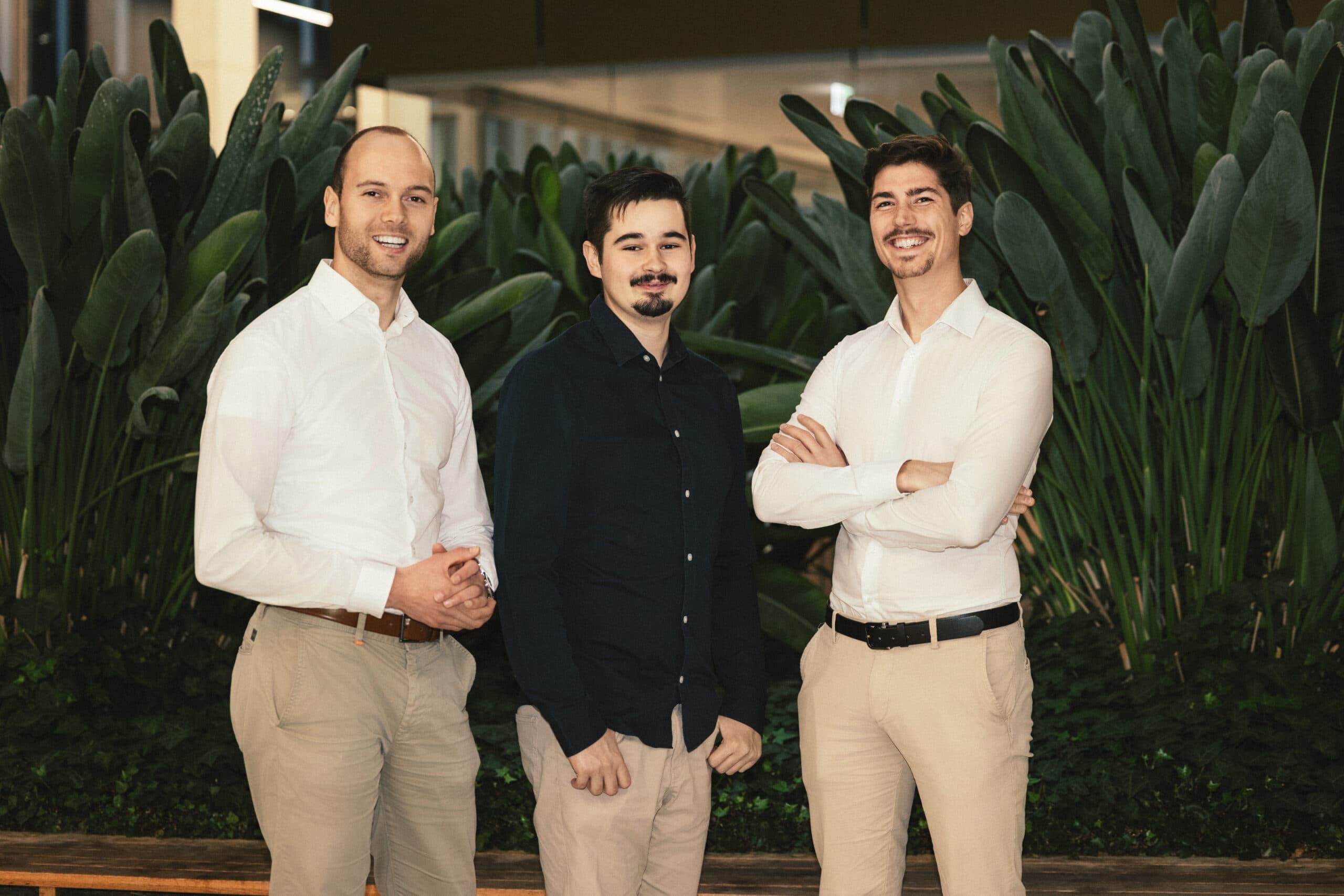
Felix Harteneck, founder and CEO: At Inplanet, we focus on the permanent removal of CO2 from the atmosphere. The core problem we solve is the scalable and cost-effective removal of large amounts of CO2. Our approach accelerates the natural weathering of silicate rock by grinding it and applying it to agricultural land. This binds carbon in just five years instead of over millennia, while also promoting regenerative agriculture. Through improved soil fertility and reduced need for chemical fertilizers, we address two of the most pressing global challenges: climate change and soil degradation.
Why Inplanet’s approach is truly innovative
Munich Startup: But that’s already existed for a long time!
Felix Harteneck: The natural process of carbon sequestration through rock has existed for millennia, but it’s far too slow to meet today’s climate goals. Inplanet’s innovation lies in accelerating this process and developing scientifically founded measurement and verification systems (MRV) that can reliably demonstrate CO2 sequestration—something that has been lacking so far. In January this year, we issued the world’s first certified Enhanced Rock Weathering (ERW) certificate and are pioneering scalable, technology-supported MRV systems to bring ERW to the global carbon market.
Munich Startup: What’s your founding story?
Felix Harteneck: Inplanet emerged from the shared vision of my co-founder Niklas and myself to address climate change through nature-based, scientifically sound solutions. Niklas brings solid expertise in tropical agriculture and sustainability. I contribute my entrepreneurial experience and network from my previous startup Park Here. Together, we recognized the enormous untapped potential of ERW in tropical regions like Brazil and decided to turn scientific potential into real climate impact.
Munich Startup: What have been your biggest challenges so far?
Felix Harteneck: One of the biggest challenges was building a reliable MRV system with which we can scientifically demonstrate how much CO2 we actually remove. ERW is a very new field. We issued the first ERW certificates worldwide in January, so establishing scientific credibility is crucial. At the same time, as a startup, we need to scale quickly, which requires balancing scientific precision with implementation speed. We had to expand our activities across multiple regions, build a robust MRV system, and secure funding while operating in a young and still-developing market environment.
Scaling at gigaton scale
Munich Startup: Where do you want to be in one year, and where in five years?
Felix Harteneck: In one year, we want to significantly expand our activities and remove significant amounts of CO2. Over the coming years, we’re aiming for megaton-scale deployment. Beyond that, our MRV system should be in global use, and Inplanet should be established as a leading company for nature-based carbon dioxide removal (CDR) that supports millions of farmers while combating climate change at scale.
Munich Startup: How have you experienced Munich as a startup location so far?
Felix Harteneck: Munich is an excellent place to grow as a founder, particularly thanks to programs like Manage&More by UnternehmerTUM, where I met my first co-founder. The combination of strong technical universities, active innovation centers, and good access to investor networks provides an ideal foundation for startups. At the same time, we as a company are very internationally oriented. This is evident not only in our three hubs—Munich, New York, and São Paulo—but also in our team, which comprises 14 different nationalities.
Munich Startup: Hidden champion or shooting star?
Felix Harteneck: We’re pursuing both: building long-term, scientifically sound climate infrastructure while also achieving rapid growth. The Intergovernmental Panel on Climate Change (IPCC) estimates that around 15 gigatons of CO2 per year need to be removed through CDR by 2050. But there are far too few scalable solutions so far. That’s exactly where we come in: we’re convinced that ERW is one of the most effective, safest, and at the same time nature-based methods to achieve this goal. Our strength lies in the combination of profound, lasting impact, technological innovation, and fast, purposeful implementation.