
Finding solutions takes far too long at the Bundeswehr
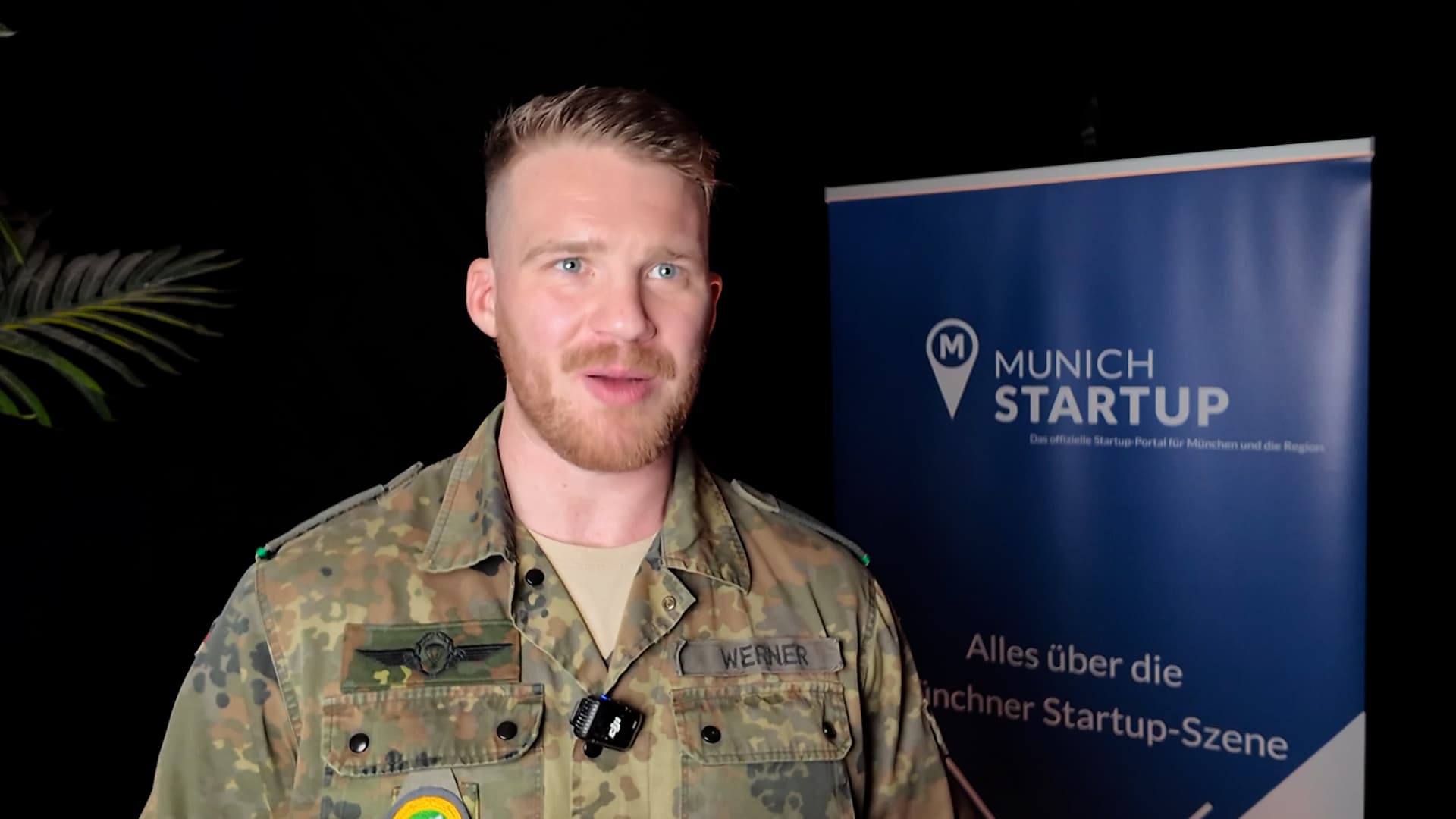
Until now, the Bundeswehr with its planned economy and innovative startups that adapt quickly to developments have been two opposites that were hardly reconcilable. According to Julian Werner from the Bundeswehr University in Munich, this needs to change urgently:
“We as soldiers live in a bubble. We’re in our barracks all week. And often we don’t even know what technical solutions already exist out there. For problems that we encounter again and again in operations. What we first need is dialogue with founders and investors. And then we need to see which solution makes our soldiers safer or really helps us save lives.”
Like innovations in the health-tech sector. A sector that receives too little attention at the Bundeswehr, Werner explains:
“Often these are startups that have developed a very specific solution, for example for hospitals. In dialogue, however, we then discover that if you paint the product green, so to speak, and make it a bit more compact, it can also be transferred to a field hospital.”
The same applies to the entire logistics in operations. Werner himself was stationed in the desert and depended there on weekly food deliveries by outdated diesel vehicles:
“Anything we can find in this area in terms of autonomous or self-sufficient supply makes our lives easier and safer.”
Startups in the resilience sector have good chances

Developments that defence startups can take advantage of. Felix Kästner, co-founder of BASED, an initiative of the German Federal Ministry for Economic Affairs and Climate Action, says:
“There’s a lot of money being put into the market right now. This means that some startups are also building a use case for it. There are two types of startups we’re currently seeing. One are startups that were purely civilian before and are now opening up a dual-use case. And there are startups that are focusing on pure defence from the start. For example, building drones that are really designed for military applications.”
But above all, according to Kästner, the potential and the needs of the defence sector lie in the resilience sector:
“It’s about protecting our democratic values and that requires technological sovereignty. Deterrence also, to a certain extent, unfortunately. If you approach the whole thing from a resilience angle, then startups also have a very, very important role to play. It’s about civil protection, the protection of critical infrastructure and right through to the ability to defend ourselves. It’s worth investing here.”
In 2024, defence technology startups worldwide received around three billion US dollars in venture capital. This significantly exceeded the previous record from 2022 (2.6 billion USD). This comes from a current analysis by the Crunchbase data platform. A topic that was also discussed at a panel at the Munich Startup Festival.