
Munich Startup: What does your startup do? What problem do you solve?
Robert Zechlin, Co-CEO & Founder: Leading biotech companies typically have between five and 20 employees dedicated to laboratory automation. These are usually former biologists who have become software engineers, and their job is to connect hardware and software, automate processes, implement data analysis, and even introduce AI applications. Currently, they build all of this themselves and struggle with proprietary hardware interfaces and closed vendor ecosystems. We believe that over 50 percent of their valuable time is wasted. Hardware integration is clearly the bottleneck in laboratory digitalization and automation. Our platform simplifies and standardizes this process.
UniteLabs thus offers the operating system for AI-driven laboratory automation, which standardizes the connectivity of hardware and software in bioscience. Our platform breaks down manufacturer barriers, reduces costs, and creates a scalable infrastructure that accelerates digital transformation. This enables improved data integrity, process automation, and device monitoring, creating the prerequisites for the laboratory of the future.
Munich Startup: But that already exists, doesn’t it!
Robert Zechlin: The decisive difference from our competitors is our innovative integration infrastructure, which includes standards, protocols, tools, and platform products. UniteLabs is the only platform that combines complete device integration including control with a development environment. Devices from all manufacturers are securely integrated into the cloud and are programmable. Additionally, UniteLabs offers a hub for connectors and a driver framework for easy device integration. Thus, our platform is the only open, manufacturer-independent solution for AI-driven laboratory automation.
From shared apartment idea to international platform
Munich Startup: What is your founding story?
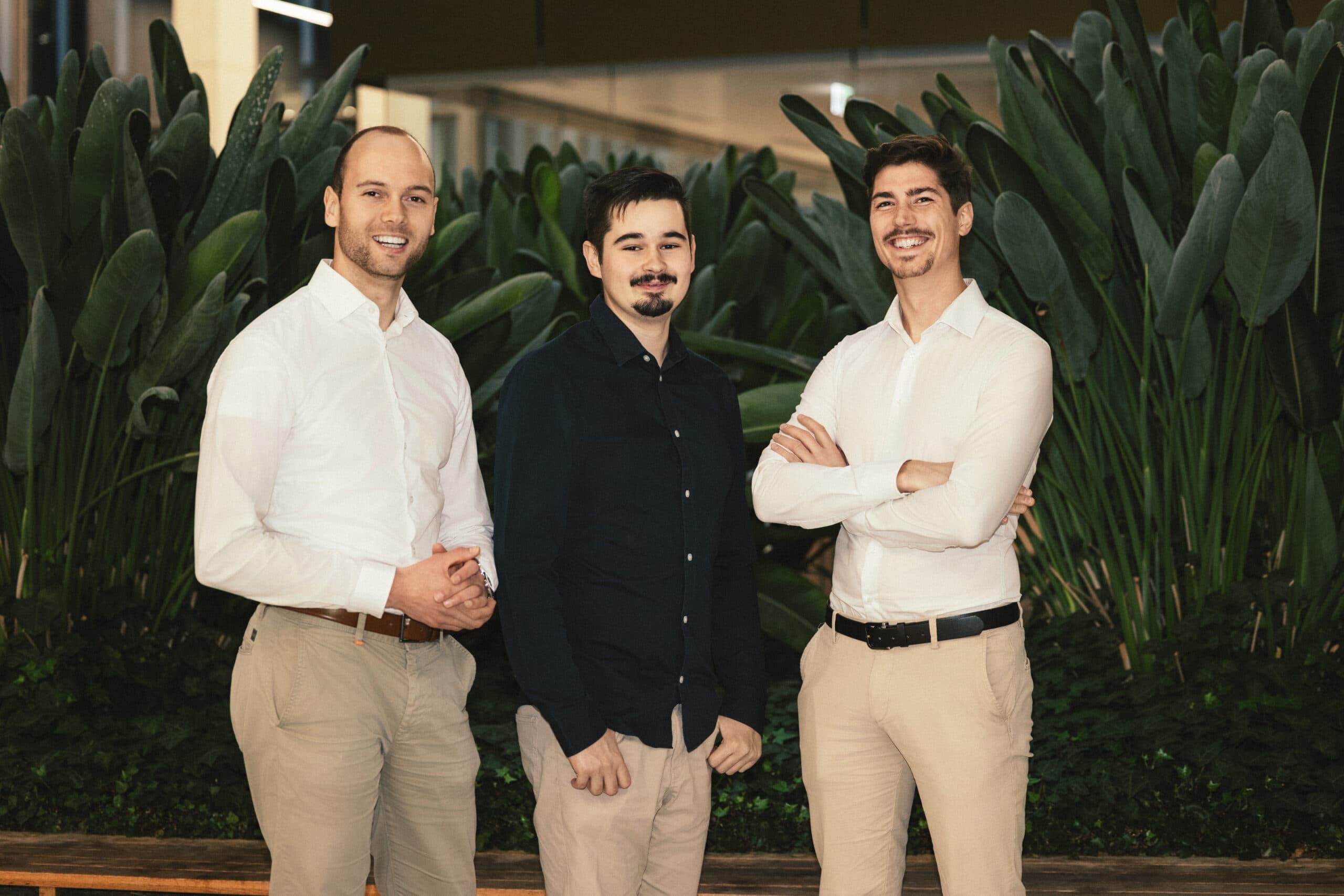
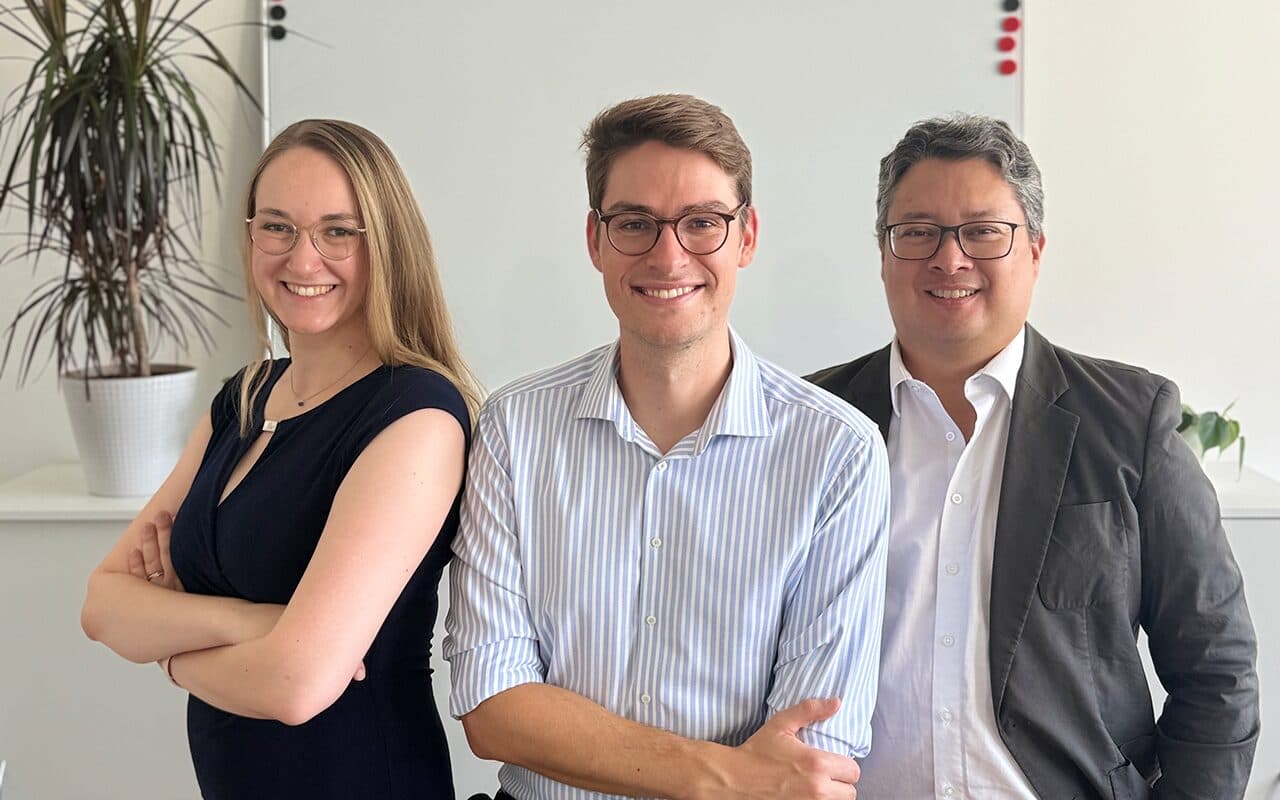
Robert Zechlin: My former roommate Lukas conducted research at the TU München on “digitalization in industrial biotechnology” at the Chair of Bioprocess Engineering after completing his chemical engineering degree as a research assistant. The software developed during this time evolved very well, he became a member of the SiLA standardization consortium, received increasingly more requests from other universities and industry. The preliminary work from this dissertation thus provided the impetus to develop it into a commercial product and to economically evaluate the project. When we both met Julian at a business informatics get-together, it was clear: we’ll do this together! Julian has been working as a programmer since his teenage years, so it was a perfect fit: a business economist, a chemical engineer, and a computer scientist.
As luck would have it, around that time we met an angel investor from exactly that industry and were able to benefit enormously from his experience with a similar startup from Switzerland. Since the end of 2022, we have been working on the idea, and in early 2024 we founded UniteLabs.
Munich Startup: What have been your biggest challenges so far?
Robert Zechlin: Besides the classic startup challenges like funding and hiring, I would say our biggest challenge was that we were internationally oriented from the start. Our first customers were US companies. In the meantime, we have partners all over the world and recently even submitted a research proposal with a Korean partner.
On the path to becoming a global standard
Munich Startup: Where do you want to stand in one year, where in five years?
Robert Zechlin: Our goal is to connect 90 laboratory devices by the end of the year, making laboratory automation accessible to nearly every second biotech lab worldwide. But that’s just the beginning. Our long-term vision is to set the global standard for laboratory automation and make cutting-edge biotech research faster, smarter, and more connected than ever before.
Munich Startup: How have you experienced the startup location Munich so far?
Robert Zechlin: We think Munich is fantastic for our startup! UniteLabs’ scalable B2B business model in the field of industrial automation benefits enormously from the community based here. Munich is also a life science hotspot and has the most active community for laboratory automation in all of Europe.
Munich Startup: Quick exit or long-term commitment?
Robert Zechlin: Our focus initially lies on creating a foundation to build a stable and scalable infrastructure for the core processes of partially regulated companies. That takes time, of course. At the same time, the value of our platform increases with the number of developed connectors and the number of devices we can integrate. That’s why I would say we’re taking a long-term approach to the matter. Nevertheless, we have some exciting things in the pipeline that will definitely bring us attention early on.