
Munich Startup: What does Dabei do? What problem are you solving?
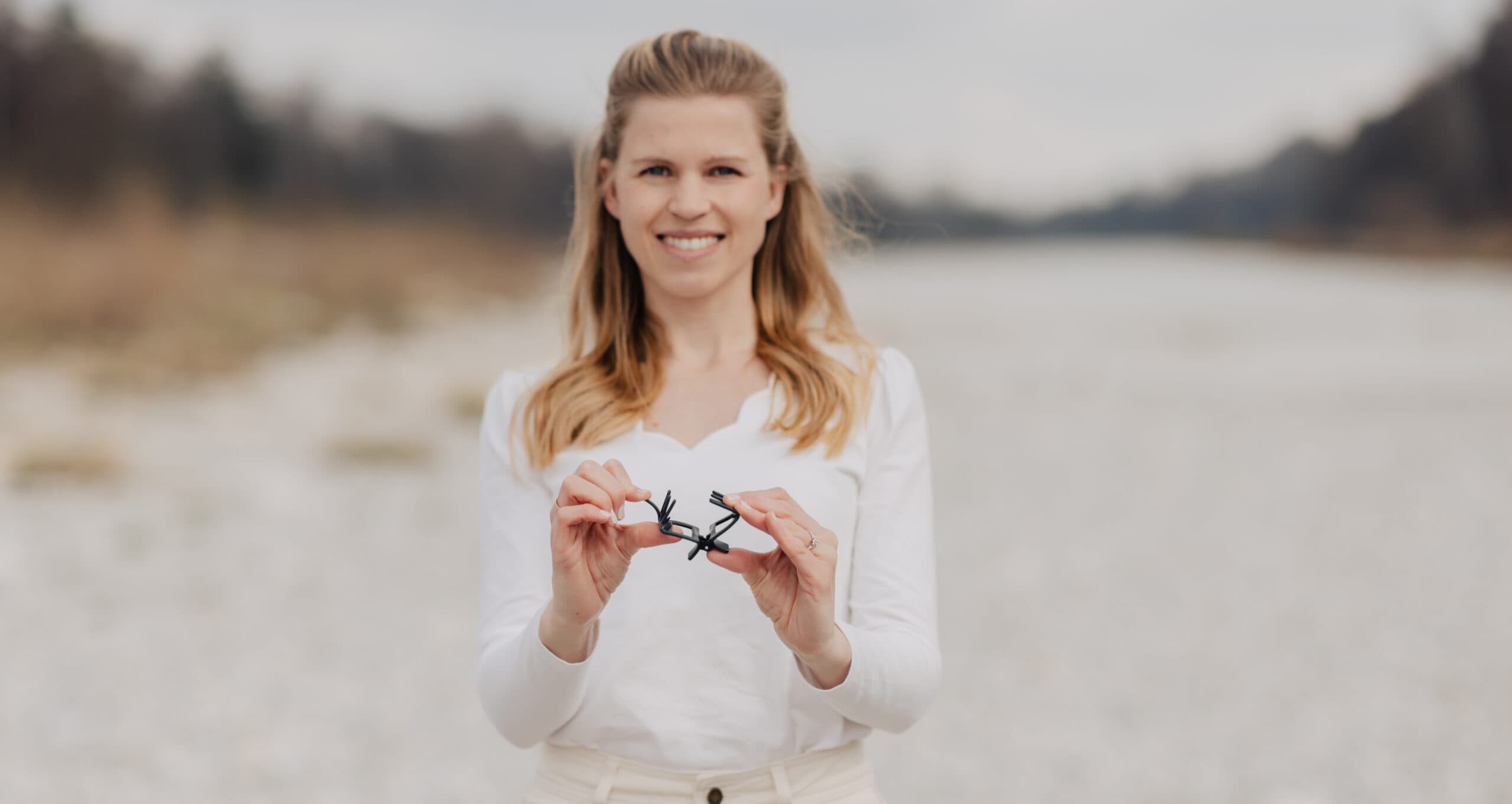
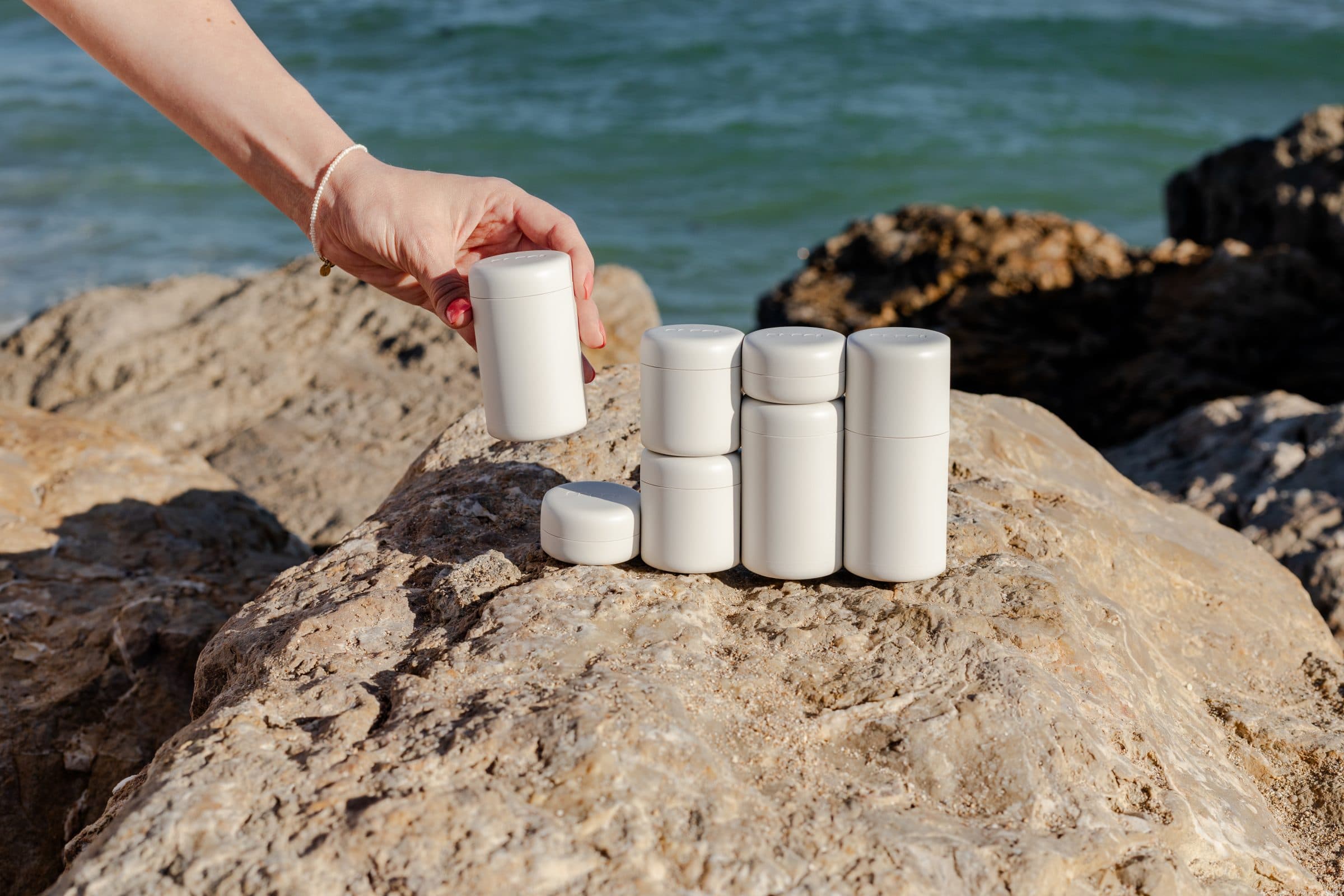
Teresa Born, Dabei: We develop a high-quality travel container system for cosmetic products to avoid the use of single-use plastic. The typical small refill bottles from drugstores or online shops are usually of poor quality, difficult to clean, and end up in the trash after just a few uses – or are reused despite poor hygiene.
Our travel pods offer a durable and well-thought-out alternative: they are robust, leak-proof, dishwasher-safe, REACH-tested, BPA-free, and available in four different sizes – all suitable for carry-on luggage. Additionally, there’s a pump attachment, and thanks to the magnetic stacking system, the pods can be organized in a space-saving way.
Munich Startup: But that already exists, doesn’t it?
Teresa Born: In fact, we haven’t found a comparable product in Europe so far. In the US, there are already some early solutions going in a similar direction – but none of them fully met our requirements. Dishwasher-safety was particularly important to us, as hygiene is essential for refill products. A pump function was also high on our wish list. In manufacturing, we also deliberately avoided embedding magnets in the plastic to maintain recyclability – an aspect that many designs overlook.
From frustration to a founding idea
Munich Startup: What’s your founding story?
Teresa Born: The idea came about quite pragmatically: I was frustrated with the unhygienic and hard-to-clean travel containers in my cosmetics bag. I had wanted to develop my own product for a long time – and this problem was obvious.
Fortunately, my husband is an engineer, we have a 3D printer at home, and so we were able to quickly build and test first prototypes. At the beginning, of course, everything looked quite different – the list of requirements grew with each development step and became increasingly complex.
Munich Startup: What have been your biggest challenges so far?
Teresa Born: One major challenge was material selection: we have high demands for chemical resistance, dishwasher-safety, impact resistance, and at the same time for environmental and health compatibility. At the same time, the materials had to be process-safe for injection molding.
Manufacturing precision was also demanding – many parts have to fit together perfectly, with tolerances in the range of tenths to hundredths of millimeters.
Munich Startup: How is business going?
Teresa Born: We ran a Kickstarter campaign in spring to test product-market fit and finance the first production series. We were able to raise over 20,000 euros and gain almost 250 supporters.
This was an important validation step for us – especially since we only advertised in the German-speaking region. Regular sales launch is still planned for this summer.
Munich brings founders together
Munich Startup: What has your experience been with Munich as a startup hub?
Teresa Born: Munich offers a very vibrant and engaged founder scene. There are numerous events, networking meetings, and programs for startups that make it much easier to get started – from initial contact with like-minded people to targeted support on topics such as financing, prototype development, or sales. We particularly benefited from the city of Munich’s crowdfunding support, a low-barrier and very useful support for development projects like ours.
The concentration of expertise is also valuable: you find many great founders and experts in the fields of technology, design, marketing, and production who are happy to share their experience. We hope that in the future we can also help others with our experience.
Munich Startup: Outsource or do it yourself?
Teresa Born: Do as much as possible ourselves, especially before validation. Furthermore, I believe that core knowledge needed long-term must be present in the company. But: for certain critical development steps where we lack expertise, we deliberately rely on experienced freelancers. In our case, for example, that was industrial design, which we outsourced.