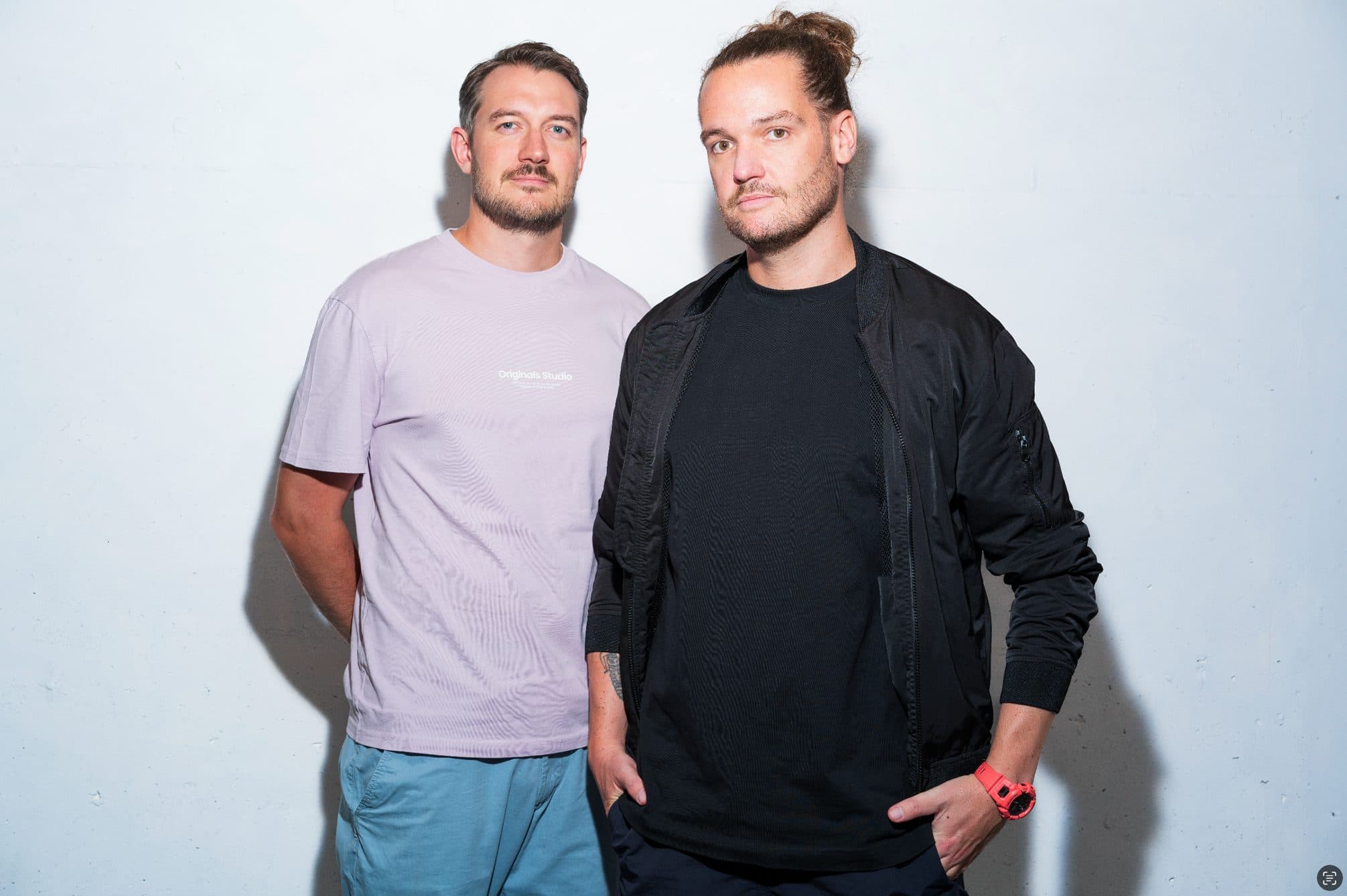

Munich Startup: What does Truly do? What problem do you solve?
Timo Wagner, co-founder Truly: Truly is an app that translates populist statements, pointed headlines, and politically distorted opinion images into verifiable facts. Without pointing fingers. Without moralizing. But rather in a comprehensible, transparent, and understandable way.
Facts instead of finger-pointing: explaining political content anew
In a time when emotions blare louder from political speakers than evidence, Truly helps people form an informed opinion of their own again. For everyday private life. For political education. For cities. And for media and companies. We want to bring lightness back to fact-checking, take personal life situations into account, and above all build it on neutral, unbiased ground.
Fake news spreads six times faster than facts, and 83 percent of Europeans believe that disinformation threatens our democracies. That’s exactly where we step in. We don’t just expose fake news; we see ourselves as a democracy OS from a forward-looking perspective—a platform to strengthen democracy.
Manipulation check with AI to make critical thinking accessible
Munich Startup: But that already exists, doesn’t it?
Timo Wagner: Not really. Correctiv, for example, offers fact-checking via WhatsApp. There are isolated apps that curate fake news or provide educational support to uncover fake news themselves. We take a different approach. We use artificial intelligence (AI) to identify fake news and categorize it through our manipulation check. Fake news isn’t a rhetorical accident; it usually relies on deliberately used manipulation techniques, which we expose and contextualize. We teach people to understand the thinking logic behind statements, which rhetorical patterns are used, which psychological triggers work, and where context is missing or distorted.
Truly is basically critical thinking made accessible.
Beyond that, we offer additional features like dynamically generated Truly Cards, soft entries, location-based data, and hopefully soon a youth version as well.
From election monitoring to a European answer
Munich Startup: What’s your founding story?
Timo Wagner: We all saw it in the political election situation: the loudest ones win. And not because they’re right, but because they speak most simply and are repeated most quickly. Facts, context, nuance—these remain in the background. Complexity is ignored. Polarization is rewarded.
Truly emerged from this observation. Our very concrete catalyst was the political snap elections last year. Because that’s when it all hit us in the face. Right-wing voices didn’t just get loud; they were made louder. And responses to them were too slow, too academic, too much searching for the right words, too moralizing.
We wanted to provide a pragmatic answer. One that doesn’t sound preachy but is actually understood. One that is accessible. That’s faster than the next meme. First a custom GPT, then social media assets—small, simple tools to provide orientation instead of just repeating opinions. We were supported by people who really know their stuff, activists like Micha Fritz, someone who has always stood for clear language. After the elections came disillusionment, and for us the realization: now more than ever. Then the city of Munich noticed us, and within less than a week an independent app emerged as a European answer against fake news. The foundation for everything that follows.
Trust, visibility, and social impact scaling
Munich Startup: What have been your biggest challenges so far?
Timo Wagner: The biggest challenge right now isn’t even technological in nature. The foundation of our current app came together within a week. For us, scaling and visibility are probably the most challenging topics at the moment. It’s still difficult to scale social impact startups in the same way as, say, normal tech startups. On the other hand, our offering is aimed at target groups like educational institutions, institutions, or municipal organizations, where decision-making processes take a bit longer. And ultimately, the most important currency for us is trust. Do users believe us when we say we’re neutral and not politically biased, and do they trust our application in general? Trust is no longer a given these days; it’s an asset that you really have to earn.
From the classroom to democracy OS
Munich Startup: Where do you want to be in one year, where in five years?
Timo Wagner: In one year, we want to be the go-to application against disinformation in the German-speaking world. Established in educational institutions, an integral part of, for example, the Constitution Quarter-hour or a role model in civics class. Ultimately, we want to become the top-of-mind application when it comes to finding solutions against disinformation in the media context. Quickly available and in simple language.
In five years, we’re no longer an application but a platform, a democracy OS. Truly will then be the home for fact-based public debates. For media, education, civil society, and business. We will then no longer have just an AI solution as a large language model (LLM), but a living agentic system that moderates, better recognizes cultural and local contexts, and ideally independently and in real time crawls, identifies, and categorizes disinformation.
Munich Startup: How have you experienced Munich as a startup location so far?
Timo Wagner: Munich is certainly one of the founding locations, but more cautious than necessary. There are strong networks, brilliant minds, and genuine interest in innovative solutions. So far we’ve been supported by really great people. People who believe in us and our mission. We’re incredibly grateful for that. At the same time, you feel a certain fear of taking a stance. Of straight talk. Of friction. Of anti-bureaucracy. And ultimately, there’s still a lack of straightforward access to capital, especially for social-impact startups in the tech field.
Munich Startup: Risk or security?
Timo Wagner: The future needs risk. And democracy needs security. We choose risk anyway. Our issue is friction-intensive, a topic where it’s important to maintain a stance. If we’re not risk-ready, we leave the field to those who shout the loudest and whose echo lasts the longest. And that would certainly be the least secure option.