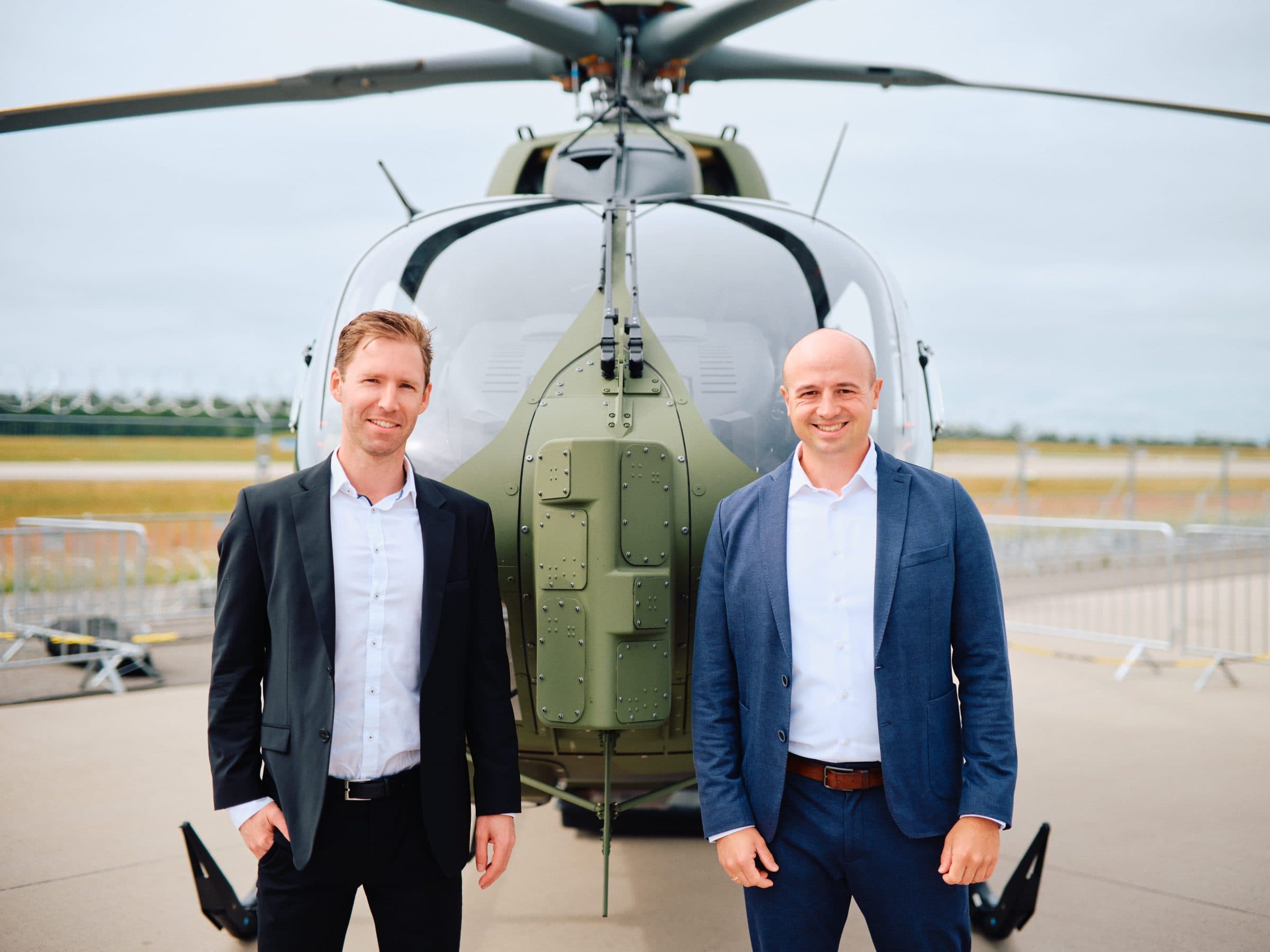

Munich Startup: Please describe your current situation!
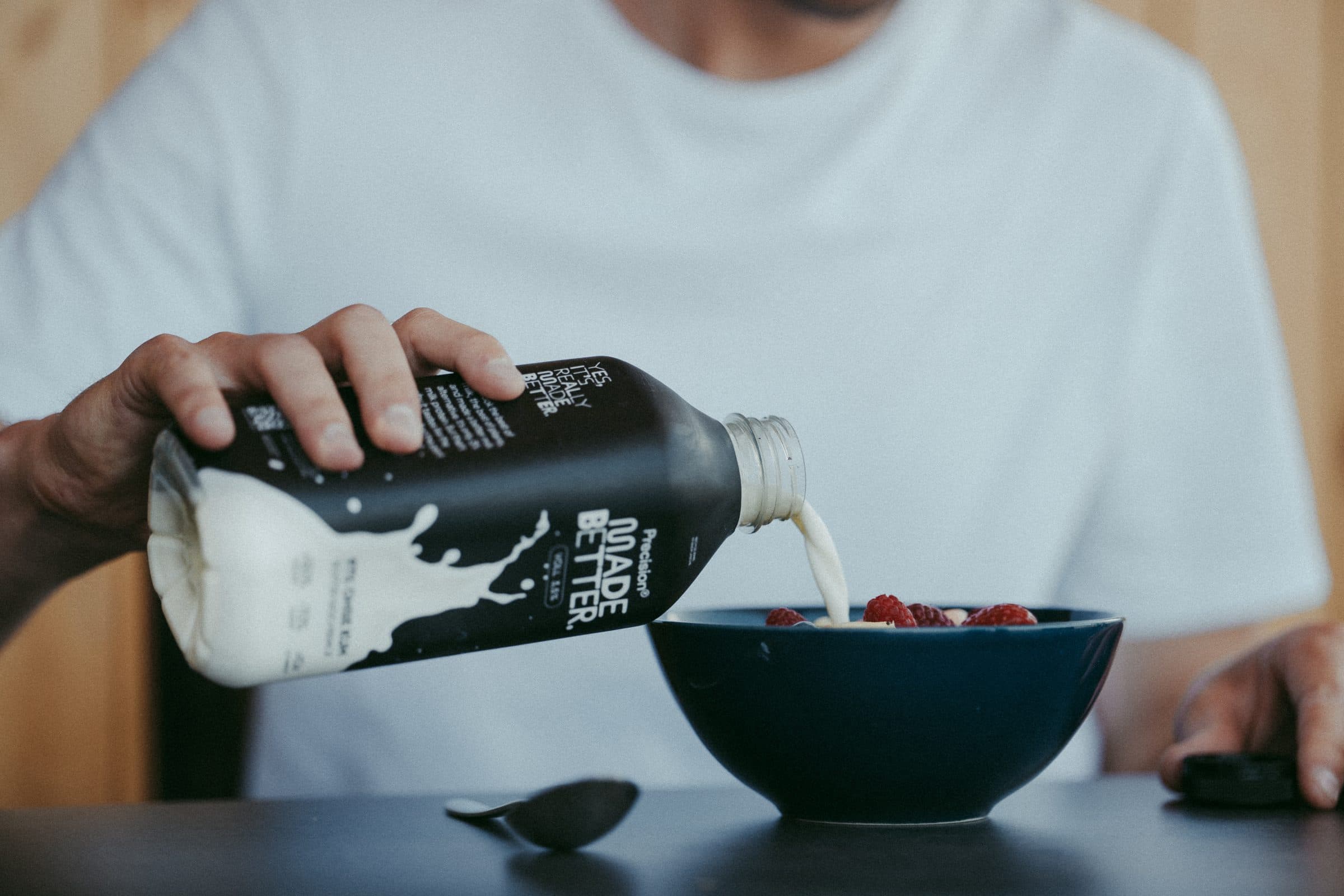
Malte Zeeck: We’ve been in German retail with our first products since October 2025, including at Edeka and Rewe. Our approach is to offer a significantly better version of milk today with a better nutritional profile and a taste that comes very close to the original, but with significantly less cow. The response has been very positive so far, especially when people try the product. In parallel, we’re already working on the next generation: completely animal-free based on precision fermentation.
Munich Startup: Why does the EU test so strictly? Why is it faster in other countries?
Malte Zeeck: The EU has deliberately set very high safety standards with its Novel Food regulation. New food products are examined extremely thoroughly here. This is generally sensible and builds trust. At the same time, the processes are often very lengthy and unpredictable. Countries like the USA, Israel, or Singapore are more pragmatic and faster here without, in our view, compromising on safety.
Strict EU rules: safety requirements meet innovation brakes
Munich Startup: Isn’t that also a competitive disadvantage?
Malte Zeeck: Yes, that’s definitely a competitive disadvantage for European companies. While other markets already have first products on shelves and are gaining valuable experience, we’re still in the approval process here. This means that innovation and value creation are partly migrating to other regions. At the same time, this also has an ecological dimension: the longer such technologies are delayed, the longer we remain dependent on existing, more resource-intensive production methods. Europe risks losing ground not only economically, but also in terms of climate protection and resource efficiency.
Munich Startup: How does it feel to have to wait so long?
Malte Zeeck: It’s honestly frustrating sometimes. You know the technology works and that there’s real added value for consumers. At the same time, you’re dependent on processes that take several years. But as a founder, you learn to deal with it and work in parallel on the things you can influence.
Munich Startup: How does it look financially? That must be quite a burden?
Malte Zeeck: Such long time horizons are of course a financial challenge because you’re making upfront investments – in product development, team, and infrastructure – without the next generation of products generating revenue yet. We don’t share specific figures, but it’s clear that capital requirements and planning security play a major role in such an environment. That’s why it’s so important that we build a functioning business model today with our current products.
Munich Startup: Can you assess how big the problem is? Does every future product have to go through this process?
Malte Zeeck: Basically, whenever a novel ingredient is used, the Novel Food regulation applies. This means that new technologies almost always come with a corresponding lead time. However, once an ingredient is approved, it becomes much easier to develop further products based on it. In that sense, the first approval is the decisive step.
Not braked: how the startup continues to make progress despite hurdles
Munich Startup: Are you completely braked now or can you still work behind the scenes?
Malte Zeeck: We’re definitely not braked. On the contrary: we use the time to build our brand, develop the market, and continue to improve our products. At the same time, we’re working intensively behind the scenes on the next generation. When the regulatory hurdles fall, we want to be ready immediately.
Munich Startup: What demands do you have on policymakers regarding faster approvals?
Malte Zeeck: Our wish is not a lower safety level, but more speed and predictability. The processes should become more transparent and efficient so that companies can invest reliably and build innovation in Europe.
At the same time, this is not just about economic competitiveness, but also about ecological progress. Technologies like precision fermentation have the potential to significantly reduce resource consumption and emissions in food production. The faster such solutions responsibly reach the market, the faster we can both seize economic opportunities and make progress in sustainability.
Our goal would therefore be a regulatory framework that enables both: innovation and value creation in Europe, while at the same time making a tangible contribution to more sustainable food production.