
This week it was finalized: Rocket Lab is buying Mynaric. What makes this acquisition particularly noteworthy is the fact that Rocket Lab is not just buying technology, but securing a strategic building block for large satellite constellations. And the US company is willing to pay for it. In total, approximately 131.6 million euros (155.3 million US dollars) in the form of a nominal cash payment plus 2,277,002 Rocket Lab shares changed hands.
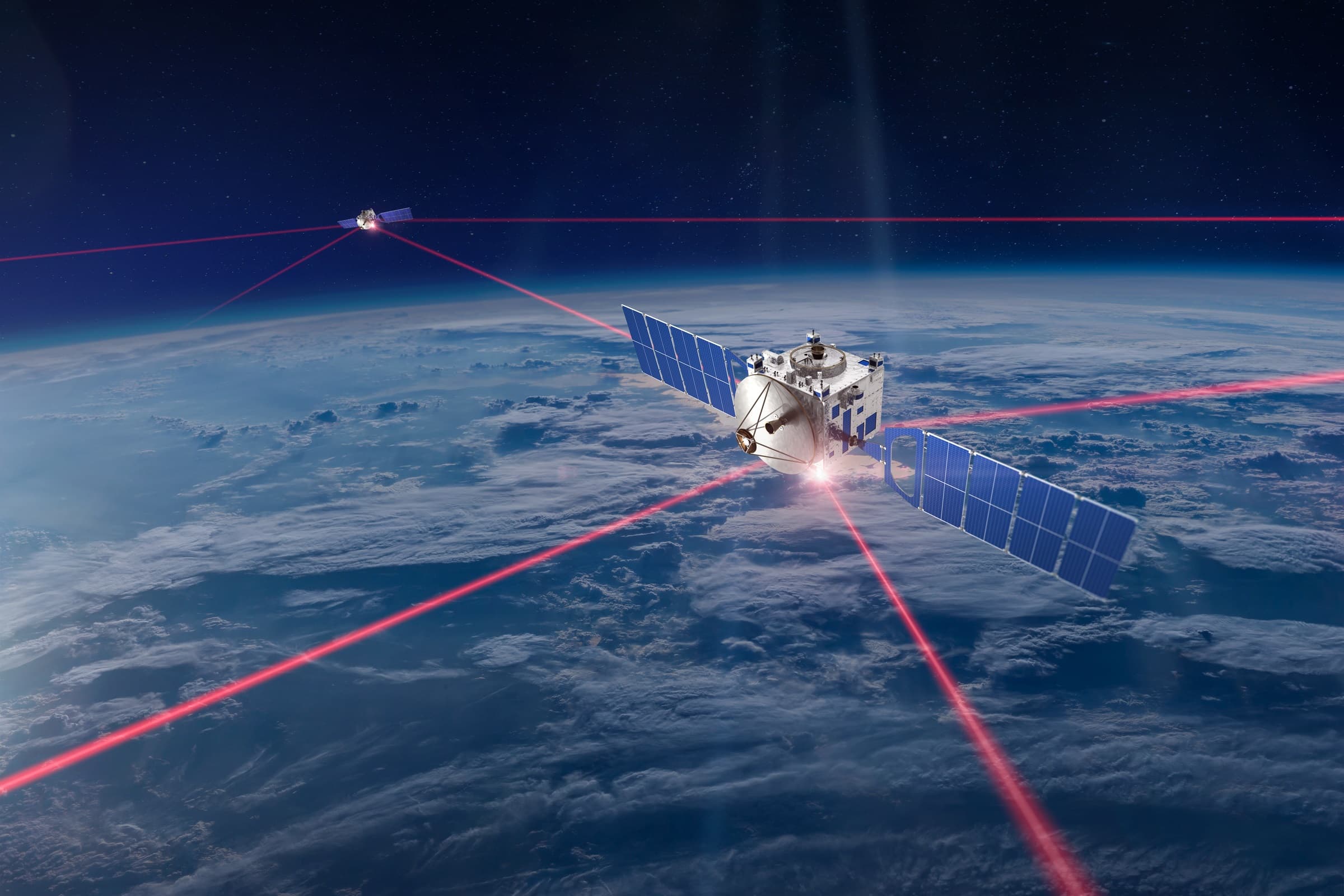
Laser communication is considered a key technology for high data rates, greater security, and scalable connections in orbit. That’s exactly where the market has recently been struggling with insufficient volumes and difficult availability. Mynaric therefore fits very directly into Rocket Lab’s expansion toward becoming an integrated aerospace provider. The US corporation has long since positioned itself not only as a launch service provider, but is systematically building out its space systems business through spacecraft, components, and acquisitions. The Mynaric acquisition now adds optical communication terminals to this portfolio.
Billion-dollar contracts make Mynaric strategically relevant
A central reason for the acquisition was the existing operational relationship between the two companies. Mynaric supplies CONDOR-Mk3 terminals for Rocket Lab’s major contracts worth approximately 1.1 billion euros (1.3 billion dollars) for the production of 36 satellites for the US Space Development Agency’s “Proliferated Warfighter Space Architecture.” According to Rocket Lab, this collaboration gave the company early insight into Mynaric’s team, technology, and scaling potential.
This means the deal is not just a technology acquisition, but also vertical integration in a market where supply chains and production capability determine the feasibility of entire constellations. While the acquisition gives Rocket Lab more control over a critical subsystem, it grants Mynaric access to a financially stronger industrial setup with a global customer base. This conclusion is supported by the previous supply relationship, the SDA programs, and Rocket Lab’s explicitly announced plans to scale up production.
Munich remains headquarters – Rocket Lab establishes first European presence
For the Munich location, it is crucial that Mynaric is to remain based there according to Rocket Lab. The corporation explicitly states that it intends to establish its first European presence with Mynaric and thus expand support for German and other European space programs.
For the Munich startup and deeptech ecosystem, this is not a classic exit with complete relocation of operations. Instead, a Munich spacetech specialist is being integrated into an international aerospace platform, while development and presence at the location are intended to remain.
Why Mynaric recently came under pressure
The deal comes for Mynaric after a difficult period. In August 2024, the company significantly lowered its revenue and cash forecasts for 2024, citing production delays on the CONDOR Mk3, lower manufacturing yields, and supply chain bottlenecks among other reasons. At the same time, Mynaric reported only 6.3 million euros in liquid funds and stated it needed to explore additional financing options.
In February 2025, Mynaric then initiated a restructuring procedure under StaRUG. On its investor relations page, the company describes a plan involving debt cuts and capital measures to stabilize the group. The Rocket Lab deal was thus not just a growth scenario, but also a stabilization scenario for the Munich laser specialist.
Why laser communication is becoming more important for the space market
Optical communication between satellites is becoming more important because constellations need to transport ever larger amounts of data, and conventional radio links are reaching limits in bandwidth, spectrum utilization, and sometimes security. Rocket Lab therefore describes laser communication as a “key enabler” for current and future constellations and wants to expand Mynaric’s production capacity precisely here.
For Europe, this is doubly interesting: On the one hand, a relevant laser communication location remains in Munich with Mynaric. On the other hand, a strategically important supplier is moving under the roof of a US corporation that is strongly positioned in the defense and government environment. This increases industrial capabilities, but also shifts the balance of power in the European space market. This assessment is based on Rocket Lab’s announced European expansion, the SDA connections, and Mynaric’s role as a supplier in multiple programs.