
Munich Startup: What does Fairdoc do? What problem are you solving?
Sylvia Edmands: There is an acute shortage of doctors in clinics and hospitals. Advertised positions remain unfilled for months, sometimes even years. Wards, even entire hospitals, are being closed. This leads to bottlenecks in medical care – and the trend is rising.
Fairdoc is a digital agency for temporary staffing in medicine and helps close these gaps. Hospitals and facilities can use the Fairdoc app to recruit short-term, temporary replacements. This enables clinics to plan staffing in an independent, flexible, and cost-effective way. Doctors find temporary assignments throughout Germany via the app without any hassle. With just a click, registered doctors can apply for a replacement position that is tailored to their personal situation – in terms of location, time, and duration of the assignment.
Munich Startup: But that already exists!
Sylvia Edmands: We are the first digital temporary staffing agency for doctors on the market that passes on all savings generated through digitalization to our customers. We designed our placement app as a one-stop-shop. Hospitals and doctors can handle temporary staffing assignments through Fairdoc completely digitally: from initial contact through assignment management to payroll processing. The various features of the app ensure smooth processes and transparency for both sides.
Fairdoc is the further development of Talentee
Munich Startup: What’s your founding story?
Sylvia Edmands: Fairdoc is the further development of the networking and career platform Talentee. For Talentee, we used algorithm-based matchmaking, similar to what you find on online dating portals. This way, we brought together students and doctoral candidates with the specialist departments of companies looking for corresponding talent.
We strategically redirected this recruiting idea during a pivot exclusively to the medical sector and adapted it to the needs in that field: Since our work brings people together in a very demanding employment relationship, the matching of doctors and clinics at Fairdoc is handled by our HR expert and co-founder Mathias Tünnerhoff. He and his team review the AI-based pre-selection and ensure that the registered doctor is exactly suited to the requirements and needs of the facility – and vice versa.
Munich Startup: What have been your biggest challenges so far?
Sylvia Edmands: Regulation and bureaucracy – Fairdoc operates as a staffing agency in the field of temporary staffing. For the lending of employees, the Employee Leasing Act (AÜG) applies in all industries, including healthcare. The AÜG protects employees and provides clear requirements for employment relationships. We need an appropriate license, which we initially had to wait several months for. Additionally, we are regularly audited by the Federal Employment Agency for compliance with the AÜG.
The doctors we place are directly employed by Fairdoc as full-time or part-time employees. A contract signed with us forms the basis of the temporary employment relationship. The AÜG requires these contracts to be in written form, for example, so we send most of our contracts by mail in paper form. Due to this contractual arrangement, we are the employers of the replacement doctors. Therefore, another challenge is cash flow: our income is offset by relatively large expenses.
Improving medical care in Germany
Munich Startup: Where do you want to be in one year, where in five years?
Sylvia Edmands: In one year, our brand should be well-known in our (relatively small) target market. Doctors who want to work flexibly, as well as decision-makers in clinics and facilities, will actively seek out temporary assignments via our app and handle them through Fairdoc. Because we live up to the “fair” in our name, it’s the positive experiences with us that will lead them to recommend us.
In five years, we want to work largely digitally and automatically. This will allow us to focus on the few human touches that distinguish our service. This, combined with speed and user experience, sets us apart positively from our competitors. At that point, Fairdoc will offer the doctors registered with us everything that enables them to be successful in their profession while maintaining the desired work-life balance. Overall, we at Fairdoc are doing our part to improve medical care in Germany (and perhaps in other markets as well).
Munich Startup: How have you experienced the startup location Munich so far?
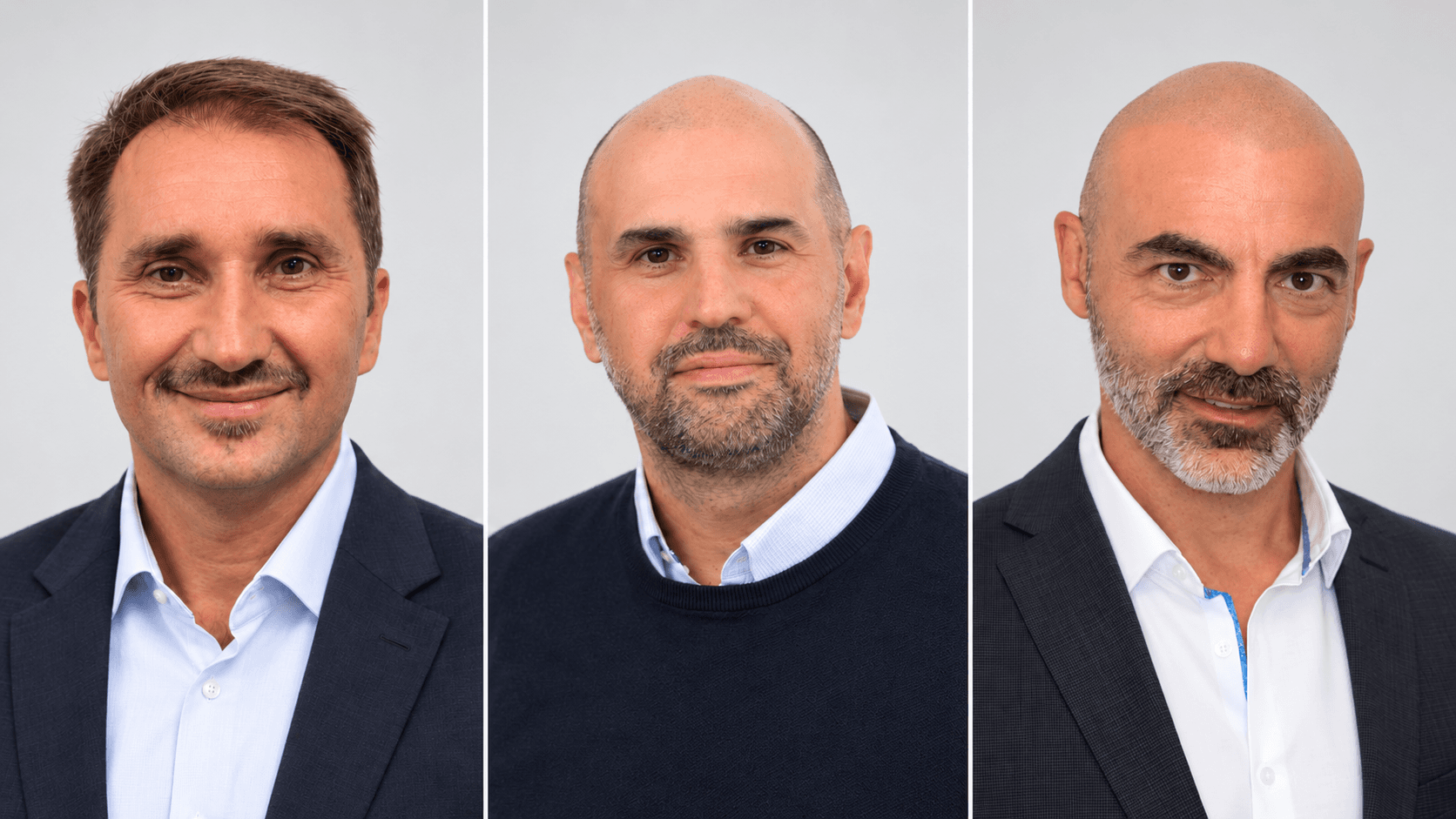
Sylvia Edmands: Munich is the place of choice! For me personally, because I feel so connected to this city on a personal level that I couldn’t imagine founding elsewhere. What’s more important is: Two of my co-founders, Marcus Otto and Michael Wenglein, are old hands in the Munich startup scene. Their first-rate network benefits us in many aspects. We are open to remote work for our employees.
Save time and money by doing it yourself
Munich Startup: Outsource or do it yourself?
Sylvia Edmands: Do it yourself! This began with programming the app. For the Fairdoc app, we opted for low-code software. Our co-founder Marcus Otto acted as the developer. Without any experience in software development, he was able to acquire all the relevant skills through available tutorials. We managed to launch the entire Fairdoc app with all features within four months.
For our Talentee platform, we had the app and user interface developed in the traditional way. Despite using up to six developers, it took twice as long. The coordination processes were often frustrating, and the platform cost about ten times as much as our current low-code solution. Our experience shows that by doing it ourselves, we achieved significantly faster time-to-market, at considerably lower costs, and with much greater flexibility.