


A casual chat over a beer after work and you’ve found a new business partner or customer — unfortunately, networking doesn’t always work that directly. Nevertheless, the casual exchange offers many opportunities. We asked startup founders how they approach networking.
A well-known business wisdom says you should never eat lunch alone. Even busy founders should therefore tear themselves away from their work and prefer a business lunch to a snack at their computer. The idea behind it: if you want to be successful, you need personal contacts and a dense network.
Startup culture in particular emphasizes the great benefits of networking. Founders can get to know their future customers, investors, or employees more or less in passing over lunch or an after-work beer. After all, it never hurts to know as many people as possible — who knows what could come from a chance contact?
Accordingly, the supply of evening networking events in startup hubs like Munich is substantial. Practically every evening of the week, meetups and fireside chats, conferences and regular meetups take place. The Munich startup Mystery Lunch has also discovered lunch as an internal networking tool for large companies and offers a cloud service that networks employees from different departments using an algorithm. Over shared lunch, employees are supposed to get to know and exchange with each other. The startup’s customers already include Allianz, O2, DHL, Deutsche Bundesbank, and Payback. Even large corporations have apparently recognized the value of spontaneous chat.
Networking as a time-eater?
But the spontaneity of networking also contains its biggest problem: networking costs valuable time, yet the benefit is hardly predictable. Besides, casual exchange is not for everyone. Introverted people often struggle with small talk. Others prefer to spend their limited time outside of their business with family and friends. Many founders therefore ask themselves: how much time should I invest in networking? Which events are worth it and where am I just wasting my time?
Dario Nassal is one of three founders of TheBuzzard. The platform collects different opinions, views, and perspectives on a topic. The goal is to show media consumers different perspectives, even those that diverge from their own opinions. For Nassal, networking is primarily a question of time:
“There are a lot of people in the startup scene who haven’t really done anything yet and just talk. But as a founder, you have to move forward, and that’s why time is precious.”
Especially at the beginning, the founders had little time for networking:
“Especially during our six months in the Media Lab, we were mainly focused on building the team, developing a prototype, and acquiring customers. It was a lot of work and stress, but that’s also why we made quick progress.”
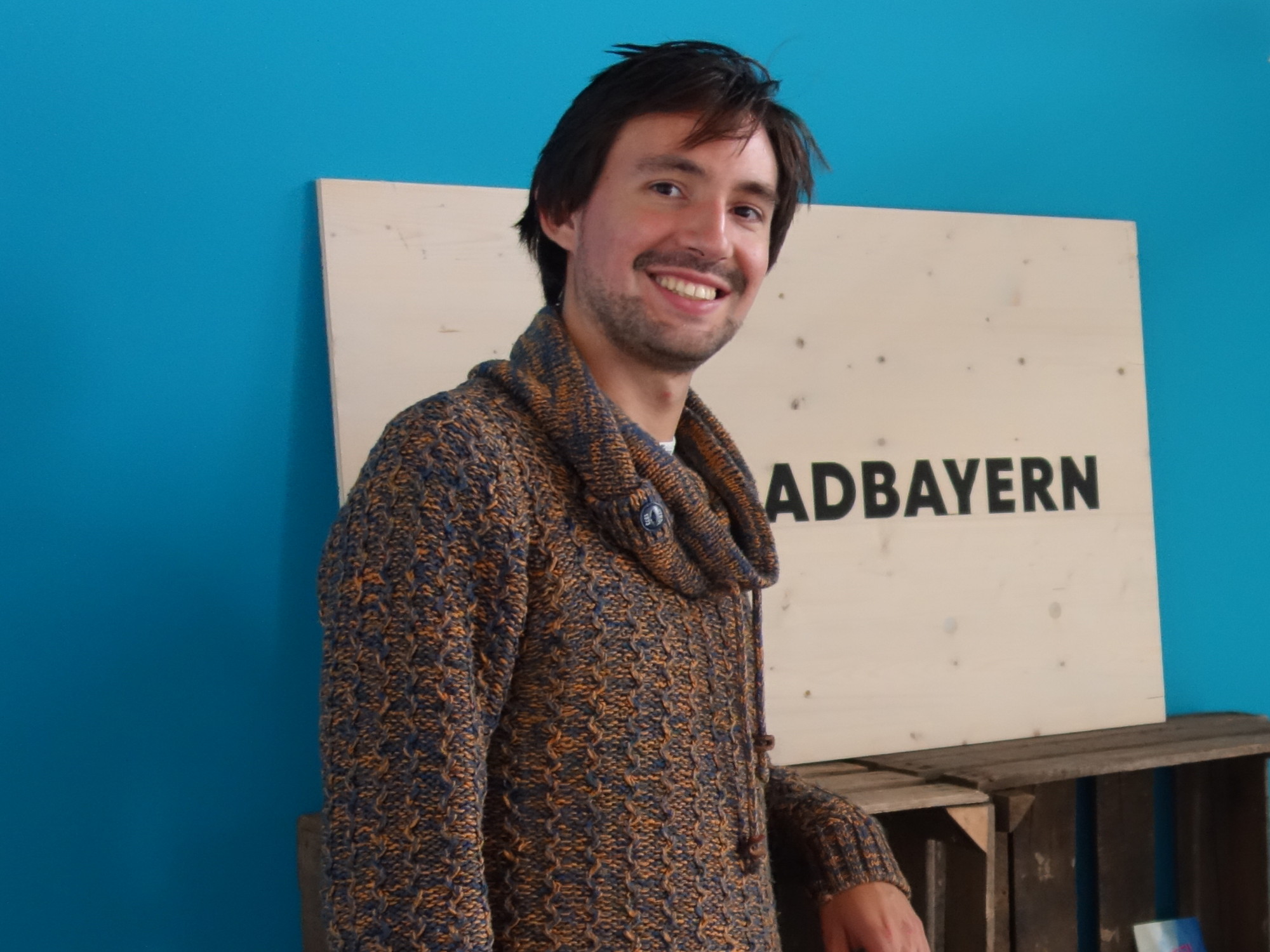
TheBuzzard co-founder Dario Nassal, Photo: Munich Startup
Philipp Heiler, a licensed physician, works in a completely different industry. Heiler founded the company Brainboost Neurofeedback together with his brother Tobias. The startup analyzes its customers’ brain activity and offers coaching based on that data. Especially in the beginning, it was difficult for Heiler to find time for evening events. The founders often stayed in the office until half past eight: “By then, many events are already half over.” He therefore advises:
“Especially at the beginning, when time and personnel resources are tight, you should focus on specific events in your own industry. Of course, I can find interesting people at general startup events who I chat and exchange with. But they often don’t have what I need and I don’t have what they need. We found better matches, for example, at doctors’ meetups where startups, doctors, and everyone from the medical field meet. At least I know that someone I approach works in my industry. That’s an important factor.”
The Brainboost team has an additional time problem:
“With us, everyone in management is also very involved in day-to-day operations. That often makes networking difficult. I spend much of my working time conducting treatments and training. Initially, I had maybe ten percent of my working time left for all business development, including networking. It was important to work efficiently here.”
The benefits of networking often only become apparent later
Looking back, the effort was worth it, Philipp Heiler emphasizes:
“But now the great added value of networking events becomes apparent. In addition to the primary network, the secondary network is also built up. And a year later, someone reaches out because a colleague of theirs saw us somewhere.”

Brainboost co-founder Philipp Heiler, Photo: Brainboost
Here lies perhaps the crux: the gain from the time invested in networking today only materializes in the future. Especially at the beginning, many founders seem to overlook this:
“Networking events are extremely important; we underestimated that at the beginning. We tried to present our main service — neurofeedback — there. But at that time it was still very specific to medical cases and also quite expensive. It was an important step for us to develop a product or showcase specifically for events: a race car track controlled by the brain. That generates attention, and although it’s somewhat removed from our actual product, you get into conversations with people and often find connections.”
Dario Nassal from TheBuzzard reports something similar:
“I think networking is definitely important. There’s no way around it. That’s something we probably need to learn more about now.”
The time the media startup invests in networking has so far depended heavily on the phase it’s in, according to Nassal:
“When we were recruiting, for example, we tried to attend two to three events a week and took turns a bit. But we often thought: we’d rather work on the product and talk to customers. We want to tackle networking more seriously now because we realized how important it is.”
“Just have some fun”
Whether networking ultimately brings desirable results depends directly on the type of event and its attendees: stuffy venues, tedious presentations, or poor scheduling are enough to take the fun out of exchanging ideas for guests. And conversely: the best atmosphere brings nothing if the audience doesn’t fit together. Philipp Heiler says:
“I have great respect for well-organized networking events. There’s always the danger that people mainly show up for the free beer.”
And the medtech founder continues:
“A successful event, for me as a founder, consists of interesting business contacts that lead to uncomplicated cooperations. Forced networking, where both sides have to bend quite a bit to arrive at a common business case, usually only lasts in the short term.”
But despite all the considerations, the physician has one simple recommendation:
“From time to time, you should also just go to an event to have fun. Often that’s exactly when you get into conversation and generate an important contact without having aimed for it.”