Munich Startup: What does your startup do? What problem are you solving?
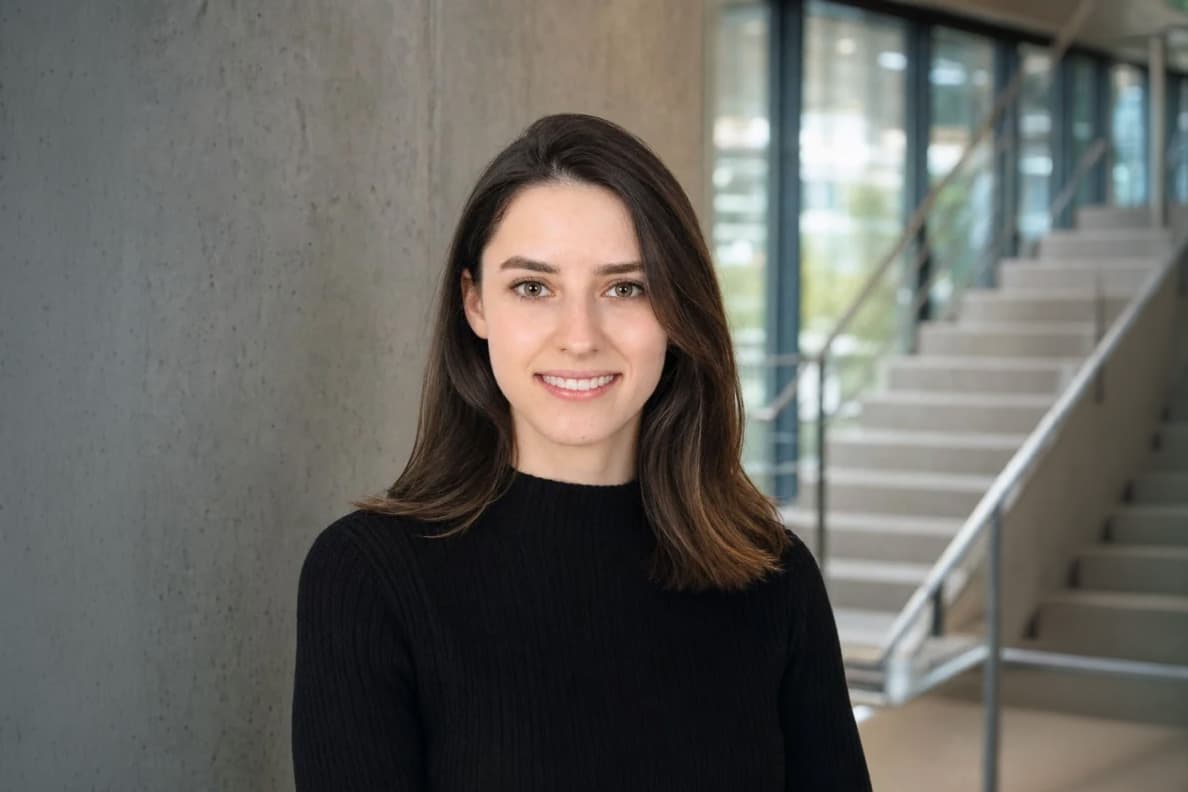
Christina Port, founder of 2NA Fish: Personalized medicine requires personalized diagnostics. It is now well-established that RNA biomarkers play a crucial role in tumor therapy response. (Editor’s note: RNA = Ribonucleic acid). However, existing technologies for analyzing these RNA biomarkers either provide insufficient information or are unsuitable for use in clinical laboratories due to cost and complexity reasons.
With 2NA Fish, we have developed and patented groundbreaking technology for spatial analysis of RNA biomarkers (“Spatial Transcriptomics”). We combine DNA nanotechnology with artificial intelligence, enriching tumor analysis with a new spatial dimension of RNA expression that is currently unavailable. With this, we want to revolutionize therapeutic decision-making in cancer treatment!
Nanotechnology in tumor analysis
Munich Startup: But that’s been around for ages!
Johannes Breulmann, founder of 2NA Fish: If only that were true! Spatial transcriptomics technologies have experienced a real boom in recent years and were even named “Nature Method of the Year” in 2021. However, these technologies have not been suitable for clinical use so far. There are two main reasons for this: Either the technologies are too expensive and complex to acquire, implement, or analyze the resulting images. Or the technologies are not scalable. In other words, they can detect a maximum of three biomarkers simultaneously, but not ten or twenty RNAs, which limits their application. Our technology, on the other hand, works on standard equipment that pathology labs already have and can be integrated into existing workflows.
Munich Startup: What’s your founding story?
Johannes Breulmann: I would call it a “forced coincidence.” After selling my previous startup, InsureQ, I was looking for a new challenge. With InsureQ, we actually wanted to go much further. Unfortunately, we missed finding follow-on funding for our 30-person team. So I wanted to start a company again, ideally in biotechnology, since I’ve been passionate about science fiction and the boundaries of scientific possibility since childhood. Through a former intern of mine who knew about this passion, I then learned about Christina and her team at TUM.
Funding totaling 1 million euros
Christina Port: Exactly. At that time, I had already validated the technology and, through much sweat and tears, raised over one million euros in funding. The very beginning was brutally difficult and I invested all my savings into founding the company. When I felt that the technology was ready to move out of the laboratory, I actively searched for a co-founder with founding experience. The fact that Johannes came to us at exactly that moment was truly a lucky coincidence.
Munich Startup: What have been your biggest challenges so far?
Christina Port: Convincing the very first people to believe in me and the product was certainly one of the biggest challenges so far. In the meantime, we have already won several awards and grants, for example the Medical Valley Award, the Science4Life Business Plan Competition, and the Munich Startup Award. And we have established prestigious partnerships. This makes it somewhat easier to make further good contacts and convince investors of our idea. But the very first steps were, as is often the case, the most difficult.
2NA Fish: First pilot projects launched
Munich Startup: How is business going?
Johannes Breulmann: As an EXIST-funded startup, we are currently not allowed to generate revenue. Nevertheless, we have already started several pilot projects with renowned research institutions. We expect first revenue towards the end of the year, once the EXIST funding has expired and we have completed our financing round. In fact, there is already a waiting list of interested parties for our technology, which we can currently only process very slowly. We already have eight employees, but with additional staff – particularly scientists – we could grow significantly faster.
Munich Startup: How have you experienced the Munich startup location so far?
Christina Port: The network for startups in general and biotech startups in particular is already really good. I especially want to highlight the BioM cluster, through which we have received many relevant contacts and support. But we also feel very well looked after at the TUM Incubator, thanks to Ivana Hecimovic, Joanna Whyte, and many friendly startups. Of course, there is always room for improvement, and the bureaucracy around managing our funding is not always straightforward – but other locations probably have this problem too
.Johannes Breulmann: I see it similarly. What I think is still missing is a kind of co-working lab space in central Munich – for example in the Werksviertel or other places with many startups. The facilities that BioM is currently building with MAxL in Martinsried are a good example. I’d like to see more of that.
Do it yourself!
Munich Startup: Outsource or do it yourself?
Johannes Breulmann: So far, a clear focus on doing it ourselves. This applies both to the core of our technology in the laboratory and to initial customer acquisition. We currently want to learn as much as possible about our technology and customers. Once we feel that the learning curve is declining (does it ever?), we would consider handing over production and distribution of our technology to others.