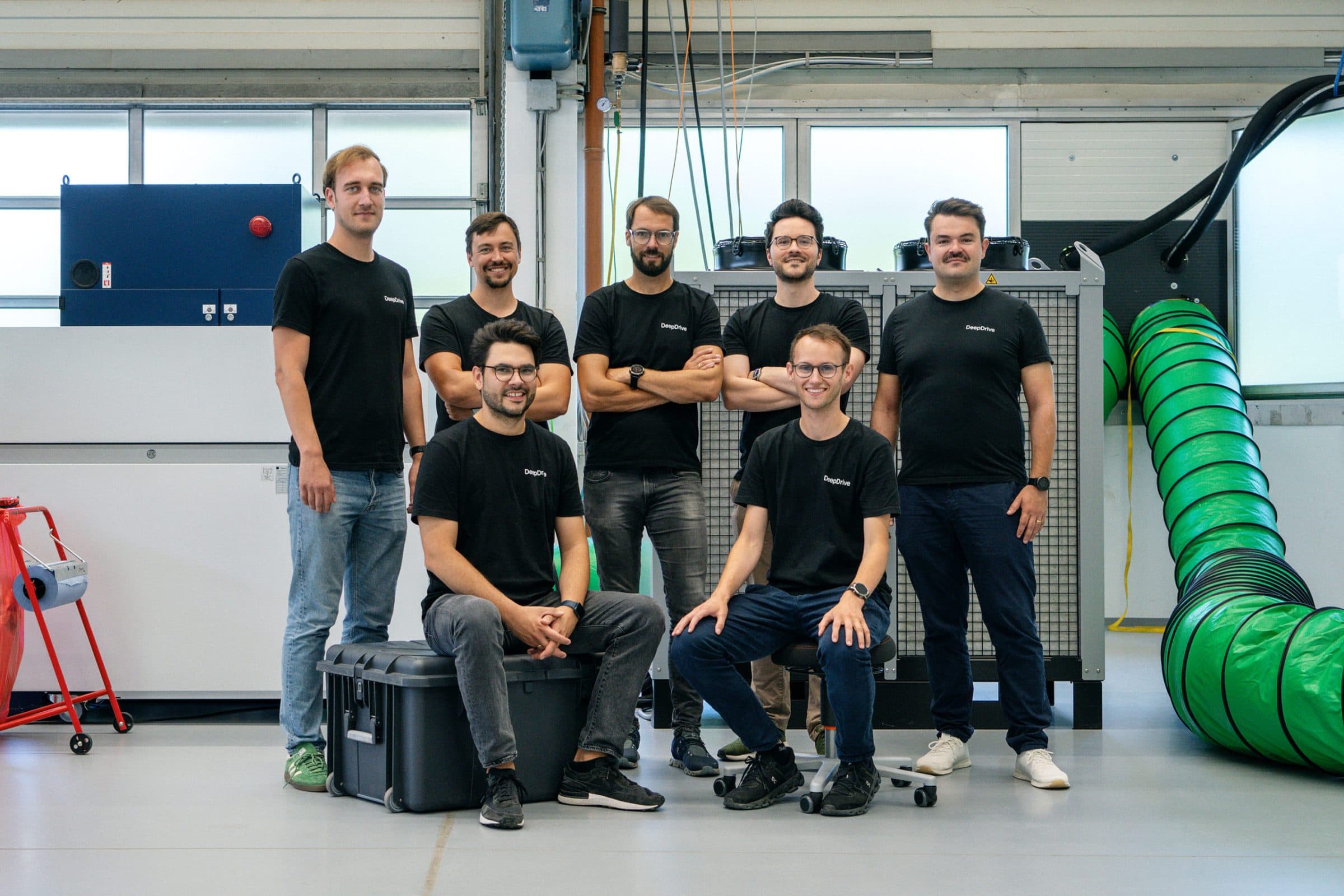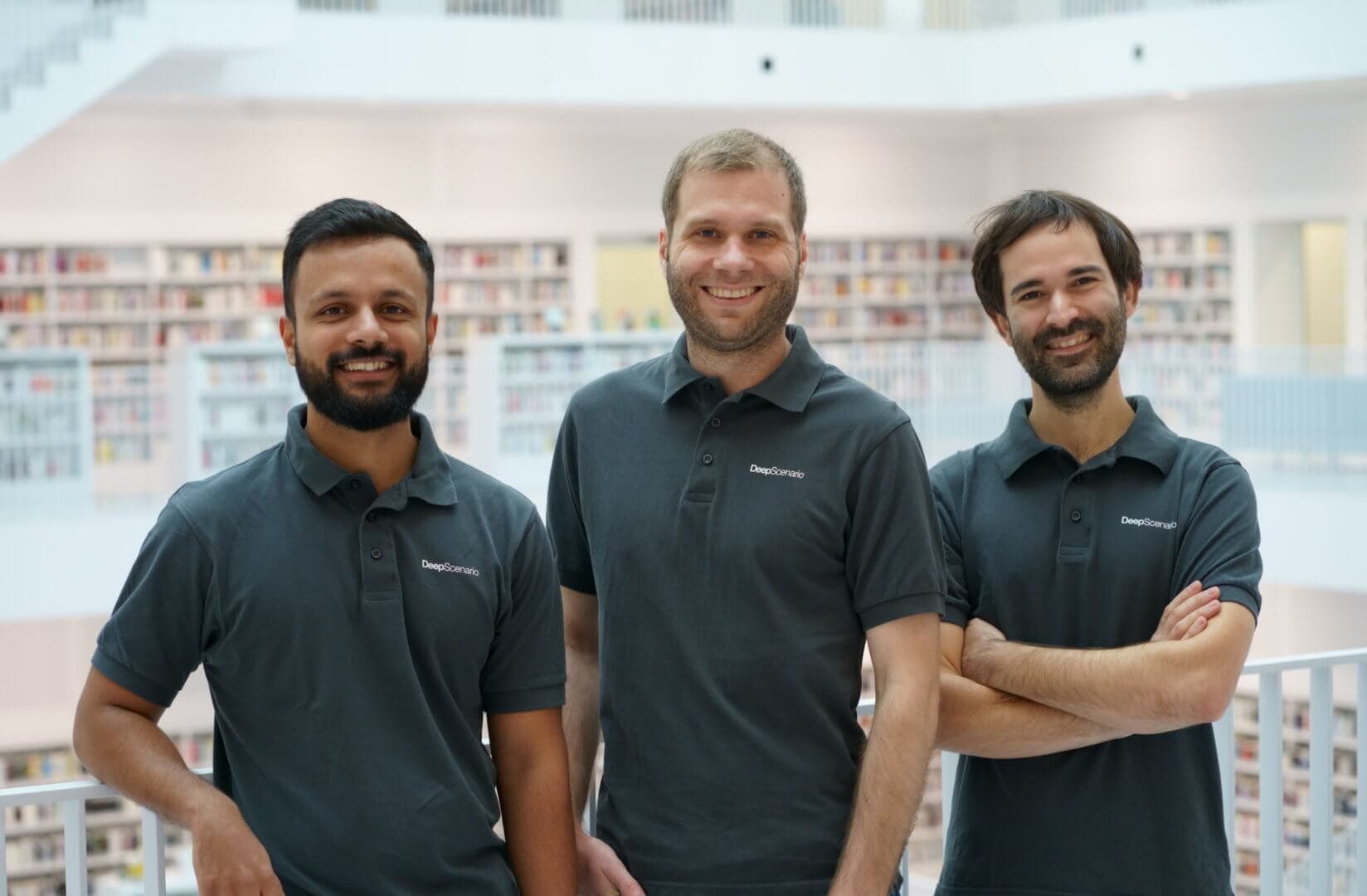

Munich-based AI startup Deepscenario offers with its AI Scenario Engine a platform for training, testing, and validating autonomous systems of any kind. The startup’s focus is on the automotive industry. The platform uses computer vision software that leverages traffic scenarios from cameras and thus does not rely exclusively on synthetic data. With this solution, companies should be able to train, test, and validate their autonomous systems at scale. This allows Deepscenario’s customers to bring autonomous products to market in shorter timeframes and at lower costs. Deepscenario was founded in early 2021 by Holger Banzhaf, Jacques Kaiser, and Nijanthan Berinpanathan.
Co-founder and CEO Holger Banzhaf explains:
“Deepscenario’s technology is industry-leading, and this new funding will enable us to make our solution accessible to customers worldwide. What sets the AI Scenario Engine apart from other solutions is our scenario mining process. We use our groundbreaking computer vision algorithms to gain access to representative distributions of the real world in all three spatial dimensions and the time dimension.”
“Combining the physical world with simulation”
In addition to High-Tech Gründerfonds and Mobilityfund, several business angels have also invested in the Munich startup. Including Michael Bolle, former CTO and CDO at Robert Bosch and now board member of Deepscenario. He says:
“Training and testing autonomous systems exclusively in the physical world is not feasible as it requires too much time and resources to achieve the desired results. Simulation is the key to overcoming these limitations, but today’s simulators are based exclusively on synthetic data that doesn’t truly reflect the complexity and diversity of reality. Combining the physical world with simulation is the only way to bring autonomous systems to market with the speed and cost profiles demanded by the industry.”
Johannes Weber, senior investment manager at HTGF, adds:
“Deepscenario’s product is used as a virtual test bench where automotive manufacturers, suppliers, technology companies, and certification bodies can validate autonomous systems. For example, thousands of driving variants can be run through a challenging two-lane roundabout, generating important insights into the system’s safety and performance.”