
Update September 2025: Aiina Robotics has since renamed itself to Sitegeist.
Munich Startup: What does your startup do? What problem are you solving?
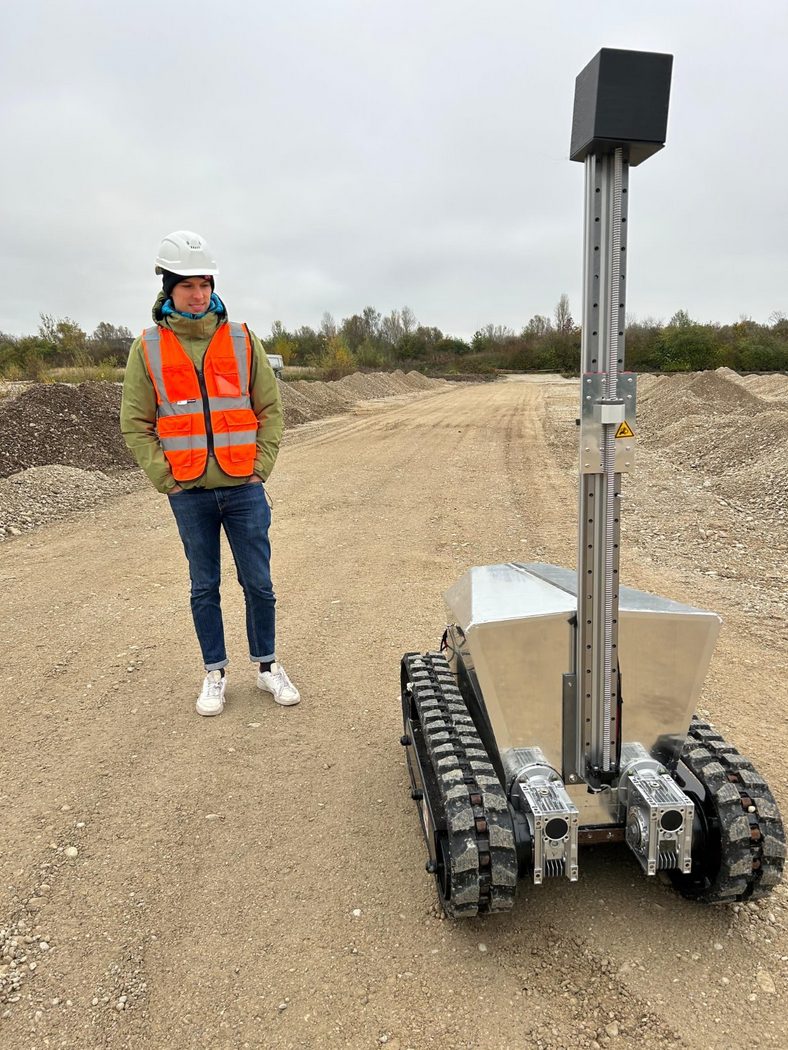
Julian Hoffmann: Aiina Robotics helps construction companies increase productivity on construction sites and address labor shortages. We develop intelligent, modular robots with advanced safety features that enable our technological solution to navigate complex, changing environments.
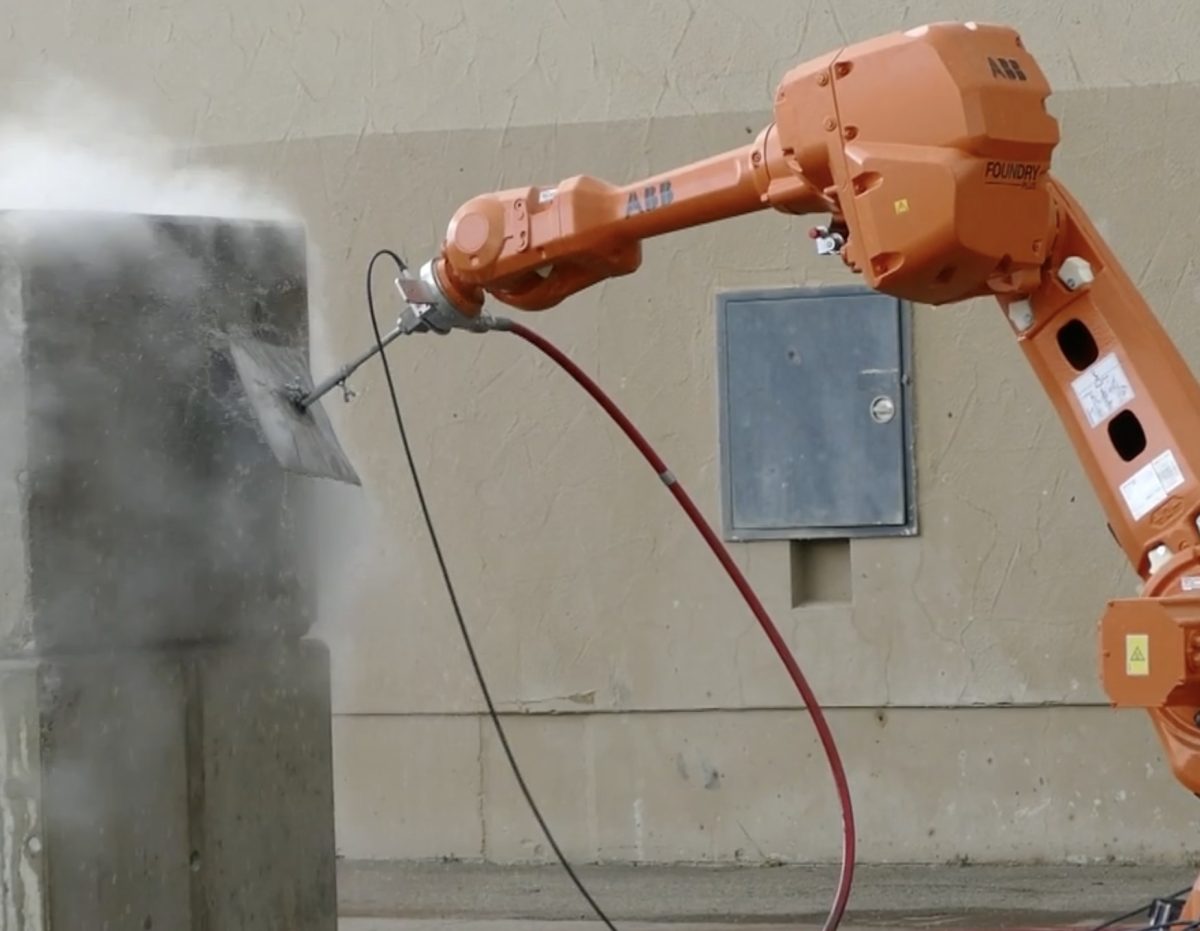
Our first use case is also the toughest job on the construction site: high-pressure water blasting for concrete restoration. This needs to be done to restore old concrete that is cracking. It’s an extremely demanding job that you can do for a maximum of half an hour at a stretch, after which you need an equally long break. In this work, we shoot water at supersonic speed and 3,000 bar pressure from a lance onto the concrete. You’d much rather have a robot do that kind of work once they’re capable of taking on the job!
New kind of safety technology for working with robots
Munich Startup: But that already exists!
Julian Hoffmann: We differentiate ourselves from competitors through revolutionary safety technology that was developed at the Chair of Robotics, Artificial Intelligence and Real-Time Systems at TU München. As a spin-off from our chair, we enable our robots to work safely side by side with humans. Additionally, our software-based approach makes it possible for the first time to automate the restoration of complicated surfaces such as corners, edges, and columns, which is technological pioneer work.
Munich Startup: What’s your founding story?
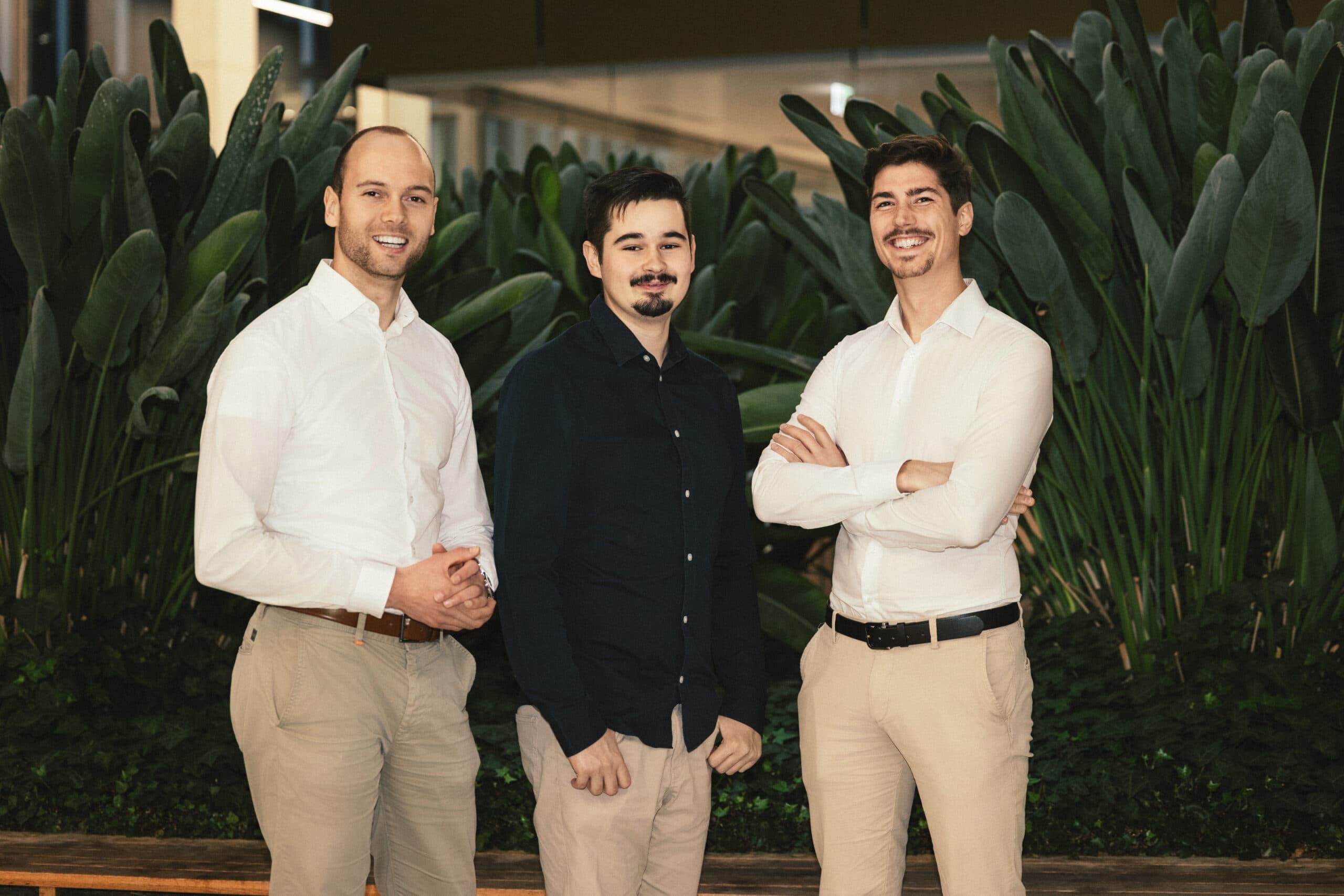
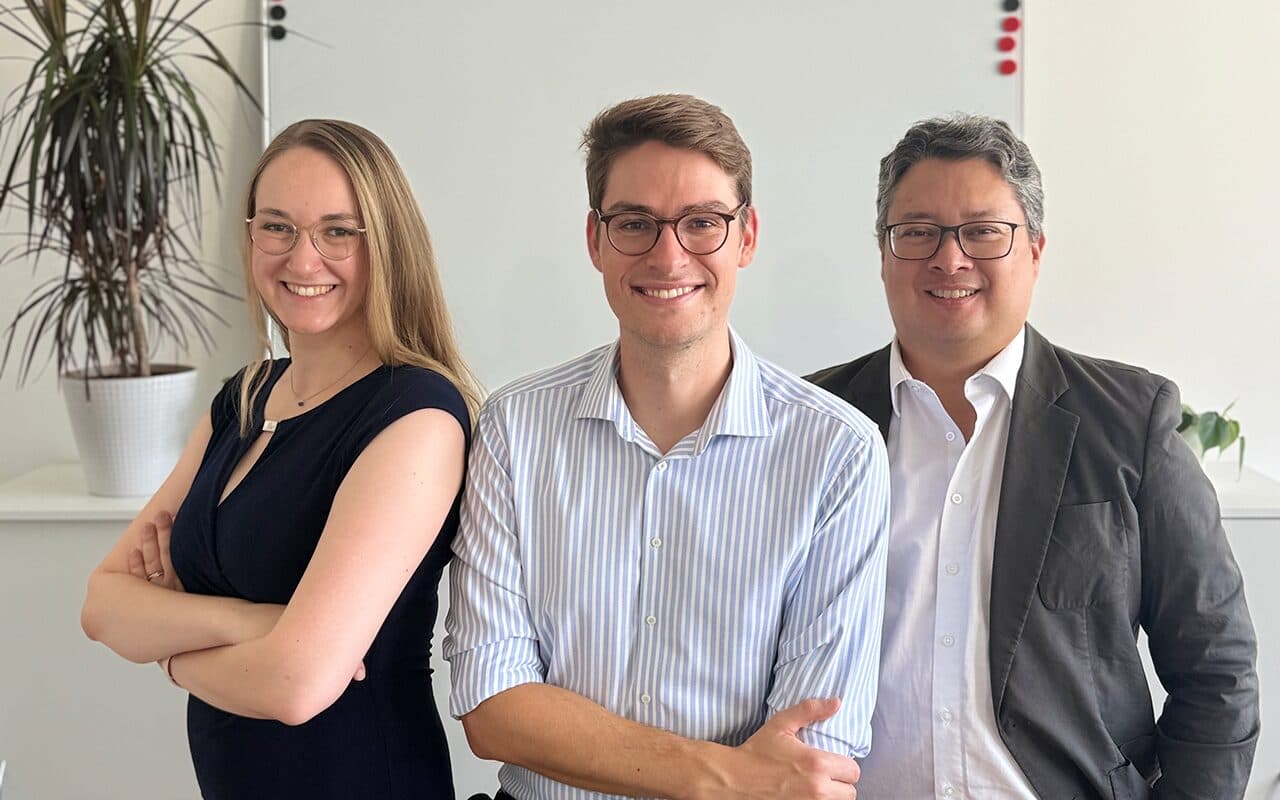
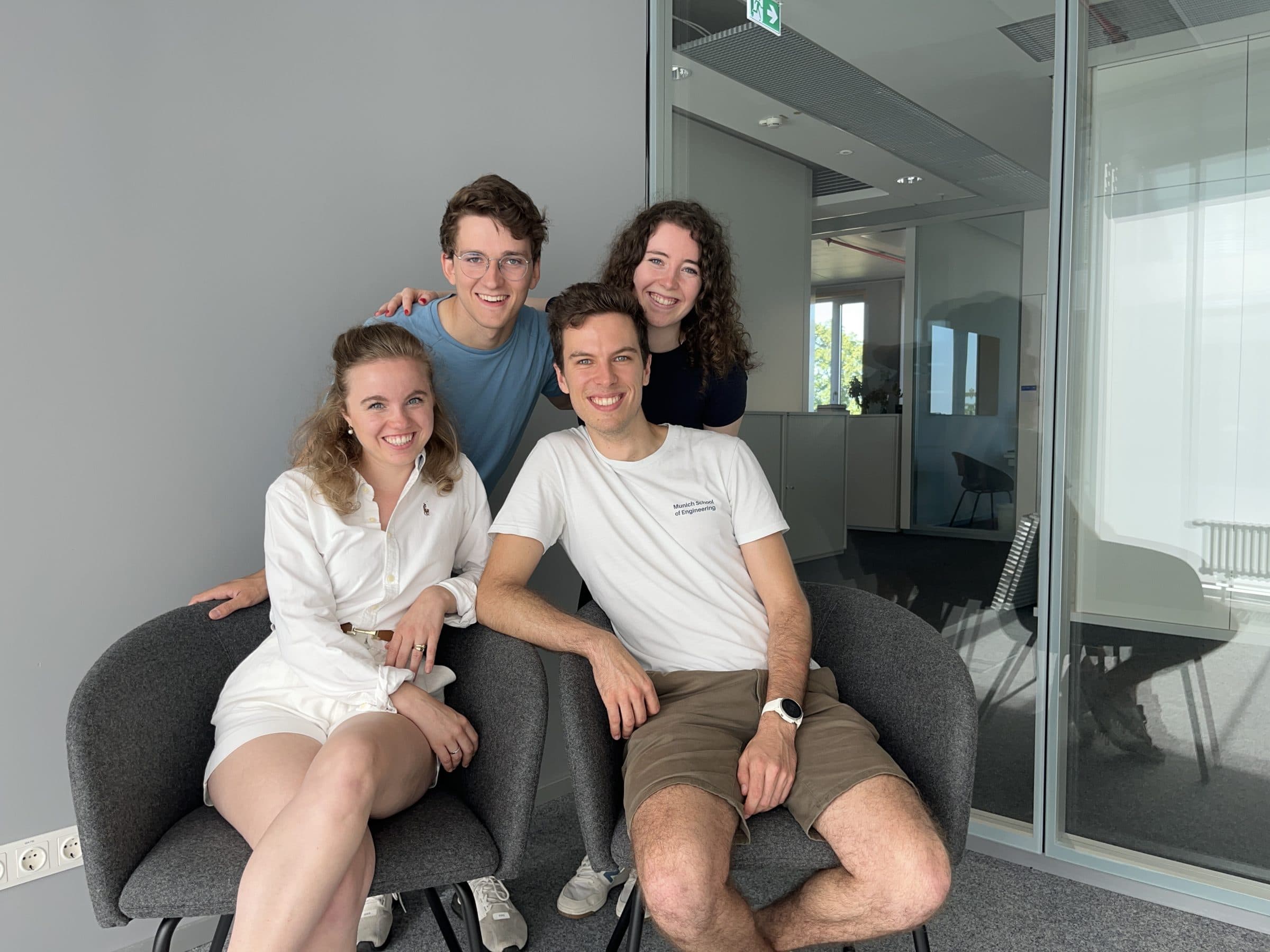
Julian Hoffmann: The founding started with my bachelor’s thesis, which I wrote under our professor Matthias Althoff, who accompanied us through the spin-off. I brought my co-founder Claus Carste on board right after that and completed the team with Lena Pätzmann and Nicola Kolb while pursuing our master’s degree in Robotics and AI at TUM. From the start, the topic was very closely aligned with industry, where we looked for existing problems. The team simply worked from the beginning: it was clear who was taking on which tasks and where each person’s strengths lay. We were very quickly certain that we wanted to tackle this challenge together.
Aiina: From bachelor’s thesis to robotics startup
Munich Startup: What have been your biggest challenges so far?
Julian Hoffmann: Our biggest challenge is – and will continue to be – building a technically robust product that can handle the conditions on the construction site and works reliably. To do that, we need to test, test, test. That takes perseverance.
Munich Startup: Where do you want to be in one year, and where in five years?
Julian Hoffmann: In one year, we want to have a functioning product on the construction site that significantly improves the lives of our customers. In five years, we want to have developed our vision of autonomous robots on the construction site to the point where our modular system can support a large part of the building renovation process, so that we can restore our desperately aging infrastructure in Germany more quickly.
Munich Startup: How have you experienced Munich as a startup location so far?
Julian Hoffmann: I can’t imagine a better location – from the research-intensive environment of TUM, which we’re spinning out from, to TUM Venture Labs to UnternehmerTUM, you can feel the support everywhere. It’s great to be surrounded by entrepreneurial people who are eager to pitch in and want to achieve something.
Munich Startup: Quick exit or long-term commitment?
Julian Hoffmann: “Hardware is hard” – we have a long-term commitment and believe that patience pays off. We want to build a sustainable, stable company that drives real change in an industry that hasn’t been automated yet. That can’t happen overnight, but we feel well prepared for the challenges ahead.