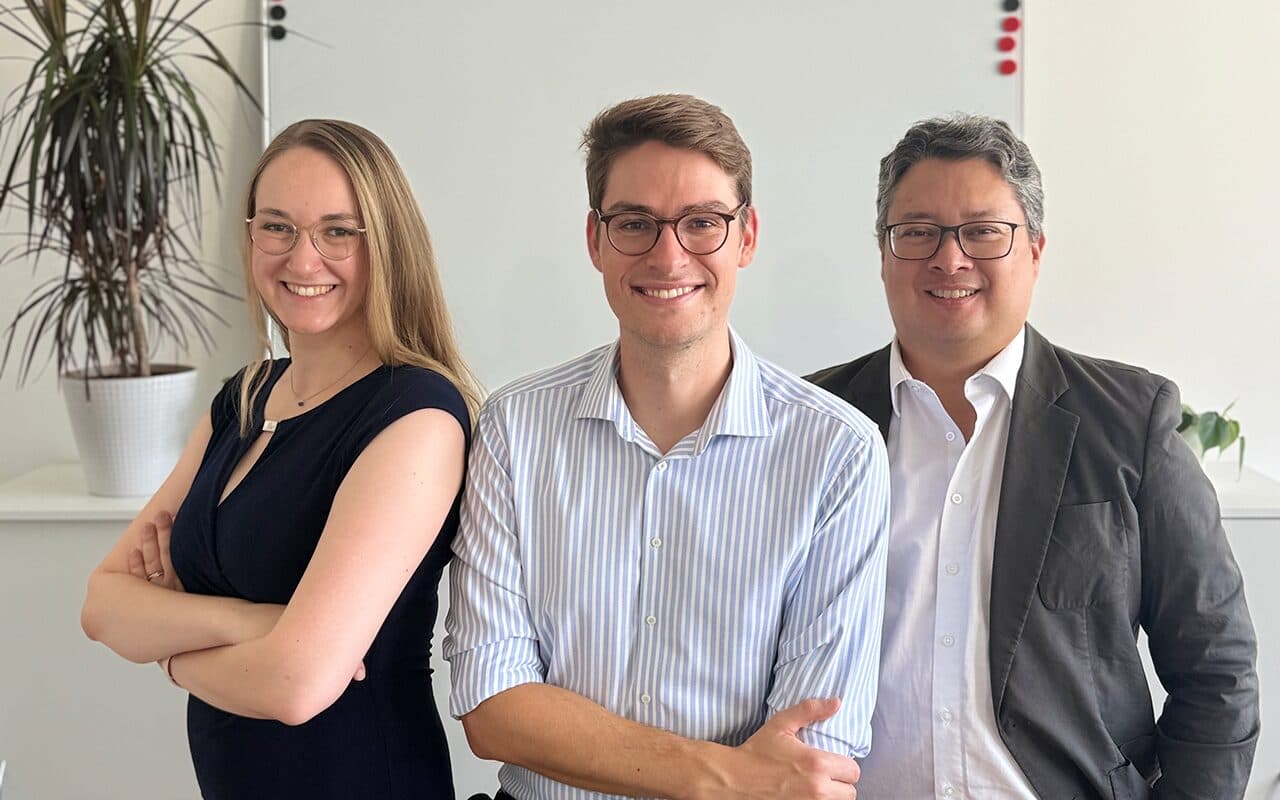

Munich Startup: What does Atopia do? What problem are you solving?
Annabell Vacano, Atopia: While access to culture is essential for psychological well-being, inclusion, and even a human right, 12 percent of Europeans and 34 percent of Americans lack it. Atopia is a metaverse for art and culture – a platform accessible via VR headset or any web browser – where all museums, galleries, landmarks, and cultural events can be experienced immersively from home.
Munich Startup: But that already exists!
Annabell Vacano: There are already two-dimensional platforms like Google Arts & Culture or Europeana that make knowledge and learning about art accessible. However, what’s missing is the experiential factor, which is the main reason most people engage with culture.
There are also many virtual (VR) productions in the cultural sector. What’s lacking is a platform to enable their discoverability and distribution. Existing metaverse platforms don’t suit the complex target systems of cultural institutions – they’re often speculative markets, visual quality isn’t the top priority, and important features are missing. Moreover, valuable network effects can only be created if a platform has a certain degree of specialization – none of the app stores for common VR headsets have a suitable platform for this.
Munich Startup: What’s your founding story?
Annabell Vacano: Valentin Diehl and I have known each other since we coincidentally moved into the same shared apartment several years ago. We worked on almost all our projects together. The idea for Atopia came up during a joint brainstorming session about how to design digital culture in a way that creates actual experiences.
15 cultural institutions cooperate with Atopia
Munich Startup: What have been your biggest challenges so far?
Annabell Vacano: As a platform, we faced the typical chicken-and-egg problem: we needed partner institutions to develop our platform and attract users, but at the same time also a platform and users to be interesting to institutions. Through a lot of effort and numerous favors, we managed to win 15 renowned cultural institutions as launch partners in the first few months – this not only showed us there’s actual demand for our solution, but also gave us the necessary momentum to close our pre-seed round, which we recently completed with funds like FOV Ventures, a renowned fund focused on metaverse investments, as well as Heartfelt (formerly APX) and several angel investors.
Munich Startup: Where do you want to stand in one year, and where in five years?
Annabell Vacano: In one year, we want to have launched, generated first revenues, and have a recurring user base. In five years, we want to be one of the top 10 entertainment platforms in the XR space.
Munich as a new XR hotspot
Munich Startup: How have you experienced Munich as a startup location so far?
Annabell Vacano: Munich is becoming a hotspot for XR – Apple has set up one of its only two European test centers for the Vision Pro here in Munich, and Meta announced just a few weeks ago the establishment of a significant hub for immersive technologies here. We’ve received tremendous support from the TUM Venture Labs with Antoine Leboyer, but also from Wavelab with Antonia Wach – a culture-tech-oriented incubator – and UnternehmerTUM. I couldn’t imagine a better location to launch an XR startup today!
Munich Startup: Outsource or build in-house?
Annabell Vacano: I think you don’t have to reinvent the wheel, and if there’s a good software development kit somewhere, we’re very happy about it – but we develop all the essential components of our technology in-house. This allows us agility, freedom, and security – and ensures our high quality standards.