
Munich Startup: What problem do you solve?
Daniel Angloher, Head of AI & Co-Founder: We enable contactless tracking of vital signs such as heart rate, respiratory rate, blood pressure, and oxygen saturation using a standard camera. Our goal is to make health information accessible wherever a screen or camera is already present: in hospitals, in telemedicine, or, looking ahead, in everyday life.
Munich Startup: What is it that only you can do today?
Daniel Angloher: What sets us apart is the combination of medical device approval, proprietary AI technology, clinical validation, and seamless software integration. Our technology is robust and works not only under ideal conditions with ring lights, but also in the hustle and bustle of a real emergency room, at home during a video call with a doctor, and even in a car with shifting shadows and constant movement.
New Access to Prevention and Early Detection
Munich Startup: What triggered the founding?
Daniel Angloher: Our healthcare system is increasingly overburdened. With our technology, we want to help make medical care more efficient while improving prevention and early detection. The first lever is the measurement of vital signs itself. It is one of the most common processes in healthcare, but today it usually requires multiple devices, time, and often medical staff. We are working to make this process as easy as looking into a camera.
The second lever is even more fundamental for us: making health data passively available. With a wearable, you have to make a conscious decision to buy an additional device, wear it, charge it, and use it continuously. Cameras, on the other hand, are already everywhere—in smartphones, laptops, tablets, or cars.
Our vision is therefore to integrate vital parameter measurement into existing interactions without people having to launch an additional measuring process. For example, we are working on enabling blood pressure measurement directly as part of Face ID on a smartphone. While I’m unlocking my phone anyway, a health-relevant measurement could take place at the same time.
When such measurements take place regularly and without any additional hurdle, an entirely new approach to prevention and early detection emerges: changes could become visible long before someone consciously goes to the doctor or decides to measure their vital signs.
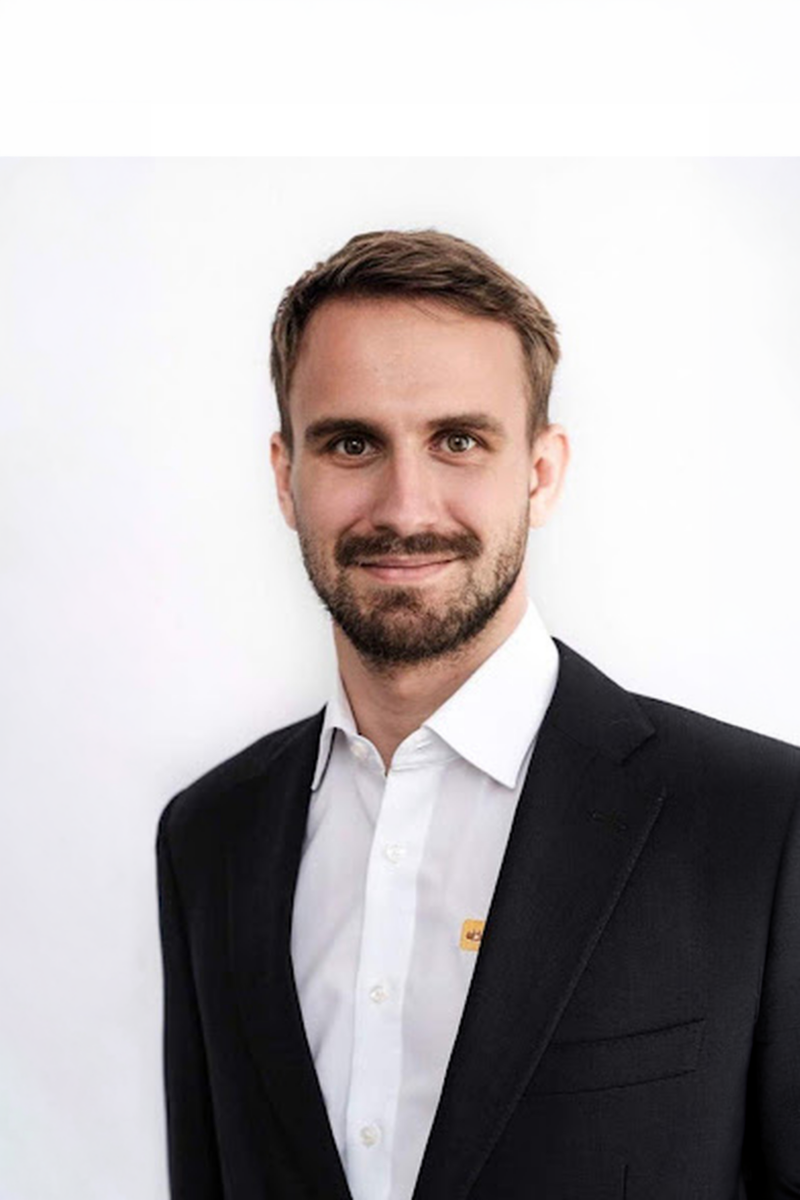
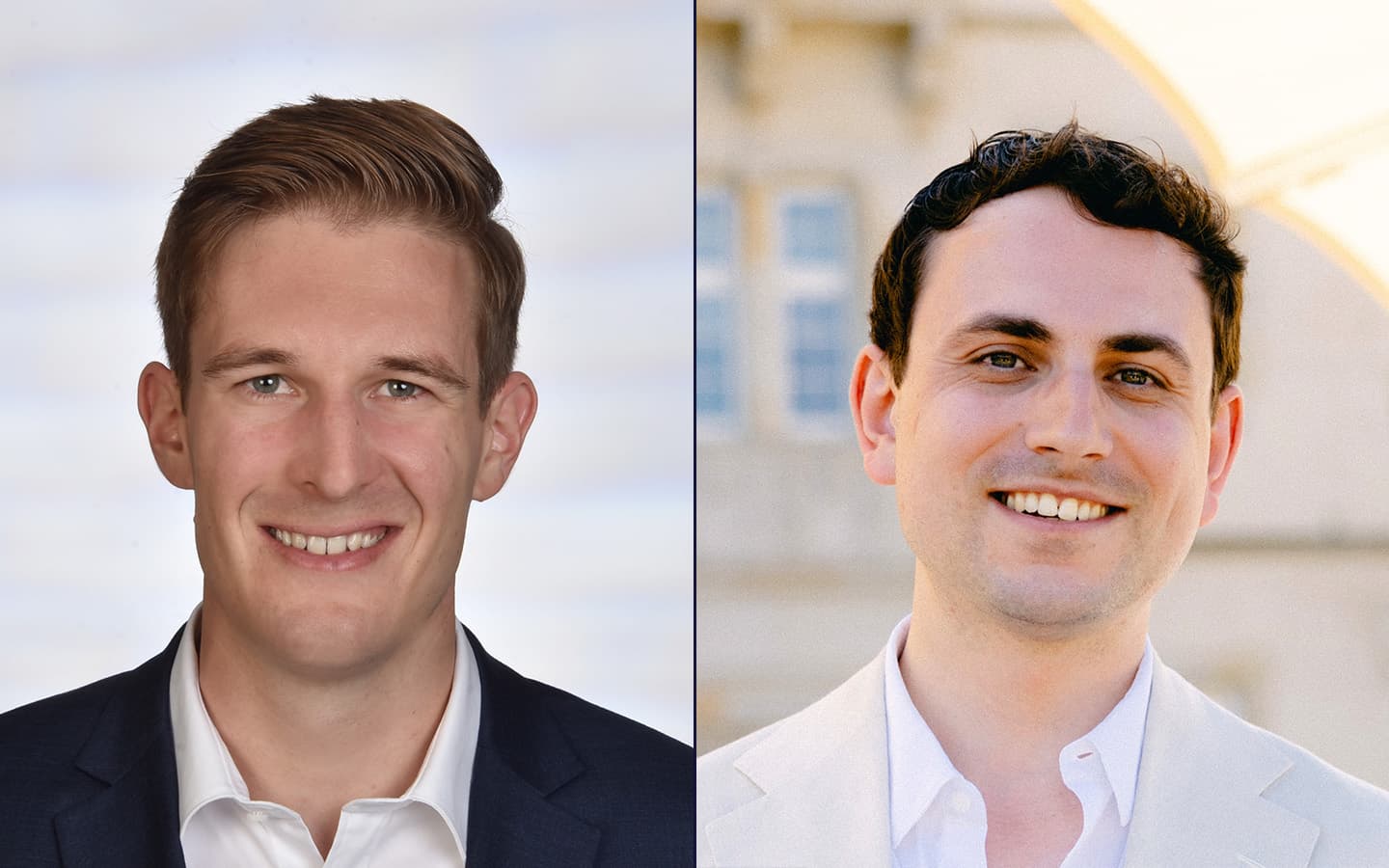
Caire Health AI was founded in 2023 by Daniel Angloher, Hamdi Belhassen, and Mohtadi Ben Fraj.
Angloher studied mechanical engineering and computer science in the US and subsequently completed the Robotics, Cognition and Intelligence master’s program at TUM.
His career path has taken him to BMW and to Precibake as a Senior Data Scientist, among others.
At Caire Health AI, he serves as Head of AI.
Munich Startup: Was there a moment when you thought about giving up?
Daniel Angloher: Not one single big moment, but a great many small ones. Medical technology entails long development cycles, regulation, clinical trials, and at the same time the reality of a startup with limited resources. There were definitely situations where we asked ourselves whether we shouldn’t have picked an easier problem to solve.
Munich Startup: How will you know in a year’s time that you’re on the right track?
Daniel Angloher: For us, the most important proof would be that our technology has become part of everyday medical practice—that patients are measured with it daily, clinics and software partners seamlessly integrate it into their workflows, and the technology delivers measurable value.
If, in a year’s time, we no longer have to talk primarily about whether camera-based vital signs work, but rather about where they are being used, we would be on a very good track.
Europe as a location has room for improvement from a founder’s perspective
Munich Startup: Would you found a company in Munich again, and why?
Daniel Angloher: That’s actually a tough question. If I were to start a company in Europe again, I’d definitely be very happy to do it in Munich. For me personally, Munich is home, and I also firmly support many European values. For example, I wouldn’t readily accept different labor standards or the loss of our social safety net just for better economic conditions.
However, if you look at the question purely from a founder’s perspective, you also have to be honest: in other regions, there are sometimes significantly better conditions for building a fast-growing technology company, especially when it comes to access to capital, the entrepreneurial mindset, and regulatory frameworks.
Munich offers a very strong research landscape, excellent universities, hospitals, industry partners, and a high quality of life. For me, therefore, the question isn’t whether Munich is a good location, but how we can manage to make Europe as a whole an even better place for ambitious technology companies.
Munich Startup: Focus or diversification?
Daniel Angloher: For us, that’s not a contradiction. Our focus is very clearly on a foundational AI layer for physiological measurements, with the long-term goal of making this functionality available across as many devices as possible.
We don’t want to build a separate product for every single use case. Instead, we want to create a technology that developers can integrate anywhere: in a telemedicine app, on a care facility’s tablet, in fitness equipment like a Peloton bike, or directly in a vehicle. So while the applications can be very diverse, the technological foundation remains the same.
Therefore, our focus isn’t limited to a single industry, but on a clearly defined core technology: physiological information should become a fundamental software feature available on any camera-enabled device.