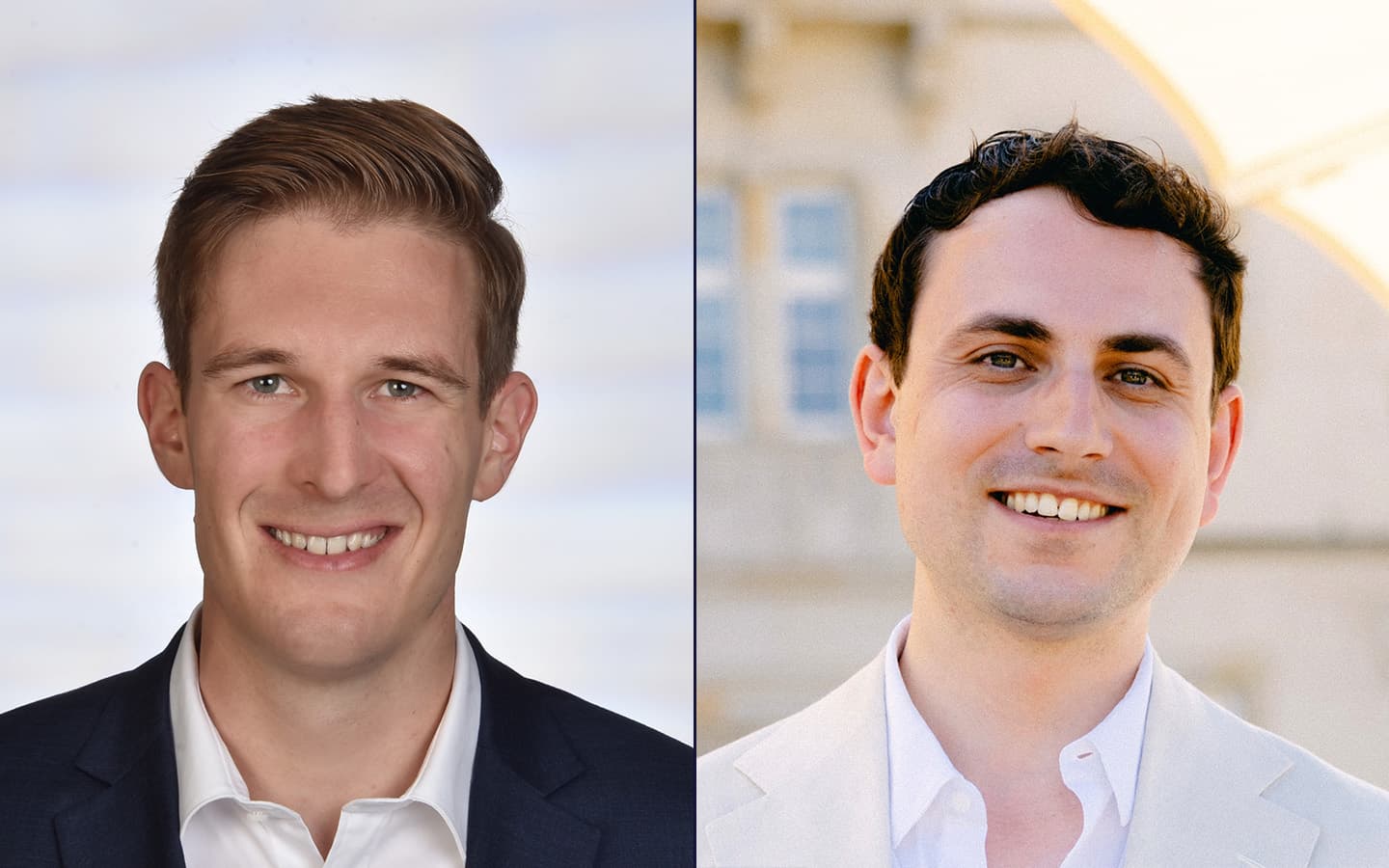
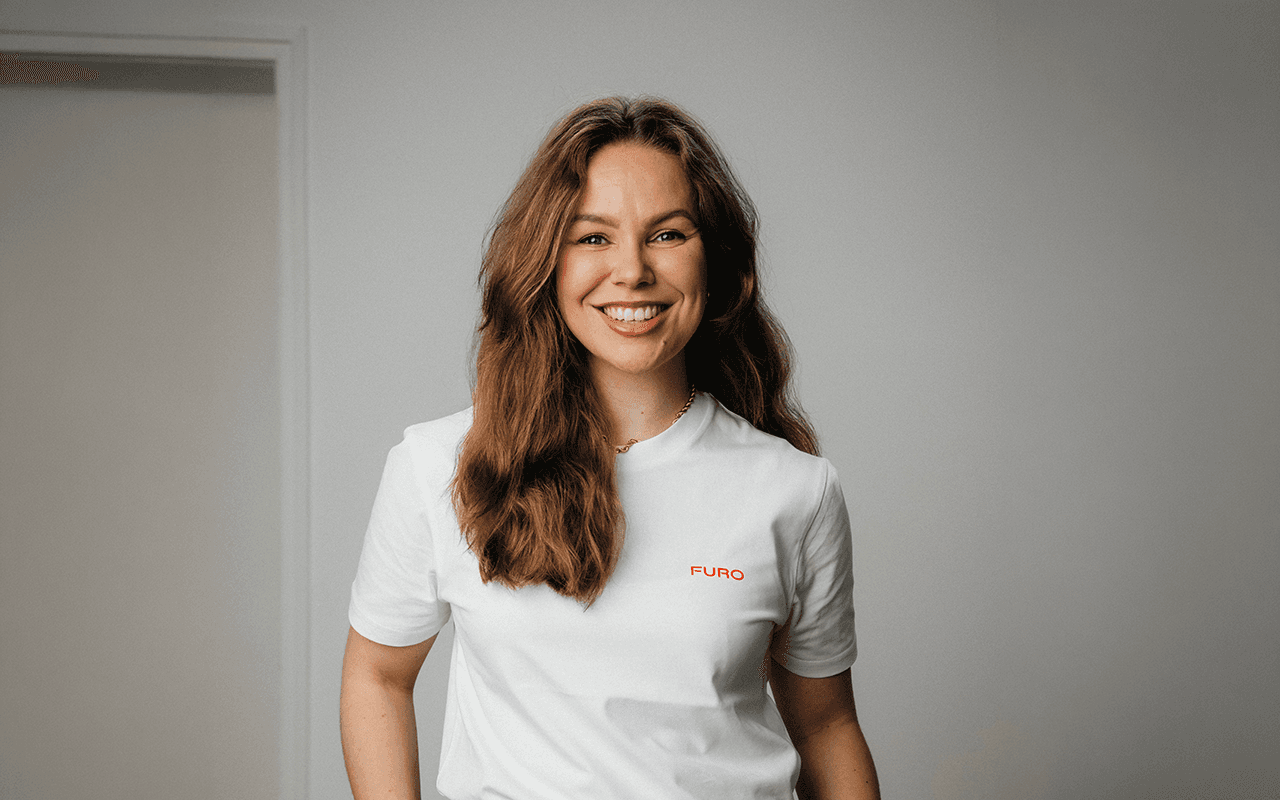
Munich Startup: Mr. Kranz, you are the new head of the Competence Team for Culture and Creative Industries (KuK) at the Landeshauptstadt München. Before we get to that, could you please outline your professional background for us?
Olaf Kranz: I’m trained as a sociologist and came to the culture and creative industries – or KuK for short – through a somewhat unconventional path: my wife, who is a fashion designer, and I founded a fashion label together about 10 years ago. I found the business so fascinatingly counterintuitive and the fashion industry so intriguingly distinctive that I gradually incorporated these experiences into my teaching and research at the University of Regensburg. There, I examined the international discourse around KuK to better understand the fashion business and industry in the broader context of KuK. Most recently, I scientifically supported and advised an EU project at the University of Regensburg on the relationship between KuK and urban development in medium-sized cities. So I have, on the one hand, a practical approach to KuK from an entrepreneurial perspective and, on the other hand, a theoretically, conceptually, and methodologically reflected approach from an academic perspective.
Munich Startup: For readers not yet familiar with the KuK’s work: what responsibilities fall under this department’s remit?
Olaf Kranz: In 2014, the city council tasked the KuK team with creating favorable economic conditions for freelancers and businesses from all eleven sub-sectors of KuK at the municipal level. By the way, the resolution was titled “Resource of the Future.” Eleven sub-sectors is a broad field. Our profile is correspondingly wide-ranging. It essentially covers all the tasks found in general business promotion, but specifically tailored to the KuK sector and its particular characteristics. We advise, train, promote, network, internationalize, raise the profile of the industry, operate a KuK business incubator at the Ruffini House and Serendipity Place, support crowdfunding campaigns, drive cross-innovation, participate in EU projects of the city such as the current New European Bauhaus project NEBourhoods, and assist KuK businesses in finding spaces. Beyond that, we handle administrative work. We prepare council resolutions, write position papers, develop funding frameworks, and answer inquiries from interested citizens and district committees.
Cross-departmental team spanning multiple departments
Munich Startup: What exactly does your role as head of the Competence Team entail?
Olaf Kranz: Given this complex landscape of diverse action areas within my team, my primary task is to work with the team to develop and maintain a strategic direction. Beyond that, there’s a wide range of operational and current issues and decisions. In addition to what I just mentioned, there are tasks related to staff and team development, and coordination with the departments whose employees are part of our matrix structure. My team, the CT KuK, has the distinctive feature of being a cross-departmental team spanning multiple departments to leverage synergies of our mandate. So I coordinate fairly frequently with the Referat für Arbeit und Wirtschaft, the Cultural Office, and the Municipal Department. Besides that, I need to write speeches, prepare assessments, and maintain contact with state and federal ministries as well as with the Bavarian, federal, and European networks of municipal KuK promoters. Finally, there’s the representation of the team and the city of Munich at events, as well as networking with international stakeholders.
Munich Startup: And what target audience is in focus?
Olaf Kranz: The most important target audience is the urban society as a whole. KuK fulfills important functions in a city’s ecosystem. Through its contribution to cultural production, it enhances the city’s attractiveness, makes it worth living in, defines urban identity, and helps the population adapt to and manage societal transformations at the municipal level.
In a narrower sense, we are accountable to two target groups. First, of course, to the city council, from which we receive our mandate. Second, to our clientele, the KuK sector, whose economic conditions at the municipal level we help improve. When examining the KuK sector, it’s customary to distinguish between the creative act at the beginning of the value chain and the commercialization of creativity up to the point of consumption. We find this distinction in each of our eleven sub-sectors; each sector is internally differentiated and intertwined along value chains. Since all value creation in KuK ultimately rests on the creative act, our greatest focus lies here. This has also been the emphasis throughout the history of the CT KuK. What’s new is that going forward, within our capacity, we also want to increasingly adopt a value chain perspective and look at companies that operate closer to the market and create value by helping to reconcile aesthetic creativity in the creative act with market demands.
Munich in second place, ahead of London and Berlin
Munich Startup: What visions do you bring to KuK in Munich?
Olaf Kranz: I have several future visions for Munich and its KuK in mind. First, I think it would be great if Munich’s image as a Creative City had greater resonance and thus reflected the actual strength of the KuK sector here. It’s still not widely known that Munich, measured in relative terms and figures, ranks second among European million-city metropolises according to the European Commission’s “Cultural and Creative City Monitor,” just after Paris and ahead of London and far ahead of Berlin. One way to increase Munich’s resonance is through physical hub structures for individual KuK clusters that make aesthetic creativity visible in this city, similar to how Paris has done with its fashion hub La Caserne or Berlin with its games hub. Another tool for greater visibility of Munich’s KuK is high-impact events or festivals that publicize Munich’s strengths far and wide.
Making what already exists visible is not yet a vision. Rather, I derive it from the future successful mastery of current challenges.
The vision is a Munich where new companies keep founding or settling in all sub-markets of the KuK sector because the city of bohemia offers enough affordable experimental spaces to develop exciting new aesthetic positions stemming from subcultural and youth cultural as well as high cultural developments that find their markets – that is, they encounter audiences receptive to aesthetic novelty and eager to experiment. On this foundation, Munich’s currently strong position in European KuK can reproduce itself and strengthen further. To achieve this, ideally, we must on the one hand give all social groups in urban society equal opportunity for self-realization in aesthetic expression and for translating these aesthetic positions into business models. On the other hand, the city’s liberal identity should open up more strongly to sub- and youth cultures.
On the path to this vision, we must find solutions to the challenge of very high living and rental costs. There’s a danger that creatives engaged in producing aesthetic novelty will be displaced from the city because there are barely any affordable spaces within city limits for them. I’ve already heard many anecdotes where members of the young bohemian generation leave the city for cheaper cities. But the problem underlying these anecdotes is general: the economic earning power of many business models in KuK typically requires a relatively long incubation period and, even after breaking even, often remains far below the revenues and returns of companies that live from their technical and technological creativity and increasingly characterize Munich.
“Pay more attention to migrant KuK businesses”
I’m also concerned with the question of how to promote the founding of migrant businesses in KuK. Munich is, on the one hand, a significant destination city for migration; on the other hand, a disproportionately large number of businesses in the KuK sector are founded within the migrant economy. There’s great potential here to develop interesting new aesthetic perspectives through the fusion of multiple cultural influences. So paying more attention to the dimension of migrant KuK businesses is also an important goal.
KuK businesses require special success conditions. An important project at the CT KuK is to develop the Ruffini House Creative Hub into a flagship project. Here, we’re experimenting with creating conditions for KuK business development that accommodate the very special development and growth conditions of KuK businesses. Successful business models here typically rely on a recognizable aesthetic signature rather than patents. An aesthetic signature is only achieved through a very long-term process. On the other hand, we want to develop a better understanding of the special success metrics in the KuK sector. If we apply the success expectations developed in the tech startup sector to KuK businesses, we can only disappoint them: rapid growth, rapid scaling, rapid financing rounds, quick exits, and so on. In the KuK sector, things generally move more slowly and in more granular fashion. When a company at our Ruffini House transforms from a GbR partnership to a GmbH to enable growth to ten employees, I consider that a very significant and valuable entrepreneurial success.
A long-term goal for my team is to expand the interfaces and networking between KuK and the technology-driven startup scene and make the boundaries between the two ecosystems more permeable to communication and inspiration, so that the hoped-for positive effects like cross-innovation and interdisciplinary cooperation actually become more of a reality than they have been. The same goal – creating interfaces, networking, and more permeable boundaries – can also be formulated for the relationship between the KuK sector and more traditional businesses in the city.
Munich Startup: In your opinion, how is Munich’s culture and creative industries sector positioned? In which areas is it already strong and where is there room for improvement?
Olaf Kranz: Unfortunately, the figures for KuK in Munich are somewhat outdated. The most recent KuK report at city level discusses figures from 2016. This prepared the picture from the already-mentioned EU Commission’s Cultural and Creative City Reports from 2017 and 2019. In national and international comparison, KuK in Munich ranks very high in relative figures: high-performing, relatively large companies with greater value added and more revenue per employee than the national average or compared with European metropolises like Milan or Amsterdam. There is substantial presence in all eleven KuK sub-markets. Worth highlighting as disproportionately strong are perhaps the media cluster belonging to the broadcasting market, the publishing industry, journalism, advertising and marketing, as well as the art market. For example, while Berlin has the most publishing houses in Europe, Munich is Europe’s strongest publishing location measured in sales, employee, and value creation figures.
Currently, however, some KuK businesses are in a difficult phase. While there are some KuK companies that performed well even under Corona conditions, it’s an open secret that the KuK sector was particularly hard hit by Corona. More than that, we’re in quite a severe storm: many companies depleted their reserves during Corona or even went into debt; meanwhile, Corona aid programs have ended; some companies must repay Corona assistance; as a consequence of Corona, there’s significant inflation in supply chains; then there’s the energy price crisis, the war in Ukraine, uncertainty, and reduced consumer spending, which particularly affects cultural goods. Businesses complain of declining audiences and falling sales. I suspect that under these conditions, there will be a shake-out in nearly all sub-markets, unfortunately.
Munich Startup: What role do startups play?
Olaf Kranz: It depends on what you mean by the term. Business founding in our sector, especially in the so-called creative act area, often takes the form of freelance self-employment. It’s often about individual self-realization through the gradual development of a recognizable new aesthetic signature. This puts creatives in our sector in a paradox: on the one hand, they operate in a realm of purposelessness to cite Immanuel Kant’s romantic concept of art, and on the other hand, they must commercially exploit the aesthetic forms they discover – that is, find willingness to pay for initially purposeless aesthetic forms. In my view, business founding in the KuK area cannot be understood with Schumpeter as “creative destruction,” a concept that has, conversely, strongly shaped the conventional startup image, often in connection with the term “disruption,” and dominates especially in technically and technologically driven business sectors. An aesthetic signature doesn’t destroy; rather, it adds a new possibility to the canon of human aesthetic expression against the background of cultural tradition. In cultural production, we accordingly have different financing models such as patrons, public-law funding, and market-based models to monetize initially “starving art.”
Startups in the sense of rapid scaling, etc., certainly exist in our sector, which has in fact exemplified and defined phenomena like hypes and trend-based growth. Such dreams of rapid success are also often the reason for business founding in our sector. The unfortunate tragic point is that these hype-based growth ideas for KuK businesses also shape success and growth expectations as the standard model in our sector, while hypes are more the exception and slow, laborious, detour-filled development of a recognizable aesthetic signature is rather the rule for business success in the KuK sector. Industry experts accordingly tend to tell newcomers that you need “staying power.” By that, they mean passion – intrinsic motivation, economic creativity in finding one’s own path not just to aesthetic but also entrepreneurial success – and the ability to persist in the face of setbacks.
Munich Startup: What overall significance does the creative industries have for Munich? And which sub-sector is currently the most dynamic?
Olaf Kranz: The European Parliament recognized KuK as a distinct economic sector in its last legislative period. On this basis, the current Europäische Kommission has recognized KuK as playing a strategic role in addressing and shaping the dual societal transformation consisting of digital and green transformation. Think of the New European Bauhaus Initiative, which is not coincidentally named after a design school – the Bauhaus.
My team is currently experimenting actively in the New European Bauhaus pilot project NEBourhoods Neuperlach. The question is how to rethink and redesign the old new urban district of Neuperlach digitally and ecologically. The CT KuK is responsible for the cross-innovation component, that is, applying creative problem-solving methods from the KuK area to classical urban development on the one hand, and bringing creative input through KuK professionals into the process on the other, in order to provide greater agility and higher innovation levels in solutions and to ensure that solutions are closer to residents and have greater legitimacy and acceptance.
In that sense, perhaps the area of cross-innovation and co-creation should be thought of as the most dynamic: how can we best include creative methods and creativity from the KuK sector in urban society’s transformation processes at the municipal level?
Besides that, KuK, as mentioned earlier, is enormously important for the city’s attractiveness. We often speak of the magnetic appeal creative cities hold for creatives. What this fundamentally means is the presence of a vigorous bohemia in critical mass – that faction of the creative class that produces cultural goods of all kinds. Where there’s a cluster of these people with great resonance, it attracts other creatives from knowledge-intensive professions and academically trained occupations. I tend to speak of “cultural-cognitive capitalism” in this context to keep in mind that the current economic structural transformation isn’t solely about increasing knowledge intensity but also about progressive culturalization of the economy.
“Space, space, space, and always think of the creatives”
Munich Startup: Scarce and especially very expensive workspace is a constant topic in Munich. How does your team support creative professionals here?
Olaf Kranz: Exactly, space, space, space, and always think of the creatives. The enormously high economic and earning power of many Munich companies drives rental and living costs ever higher in the comparatively small Munich. Particularly those not yet established actors from KuK – freelancers, small businesses – feel cost pressure increasingly; experimental spaces and niches for fresh, young aesthetic value propositions – for new recognizable aesthetic signatures – are becoming fewer and tighter. We respond to this situation by seeking opportunities to create permanently affordable work and presentation spaces for creatives. We just put out to bid five studio spaces in Neuperlach at Hans-Seidel-Platz, which we’ve developed together with Gewofag in a pilot project and which we can permanently rent at lower than market rates. We’re trying, on a pilot basis, to create gentrification brakes. Interim uses are, of course, also a perennial issue.
Munich Startup: Do you think interim uses are a solution to the problem?
Olaf Kranz: Interim uses are an instrument for alleviating space shortage and high space costs for creatives in Munich with a specific profile of advantages and disadvantages. We try to design our interim uses so they become experimental spaces for creatives where they can, for example, test their business models in a downtown location with high visibility and heavy foot traffic from a solvent audience, to see if they can subsequently afford permanently higher rents in the city center. So whenever we feel that interim uses enable us to develop experimental space that benefits our clientele with manageable risks, we support and develop interim uses.
Munich Startup: What is your vision for the Creative Quarter, which is currently undergoing transformation: an urban district is to be created here where living and working are linked with art, culture, and knowledge. What is your vision for this quarter, which has been and remains very important for Munich’s creative scene?
Olaf Kranz: The Creative Quarter is a spatially contiguous area near downtown between Lothstrasse and Leonrodplatz. The area contains diverse uses such as living, working, research, art, culture, and commerce. In this spatial proximity of uses to one another, the interplay and integration of technical and aesthetic creativity – which I mentioned earlier – could be symbolized. In the Creative Lab, one of the four areas of the Creative Quarter, a cultural mix of uses between publicly supported free art and cultural scenes on one hand and market-based operating KuK on the other could be symbolized – a cultural mix where fruitful cooperation between stakeholders takes center stage. With all this, the Creative Quarter could, in sum, symbolize the power of cross-innovation and co-creation – the principles of mutual inspiration and serendipity. I deliberately use the conditional: could. In my impression, these effects – resonance, cross-innovation, serendipity places – don’t emerge on their own but require clever contextual management by the city.
The Creative Quarter in general and the Creative Lab in particular thus hold the potential to develop a place of interdisciplinary experimentation and serendipity with great international resonance and buzz factor. At this place, one can also experiment with exciting urban development questions: what can a city district look like in layout and architecture that functionally enables cross-innovation in interdisciplinary collaboration, serendipity, experimental spaces, and use diversity equally as it symbolically expresses them in architecture and urban design?
Munich Startup: Where in Munich or at which Munich event do you feel particularly surrounded by creativity?
Olaf Kranz: I’m out and about in Munich fairly regularly. Privately, I’ve attended concerts at venues like the Tonhalle and Isarphilharmonie, theaters, art house cinemas, and clubs like Harry Klein. Work-wise, I’ve attended many events and occasions where we cooperate or provide support, such as the Media Days, Eyes and Ears of Europe, the pop conference “Listen to Munich,” the Book Days, the Backstage anniversary, and openings of interim uses, such as Tom Rebl’s fashion store in the City Hall, the Munich Graffiti Library at the City Museum, the jewelry info point for the Munich jewelry days, and the XR hub on Burgstrasse.
I’ve felt very comfortable at all of them, although the events were all quite different, and at the same time I’ve sensed creativity and positive vibes everywhere that so characterize our sector. Most concentrated, I think, is the city’s creativity currently felt at the Ruffini House Creative Hub, our business incubator for KuK.