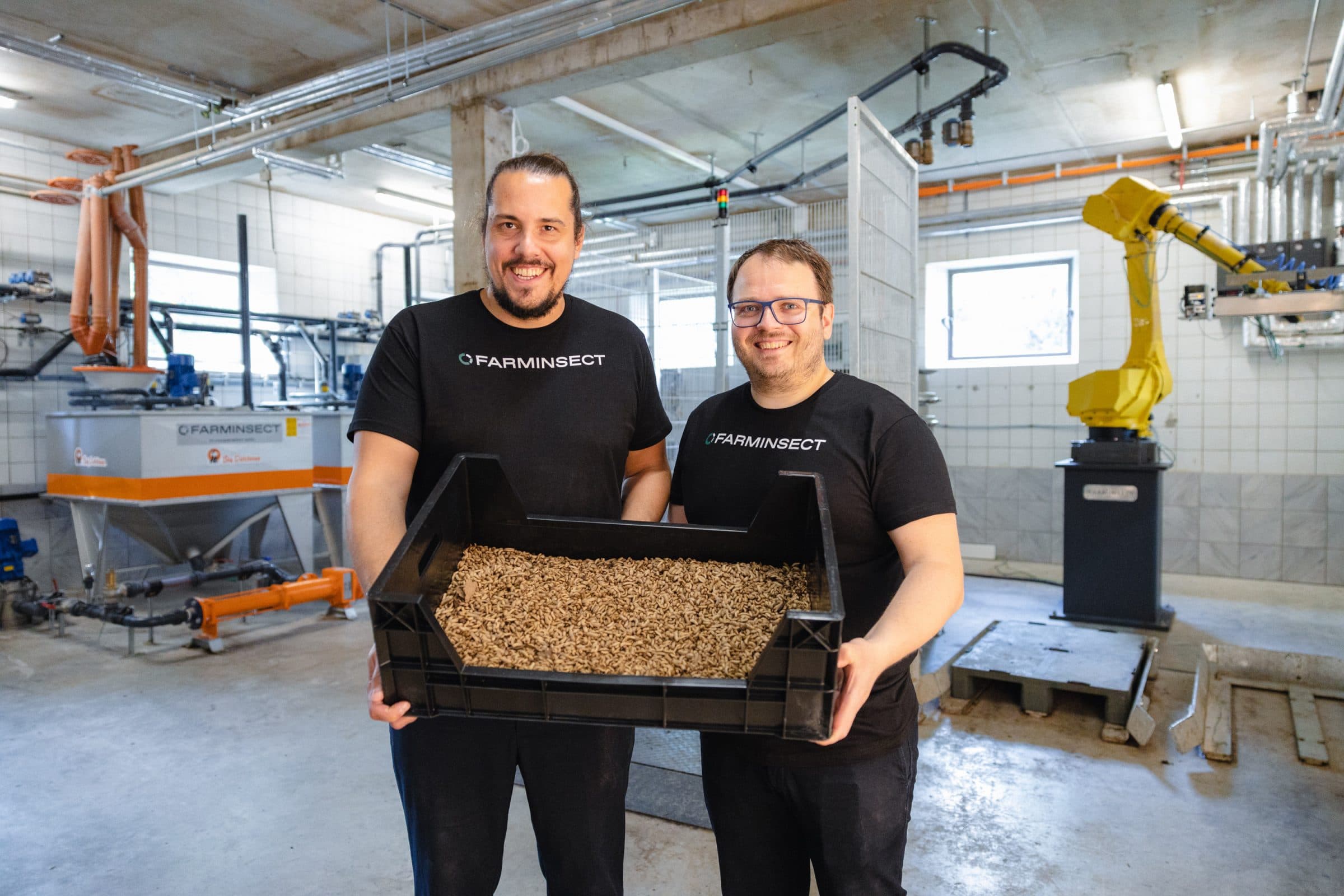

For keepers of exotic small animals like geckos or bearded dragons, feeding insects is nothing new. For farmers, however, this has long been no option. The Munich-based startup Farminsect, founded in 2020, is changing this. The agritech relies on decentralized production to optimally utilize previously unused energy and locally available residual materials for insect farming. Customers receive modular insect farming systems that they can set up on-site in their own operations. The founders then supply them weekly with young larvae, which are fattened with regional residual materials such as peels or harvest residues. This gives farmers a more sustainable alternative protein source for their animal feed.
Farminsect’s farming systems also produce compost as a by-product, which can be sold as fertilizer or used for biogas production. According to the startup, farmers should be able to reduce their animal feed costs by up to 30 percent overall. Additionally, this circular economy system reduces CO2 emissions in agriculture, which arise, among other things, from the production and worldwide transport of protein-rich animal feed. This includes soy and fishmeal, which bring additional ecological problems.
Oversubscribed Series A financing
Farminsect has now raised a total of 8 million euros in growth capital in an oversubscribed Series A financing round. Lead investor is Norwegian VC Sandwater. Other participating investors include Bayern Kapital, the Australian Minderoo Foundation, the EIC Fund, and previous investors HTGF and UnternehmerTUM Funding for Innovators. The money is primarily intended for the commercial scaling of insect farming systems as well as for research and development work to further improve Farminsect technology.
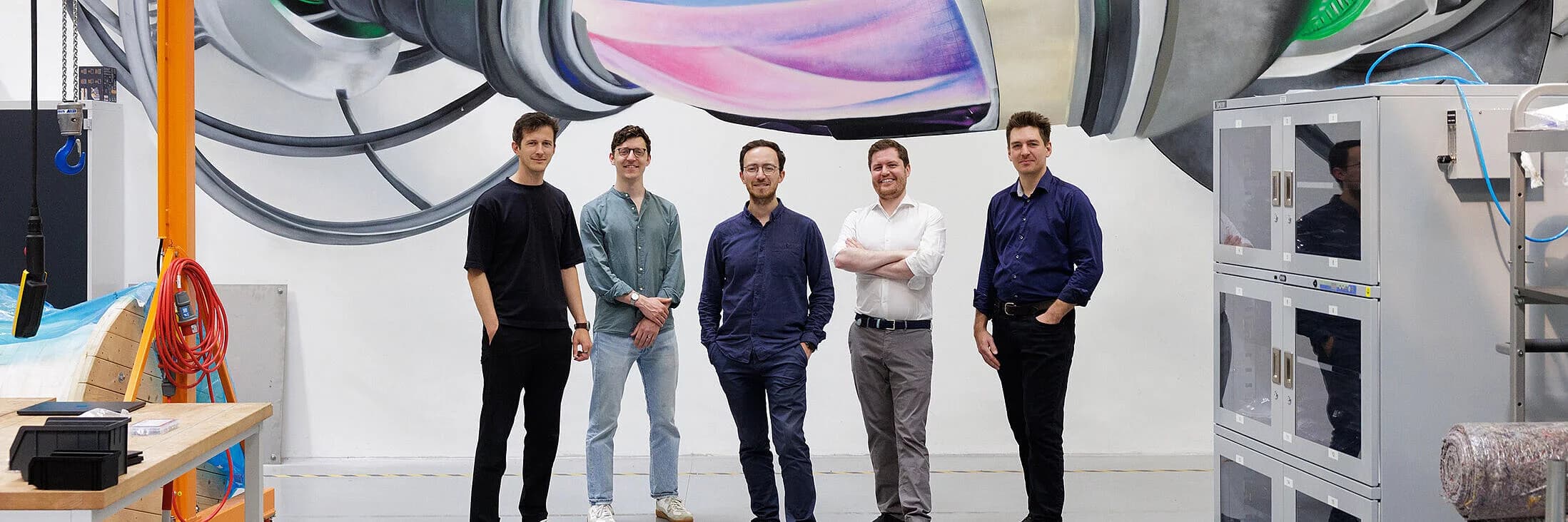
Thomas Kuehn, founder and CEO of Farminsect, is delighted about the additional funds and the external validation of his company’s potential. He says:
“We are very grateful for the trust our investors place in us. Together, we will pursue our ambitious goal of making insects the preferred protein source in the EU over soy and fishmeal. In the next step, we want to intensify our research and development work to significantly expand and improve our current breeding lines.”
Farminsect convinces investors
Morten E. Iversen, partner at Sandwater, explains:
“We recognized the economic and ecological potential of insects quite some time ago. However, the previous business models, which require substantial investments and are difficult to scale, gave us pause. What we were missing was a commercially available solution that involves low investments and is suitable for high production volumes. That is exactly the solution Farminsect offers. We are absolutely convinced that the company founders are capable of scaling Farminsect and accelerating the transition away from CO2-intensive protein feed.”
Monika Steger, managing director at Bayern Kapital, explains the investment decision as follows:
“It was clear to us already at our first investment about two years ago: insect-based animal feed is one of the most important pillars of sustainable and future-proof agriculture. The experienced Farminsect team has further developed the company very positively, installed the first systems at customer locations, and opened a new production facility. We are extremely satisfied with our collaboration so far and see great potential for the future.”