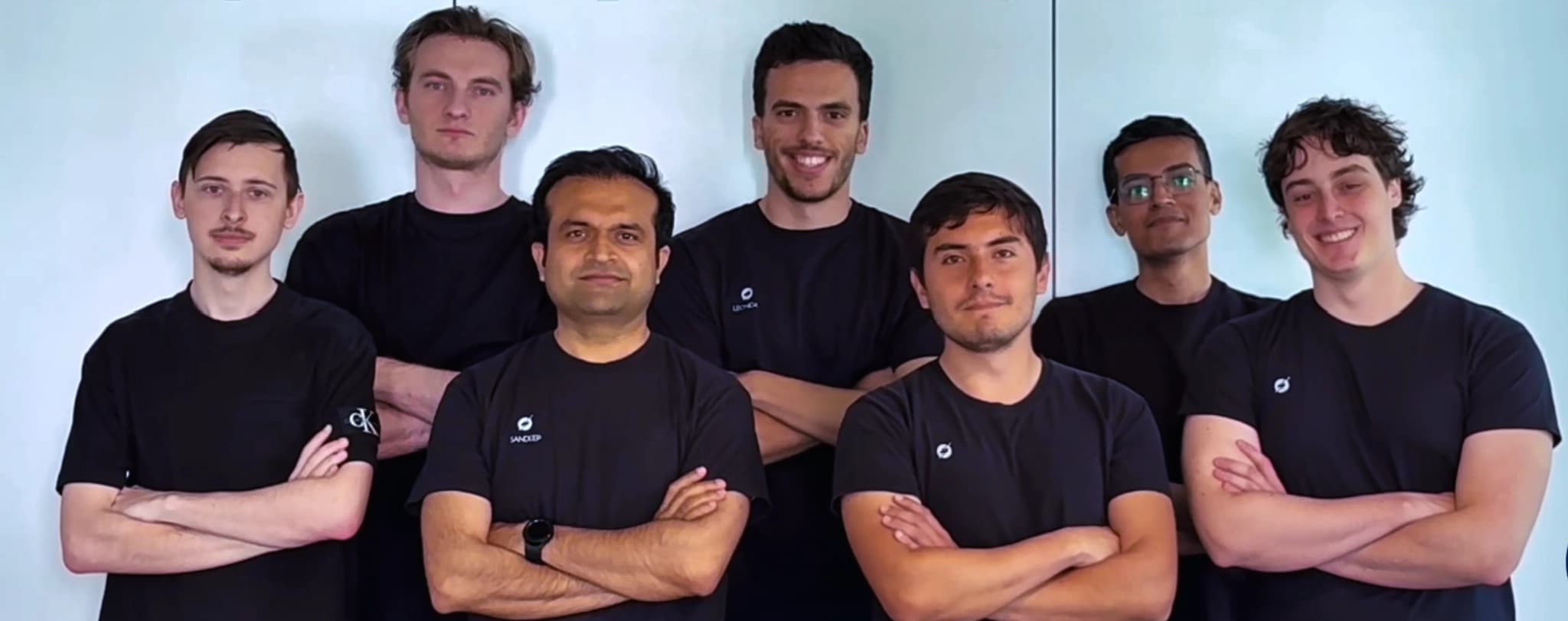

The deeptech startup Hololight, based in Munich, has completed a financing round of 10 million euros. The capital comes from a round led by European growth fund Cipio Partners. In addition to the new lead investor, existing backers Bayern Kapital, Direttissima Growth Partners, EnBW New Ventures, and Future Energy Ventures are also participating.
Hololight develops XR pixel streaming technology that enables augmented and virtual reality applications to be used independently of the end device. The technology enables wireless streaming of AR/VR applications directly from central servers – either from the cloud or on-premise. Performance and data security are maintained in the process.
CEO and co-founder Florian Haspinger emphasizes:
“Our goal is to make every AR/VR application available wirelessly – as simple and accessible as Netflix streams movies. By further developing our core technology and new products, we’re strengthening our leadership position and collaboration with partners like NVIDIA, Qualcomm, Snap, Meta, and others. We’re convinced: XR pixel streaming will become the global standard for deploying AR/VR – and soon be as commonplace as video streaming is today.”
New technology for easier integration
With Hololight Stream Runtime, the company is launching an innovation designed to make AR/VR adoption easier for many businesses. The solution enables streaming of any OpenXR-compatible apps without additional development effort.
“Hololight’s unique XR pixel streaming technology opens up widespread AR/VR adoption in industry and for consumers in the future. With this investment, Hololight can not only continue to scale its existing business but also market its latest innovation, Hololight Stream Runtime, globally,”
explains Ansgar Kirchheim, partner at Cipio Partners.
The company currently counts over 150 international customers and partners – including major OEMs and technology companies. Hololight aims to further strengthen its position in the global XR market and sees itself as a technological pioneer.
“Our vision is clear: anyone who wants to use AR/VR successfully needs XR pixel streaming. This is the only way to integrate applications flexibly, securely, and scalably within enterprises. We’re ready to take AR/VR to the next level,”
says Haspinger.