
Munich Startup: How can startups collaborate with a large consulting firm like PwC? Aren’t your services barely affordable for young companies?
Maresa Schleich: Startups are the engine of our economy and the innovation drivers of the future. That’s why PwC established the “Next Level” team several years ago, which focuses on various innovation topics and in particular on collaboration between startups and established companies.
We’re naturally aware that startups have different needs and challenges than established companies. That’s why we’ve tailored our offerings and prices specifically to this target group. Topics like investor readiness, employee participation, pricing, funding opportunities, or corporate sales readiness – to name just a fraction of our support options – play a major role for startups in the growth phase. And that’s exactly where the advantage of working with a “large consulting firm like PwC” comes into play: PwC has a comprehensive network of experts from various industries and fields, so we can advise on most topics.
Nöll: “Networking between startups and corporates plays a decisive role”
Munich Startup: Especially for B2B startups, pilot projects with established companies are often a door opener. How can you support that?
Florian Nöll: Besides consulting startups, advising established companies is another pillar of PwC “Next Level”. We help mid-market companies and enterprises gain access to the innovation ecosystem, connect with interesting startups, and find innovative solutions to current challenges. Accordingly, networking between startups and corporates plays a decisive role. This is the core component of our startup program “Scale“. We understand the challenges of our corporate customers and can place suitable startups from our community accordingly. Our success rate for such projects is 88 percent.
Munich Startup: You mention an 88 percent success rate for “venture clienting” projects between startups and corporates. How do you measure this success? And can you name best practices?
Florian Nöll: For us, a collaboration project between startups and corporates is successful when a business relationship develops between the two parties through our support – this can range from a customer relationship to a jointly developed product to an investment. For example, investments from Scale corporate partners in startups have emerged in the past. Customer relationships are the most common result of our networking. It helps me that I myself gathered many years of experience as a founder in collaboration with corporates.
Munich Startup: Are there specific industries or technologies you collaborate with more intensively?
Maresa Schleich: Generally, we focus on B2B solutions to provide the greatest added value for our customers. Beyond that, we work industry-agnostically – from deep tech to agriculture to automotive, we’re very broadly positioned.
What does the accelerator at PwC offer?
Munich Startup: PwC has also launched its own accelerator. How exactly does participation work?
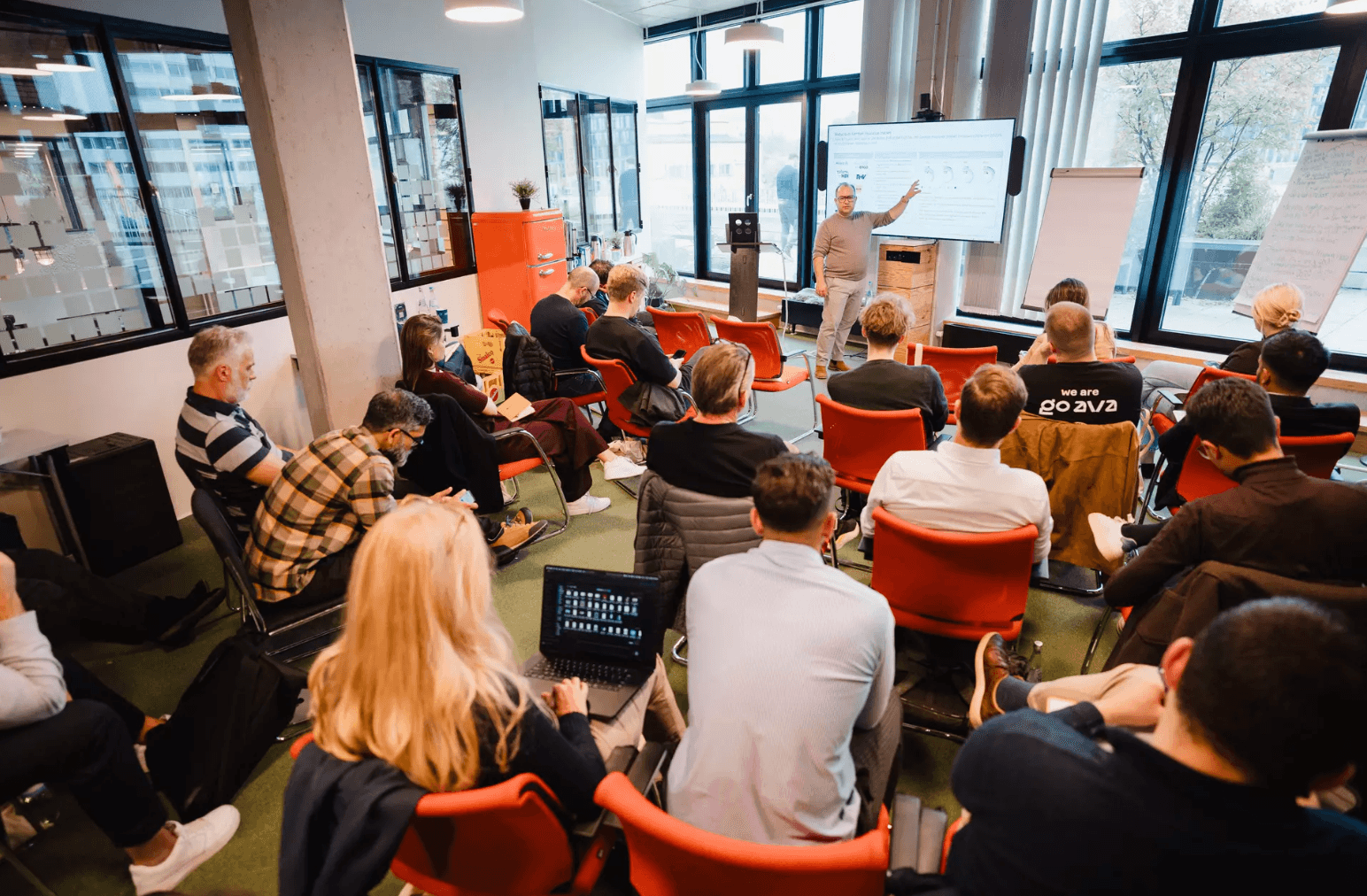
Maresa Schleich: “Scale” is a three- to six-month program that supports startups on many growth-related topics. Core elements of the program are
1. Masterclasses on topics such as investor readiness, pricing, digital marketing, corporate sales readiness, or hiring;
2. Exchange with exciting personalities such as serial founders, investors, or companies;
3. Sparring with PwC startup experts on the startup’s individual challenges; and
4. Pitch opportunities before the PwC network.
Our target audience is B2B tech-focused startups in the seed to Series A phase. Participants have completed their proof of concept and now focus on scaling. The program’s goal is to optimally prepare founders for the upcoming scaling phase and support them with our expertise and network.
Since we see a particular need at many startups for support in capital raising, there’s also the “Raise” program. Here we help startups become investor ready within 3 months. This means we support all important steps in investor outreach – from the pitch deck, through preparation of relevant materials, to the major investor day, where startups have the opportunity to demonstrate what they’ve learned before investors from the PwC network.
Special edition for female founders and startups with migration background
Munich Startup: You also offer support specifically aimed at founders who are underrepresented in the startup sector – for example, women, people with migration background, or people with disabilities. How did this come about and how do participants benefit?
Florian Nöll: Unfortunately, the founding scene is still not very diverse. This was again confirmed by this year’s German Startup Monitor. And this despite the fact that startups benefit from diverse founding teams. To promote more diversity in the startup scene, we already launched a “special edition” of the Scale program for female founders in 2022 with one of our Scale partners. In 2023 and 2024, we want to expand the spectrum further and enable not only female founders but also founders with migration background or disability to participate. With the “Underrepresented Founders” program, we want to provide this group with more support, visibility, and access to relevant contacts.
Munich Startup: You are also an individual sparring partner for startups. What was the coolest experience you had here?
Maresa Schleich: Since I originally come from the human resources field and spent several years working in the people team of a startup myself, I’m pleased to support startups in my current role with challenges around recruiting, employee retention, employer branding, and HR processes. The most beautiful experience is the positive feedback from startups and learning that the insights and change of perspective provide direct added value for the founders. But the best part of my work is definitely being in direct contact with the startup ecosystem and enabling successful networking of all actors!
Room for improvement in cross-ecosystem networking
Munich Startup: What could be improved at the startup location Munich in your view?
Maresa Schleich: Munich already offers a great environment for startups – whether in startup consulting, coworking spaces, startup events, and many other funding opportunities.
I see room for improvement currently in the area of networking. It seems to me that the ecosystem is still being viewed and served in a very differentiated way. Startups, investors, and established companies still tend to stay within their own circles. Yet the interaction of these three players holds the most potential!
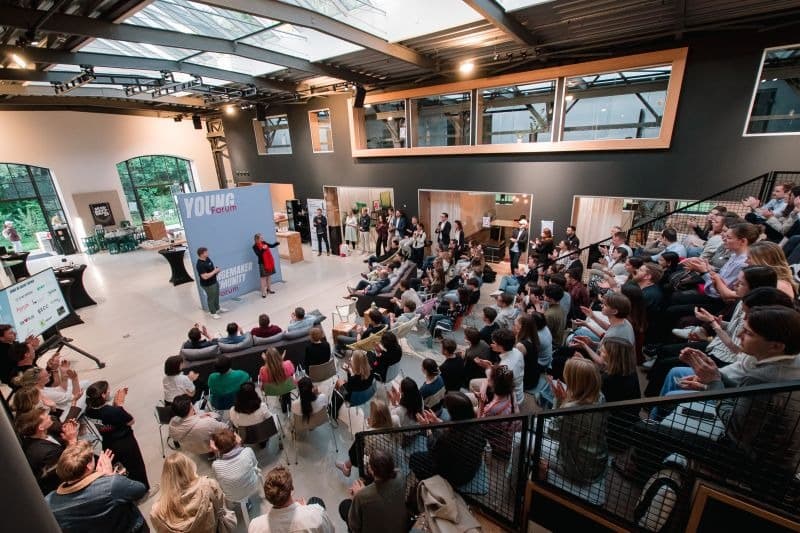
Therefore, I’ve set myself the goal of supporting and strengthening this networking in my work at PwC. For example, we’re hosting a major event in Munich in December on the topic of “Development of the startup ecosystem in Bavaria”. Here we bring the entire ecosystem together and drive mutual exchange.
Munich Startup: How can a startup best get in touch with you?
Maresa Schleich: That’s very easy. Feel free to reach out to me or my colleagues, whether by email, phone, LinkedIn, or of course in person at events. Together we’ll figure out how we can best support you at “Next Level”!