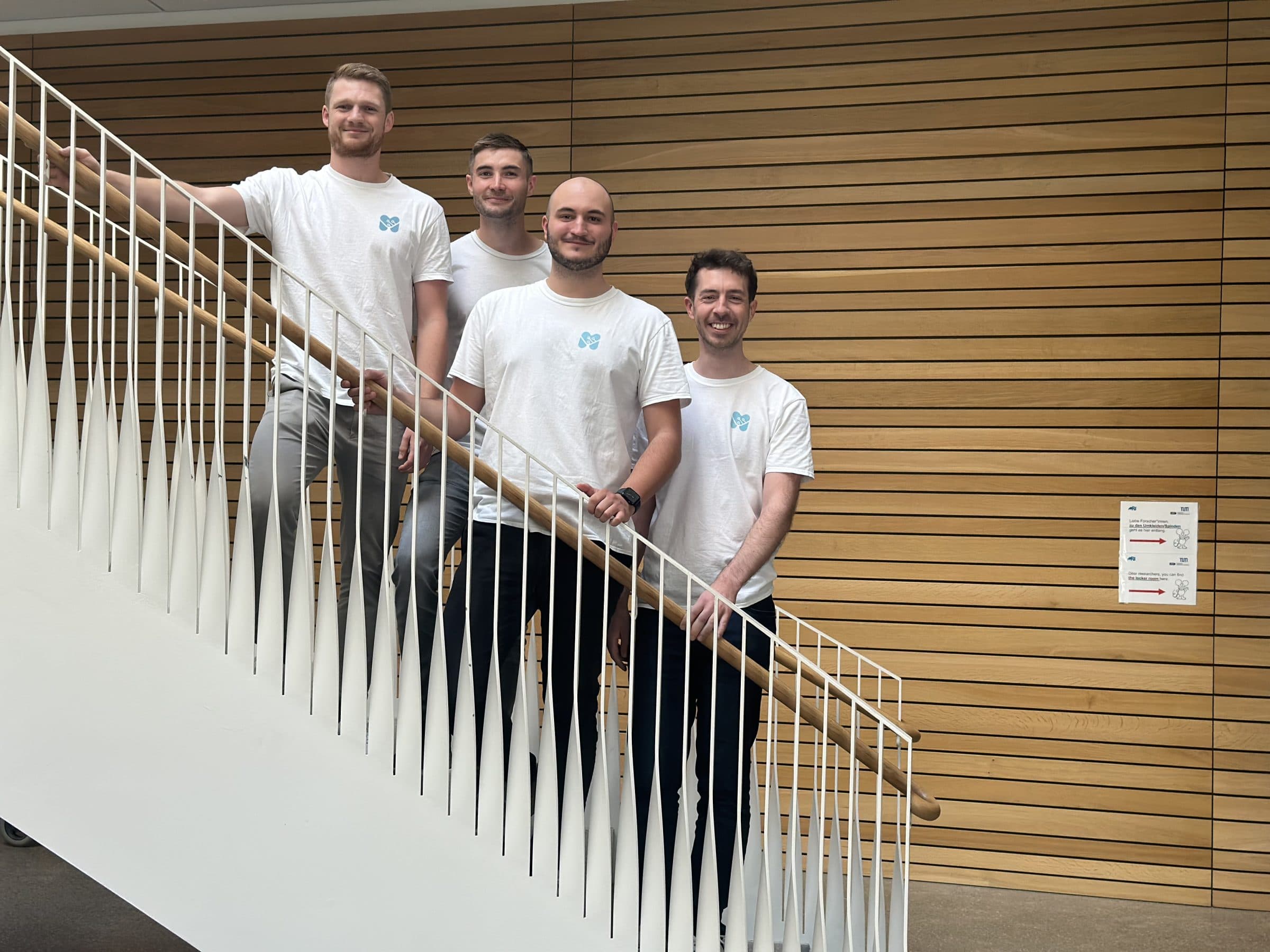

Munich Startup: What does your startup do? What problem do you solve?
Medigital: We are Medigital and we automate capacity management in hospitals. Our first finished module is occupancy management, which fully automates the planning of patient stays in the hospital. This step is crucial for the efficient use of hospital capacities, as it depends not only on the available diagnostic and treatment options but also triggers a variety of administrative processes, such as patient transport, billing, and patient discharge.
While the diagnosis and treatment of patients are already significantly influenced by new technologies such as artificial intelligence, administrative processes and their execution have hardly been modernized over the past two decades. This results in a significant portion of clinical staff’s working time being spent on these tasks, often wasting valuable time for direct patient care. We’re changing that!
Time savings and reduced coordination effort
The core of our software consists of a sophisticated AI-powered algorithm that automatically plans the required capacities for each patient stay and intelligently balances them across departments to optimize hospital occupancy without overloading staff. In our occupancy management module, for example, the algorithm takes over the automatic assignment of patients to appropriate beds based on patient master data. Additionally, the algorithm can move patients across departments, resulting in significant time savings for doctors and nurses through reduced coordination effort. Our user interface keeps the affected staff at the department level as well as at the hospital level always up to date.
Munich Startup: But that already exists, doesn’t it?
Medigital: Unfortunately, the reality in hospitals often doesn’t match what is technologically possible. It’s not uncommon for patients in hospitals to still be planned with pen and paper. There are also improvised solutions such as whiteboards and spreadsheets. Even modern hospital information systems (HIS) often only offer simple occupancy lists. It happens that these lists are printed out, manually updated, and then re-entered into the system at the end of the day.
In the area of asset management, we currently see solutions that can track not only equipment but also beds in real time to show whether they are currently free or occupied. Similarly, there are communication solutions for doctors and nurses that provide an occupancy list as a byproduct. Both approaches are undoubtedly valuable, but they often lack the comprehensive planning component for patient stays and strategic foresight. They complement our capacity management perfectly, as together they provide a comprehensive solution that not only shows the current status but also anticipates future capacity needs. Our innovation therefore lies not only in the technology itself but also in a holistic approach to the problem of capacity management in hospitals.
Munich Startup: What is your founding story?
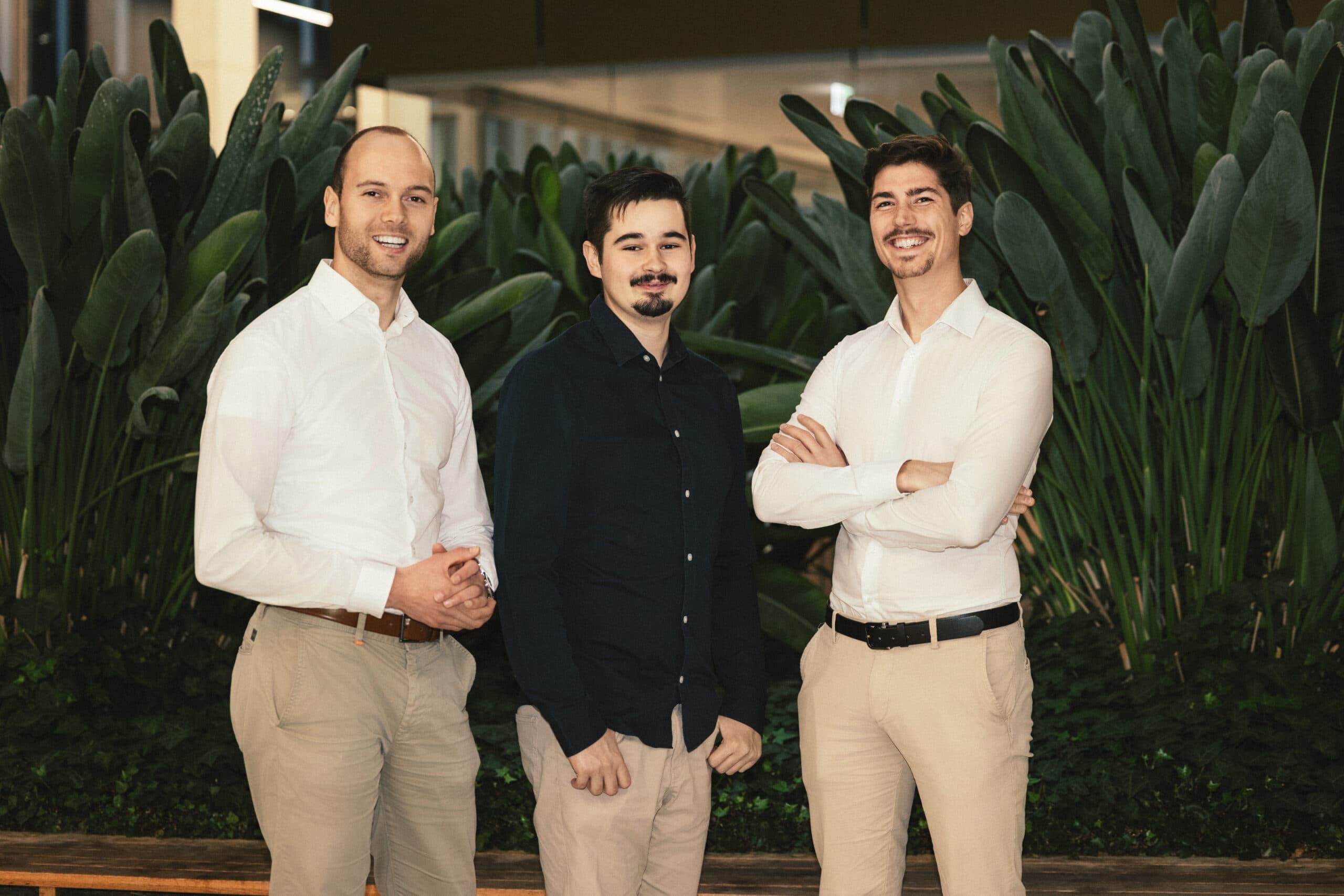
Medigital: Our founding story at Medigital is closely linked to our shared time at the Technical University of Munich (TUM). Max, Paul, and I have known each other since our days studying at TUM. During our studies, we participated together in the TechChallenge of UnternehmerTUM, a program in which companies present their real problems as corporate partners and students have the task of developing prototype solutions within three months.
During this intensive phase, we visited countless hospitals and had in-depth discussions with doctors and nurses. We were able to experience firsthand how chaotic and inefficient many processes in these facilities are. These observations inspired us to develop a solution that would help address these problems and make healthcare operations more efficient.
At the end of these three months, we were able to secure first place in the TechChallenge with our prototypes. That was our starting point for the next step. We applied for the Xplore pre-incubation program at UnternehmerTUM, where we met our fourth co-founder, Max Schnettler. As a team of four founders, we managed to first receive the EXIST founder grant and then successfully complete our first financing round. This initial phase was crucial for us and laid the foundation for the development of Medigital.
Challenge: Long sales cycles in healthcare
Munich Startup: What have been your biggest challenges so far?
Medigital: One of our most significant challenges was and remains the extraordinarily long sales cycles in healthcare. From the first contact to concrete conversations often takes several months. Nevertheless, we are currently at a point where we have increased our professionalism to deal with these long cycles. At the same time, we are reaping the benefits of our previous efforts, as hospitals increasingly approach us.
Another challenge was to raise awareness among doctors and nurses about the benefits of a digital and especially automated version of occupancy management. Initially, many users perceived using our solution as additional stress and extra work. However, we were able to quickly demonstrate how efficient and time-saving our solution actually is. After a short time, users were so convinced that they completely replaced their previous solutions with ours.
Munich Startup: Where do you want to stand in one year, where in five years?
Medigital: We have ambitious plans for the coming year. Through a planned financing round in April 2024, we will successfully further develop our first module, “occupancy management,” convert our pilot customers into long-term customer relationships, and acquire additional hospitals for our solution. The funds from this financing round will also help expand our team capacity to develop additional modules and advance our vision of automating the entire capacity management in hospitals.
Vision: Plan patient flow seamlessly
When we look five years into the future, we see our product as an essential complement in the landscape of hospital software. Our solution will enable seamless planning of the entire patient flow and optimize resources in real time, whether for admission, diagnosis, treatment, discharge, or staff. In doing so, we strive not only to increase efficiency but also to improve the quality of patient care.
Munich Startup: How have you experienced the startup location Munich so far?
Medigital: Munich has proven to be an extremely supportive founding location for us. In fact, one could say that we are in some ways a product of UnternehmerTUM, as we have utilized nearly every one of their programs and networking opportunities. We are currently proud participants of the Xpreneurs Batch 14 and have been firmly part of TUM’s VentureLabs Healthcare for almost two years.
Munich has even more to offer, however. The city is home to two outstanding universities, which are an excellent source of highly qualified talent. The numerous networking events and pitching events have allowed us to meet many other startups. This exchange is invaluable, as we can benefit from the experiences of other founders. We learn from the challenges already overcome by other startups and grow together in facing new ones.
Furthermore, Munich is an emerging center for digital health and the digitalization of the healthcare sector. Initiatives such as the Venture Lab Healthcare and events such as Bits & Bretzls HealthTech provide increasingly better support and resources for startups in this field. Particularly in the early stage, there is a wide range of support options available here.
The impressive statistics and rich network have already integrated us strongly into the Munich ecosystem before our founding and helped us successfully launch Medigital.
Munich Startup: Hidden champion or shooting star?
Medigital: Our focus on the B2B market and our specialization in hospitals make us by definition a hidden champion. But if all the modules we want to develop work seamlessly together and are successfully implemented in hospital operations, we undoubtedly have the potential to become a shooting star – at least in the healthcare industry. The potential impact would be enormous and would also be noticeable for patients. Not only would many administrative tasks in the hospital disappear, but capacities could be optimized so that more patients can be treated while simultaneously reducing staff workload.
Update from May 2024: The startup was renamed to “Auta Health”.