
Munich Startup: What does your startup do? What problem are you solving?
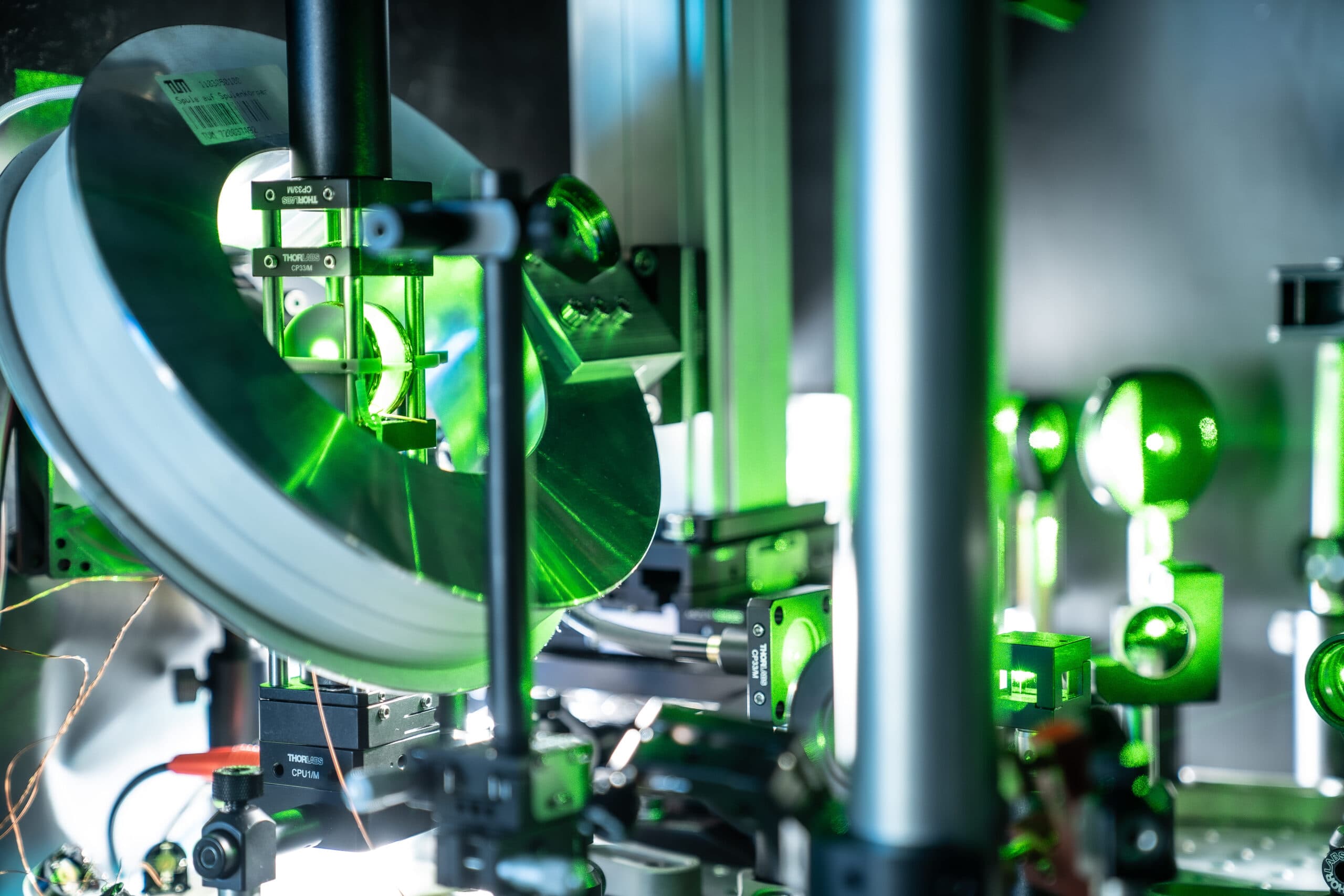
Sven Ernst, Munich Quantum Instruments: We are Munich Quantum Instruments, MQI for short, and we build measuring devices for detecting light particles (photons). Our single-photon detectors can be used in many different fields, especially in quantum technology. This includes optical quantum computing, where our sensors are used to read out information as accurately as possible. But our sensors also find applications in areas like deep space optical communication, that is, communication with satellites that are very far from Earth. Here we want to develop a special sensor together with the ESA that can significantly increase data rates and distance.
Another area we’re looking at is quantum key distribution. This technology can enable tamper-proof communication. For this, the sensor needs to be specialized in different ways, which we’re currently testing in a project with various partners to develop a prototype.
“We’re building a universal light sensor”
In the long term, we also want to supply other areas with our sensors. For example, you can build very precise measuring equipment to examine pharmaceutical products. In spectroscopy too, when it comes to the composition of various chemicals, such as CO2 in the atmosphere, you can determine that much better with our sensors. We’re building a universal light sensor, and there are very many application areas for that.
Munich Startup: But that already exists, doesn’t it?
Rasmus Flaschmann, Munich Quantum Instruments: The big advantage of our type of sensors is that they are sensitive to individual light particles. And we achieve nearly 100 percent efficiency depending on wavelength. That means you can say very precisely whether there was a single light particle or not. And that with very high time resolution, roughly in the range of 20 picoseconds. For certain communication protocols, for example, where you say “information: yes/no”, that would mean that a single light particle is enough to transmit the information.
What we want to do differently than other companies is make sensors with our highly efficient single-photon detectors accessible to a broader market. That means, in addition to the quality of the individual sensors, scalability is of central importance to us. This allows Munich Quantum Instruments to enable new applications of quantum technology in various fields.
The founding of Munich Quantum Instruments
Munich Startup: What’s your founding story?
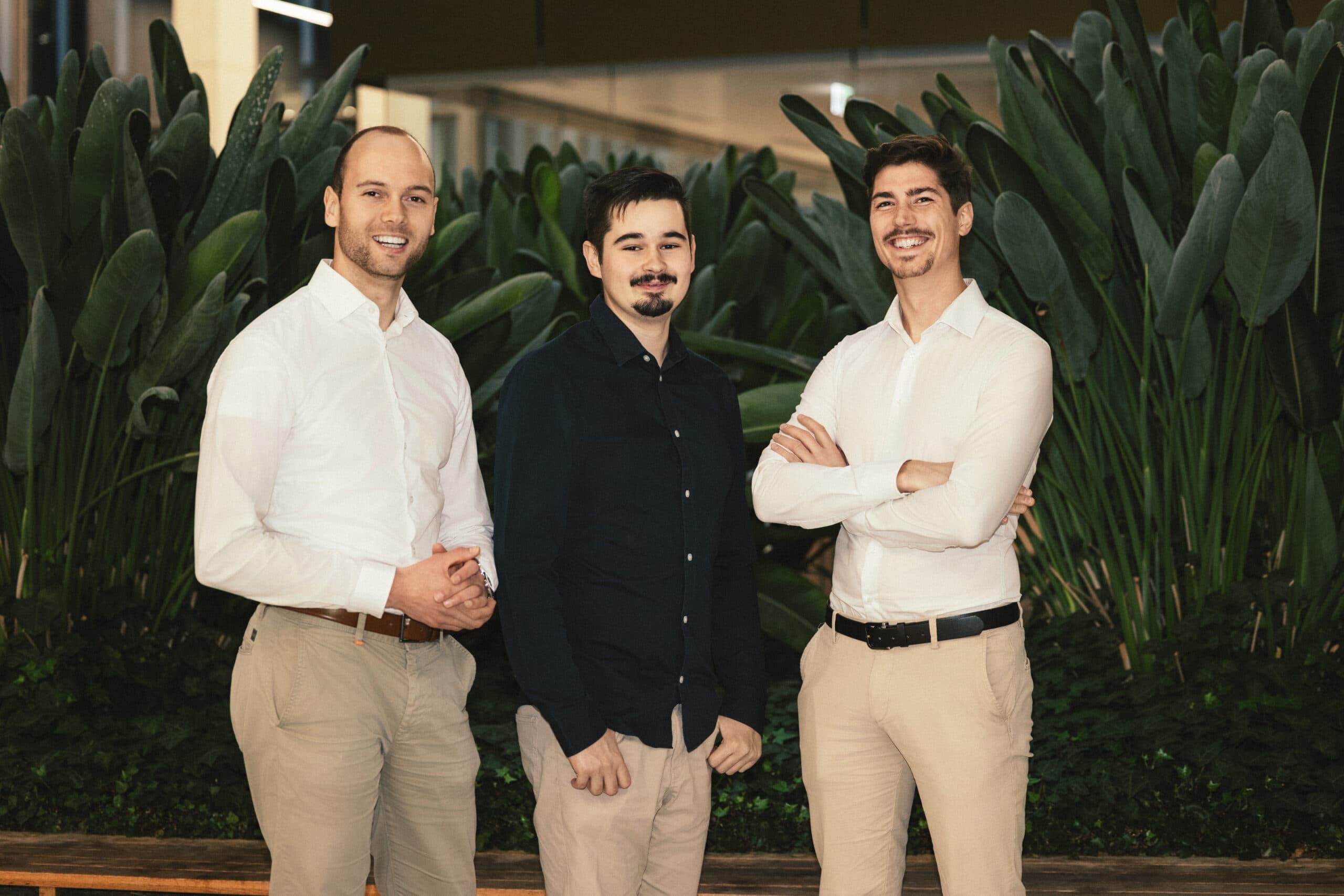
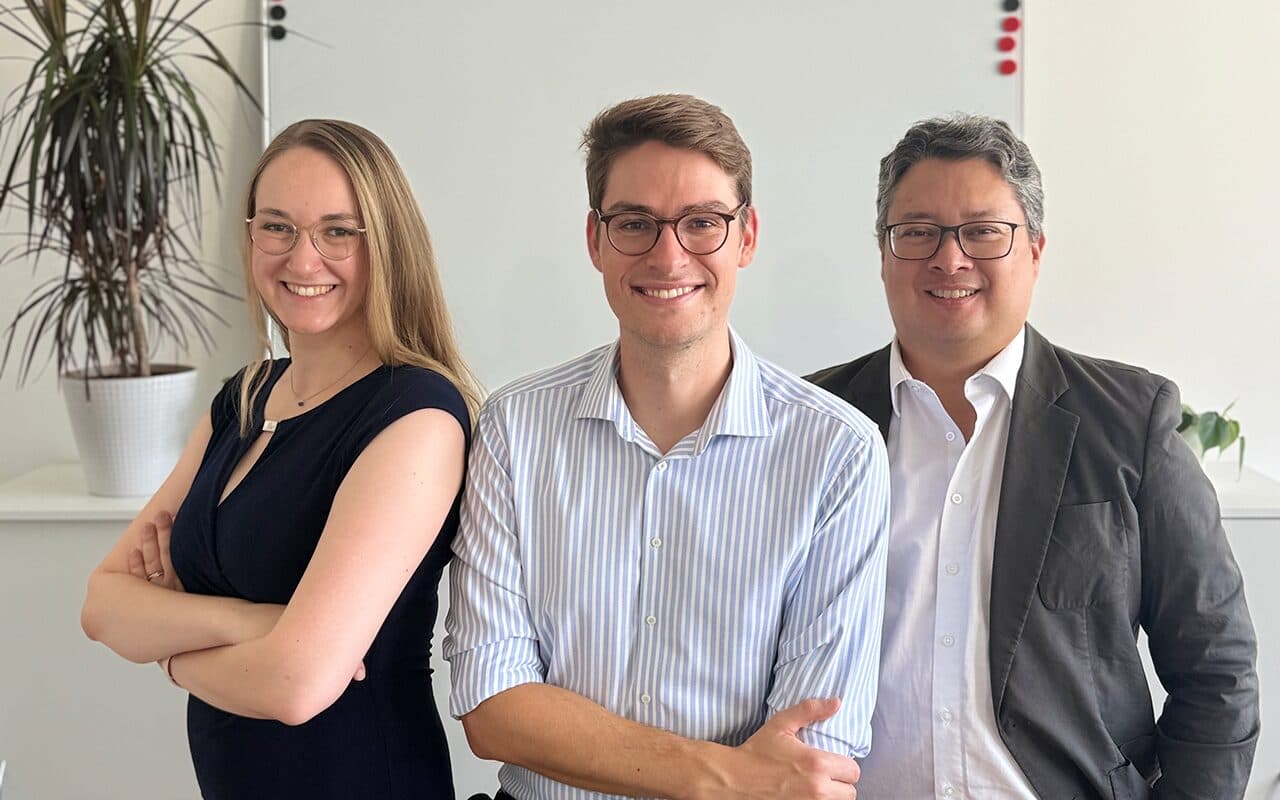
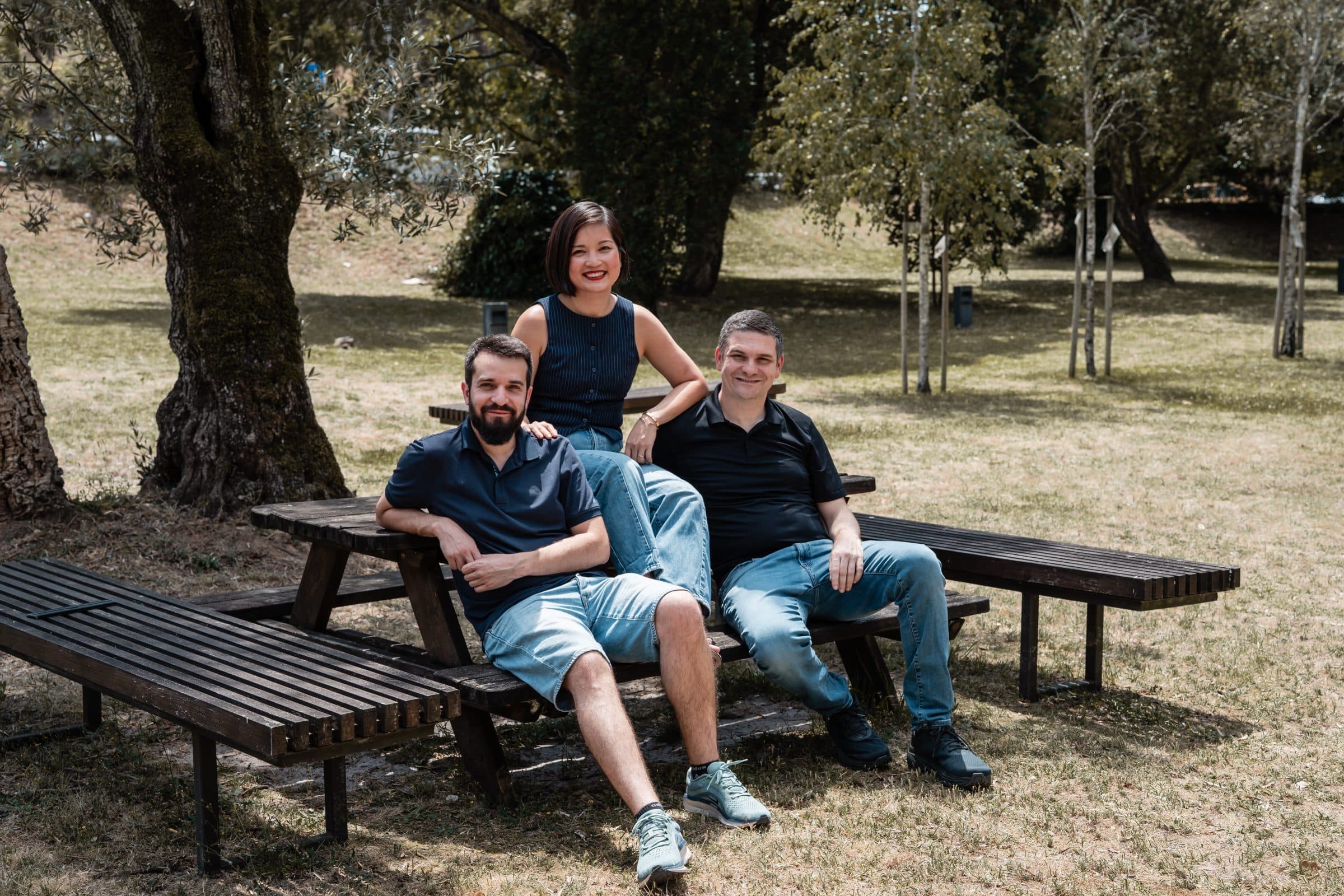
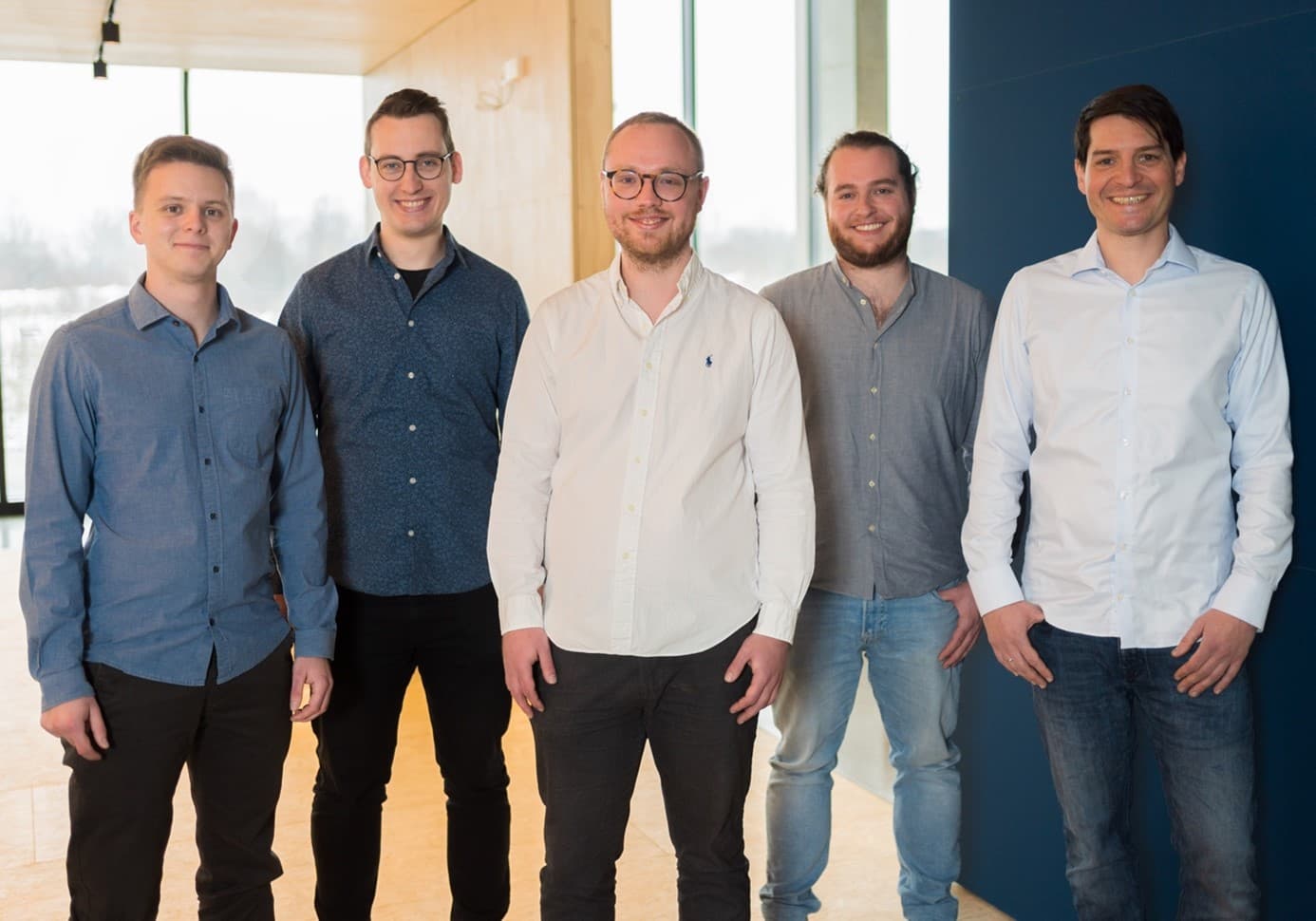
Rasmus Fleischmann: Almost five years ago, I started with my doctoral thesis. And relatively early on, the idea came up with my professor to eventually turn it into a company, which seemed very far away at the time, of course. Then, over time, my co-founders Lucio, Chris, and also Sven joined. Especially when you take on such a big project, a strong team is of paramount importance, and I think we’re all very glad that we found each other and can rely on each other 100 percent. This way, our shared vision developed piece by piece, that we want to bring quantum technology to the markets and shape this further development together.
We’ve been doing that over the past few years and have also applied to various programs over time, such as Xplore by UnternehmerTUM. There we learned how to bring a product to market or how to develop a business model. And we also met our fifth co-founder there, Andreas. He originally studied physics and later moved more to the business side. Now he’s essential for us so that we can, for example, make much better progress on the business side. As engineers and physicists, we don’t necessarily have the big training in that area.
At the beginning of last year, we applied for EXIST research transfer. The application process took several months, and around the middle of last year, we got the confirmation. Since November 1, 2022, we’ve been officially funded by EXIST research transfer. At the end of last year, we then immediately founded the GmbH. And as Sven already said, we’ve now started initial pilot projects and have more in the pipeline.
“You just have to do it”
Munich Startup: What have been your biggest challenges so far?
Rasmus Flaschmann: What was personally most difficult for me was finding the best moment for the next step. Because especially as a physicist and engineer, you’re always focused on the problem and on making it better here or there. But there’s no perfect moment, you always have to take some risk and just do it. And the business side certainly has to be taken care of. Because what good is the best product if you can’t sell it because you’re not on the market? That’s exactly why I find it very helpful that Andreas now stands by us.
Beyond that, there’s the uncertainty about which of all these quantum markets will actually work and when they will work. We’ll be dealing with that for years to come. What helps us is that there are opportunities to rely on our quantum sensors in hybrid systems for certain applications.
Munich Quantum Instruments wants to build quantum chips in Munich
Munich Startup: Where do you want to be in one year, where in five years?
Sven Ernst: In one year, we want to have completed our pilot project in an industrial market, namely quantum computing. At the same time, the MVP for our niche market research and development should also be ready. We then want to have fully developed and sold a complete system for our sensor with cryostat and electronics.
In five years, we want to have scaled in the research and development market with our standard sensors so that we have many customers there and enable many new disruptive applications. We also want to have established ourselves in the industrial market and continue to scale there. This also includes building our own manufacturing for our chips. This will allow us to position Munich Quantum Instruments very strongly in international competition and also strengthen the Munich location with quantum chip manufacturing.
Munich Startup: How have you experienced the Munich startup location so far?
Sven Ernst: In Munich, there are many offerings that support startups very well – we ourselves are involved in some of them, like UnternehmerTUM, for example, as mentioned. We’re also in close contact with Venture Quantum Labs and exchange ideas.
With the Munich Quantum Valley and the Munich Quantum Center for Science and Technology (MCQST), several institutions have set themselves the goal of making Munich a key player in quantum technologies: the Silicon Valley of the quantum field. In quantum research, physics research, technology research in general, Munich has always been very strong. Now the goal is added to bring that into startups and companies as well.
Munich as Silicon Valley for quantum
What’s still missing here, though, is for the founder scene in the quantum field to organize events on its own. Of course, you know the other startups – there aren’t that many yet – but there are still no central events organized by the founders because they want to exchange ideas. Everything is still being pushed by the institutions; I’d like to see a bit more activity there.
Rasmus Flaschmann: What’s definitely an important point here too is the next generations of potential developers, physicists, and engineers, especially in quantum technologies. And what Munich is already doing really well here is offering degree programs with the Munich Quantum Center for Science and Technology (MCQST), for example, that go in exactly this direction. And the Munich Quantum Valley promotes research facilities and integrates companies into flagship projects. So on the one hand, the country’s brains are being further developed, and on the other hand, more startups are being supported and companies are being integrated into the projects. And that will be very important. I can imagine that in ten years, quantum and Munich will be inseparably linked.
Munich Startup: Hidden champion or shooting star?
Rasmus Flaschmann: Our offering is a B2B business, not B2C. In that sense, I’d say more hidden champion. We’re the ones working with Deutsche Telekom, with the ESA, with whoever else. But in the quantum field, we’re also a shooting star because we’re one of the first hardware startups offering quantum hardware from Munich. We definitely believe that in the future, industrial markets in Germany and Europe will be equipped with quantum hardware made in Munich.