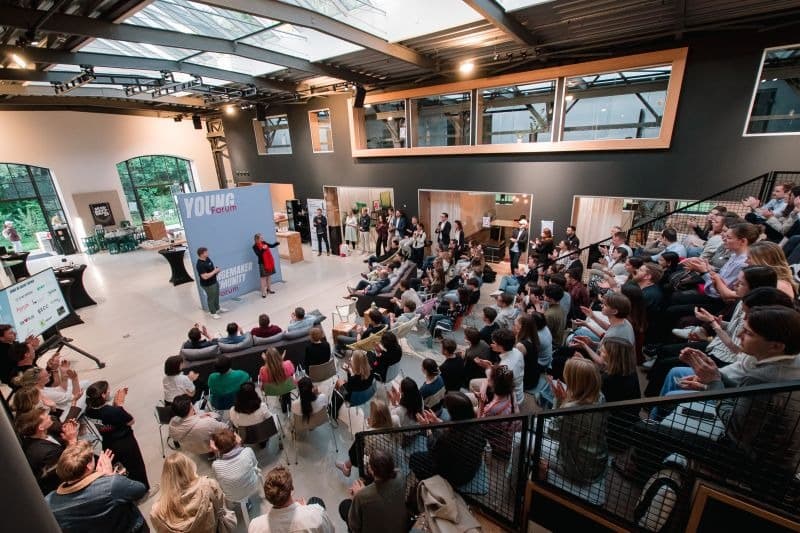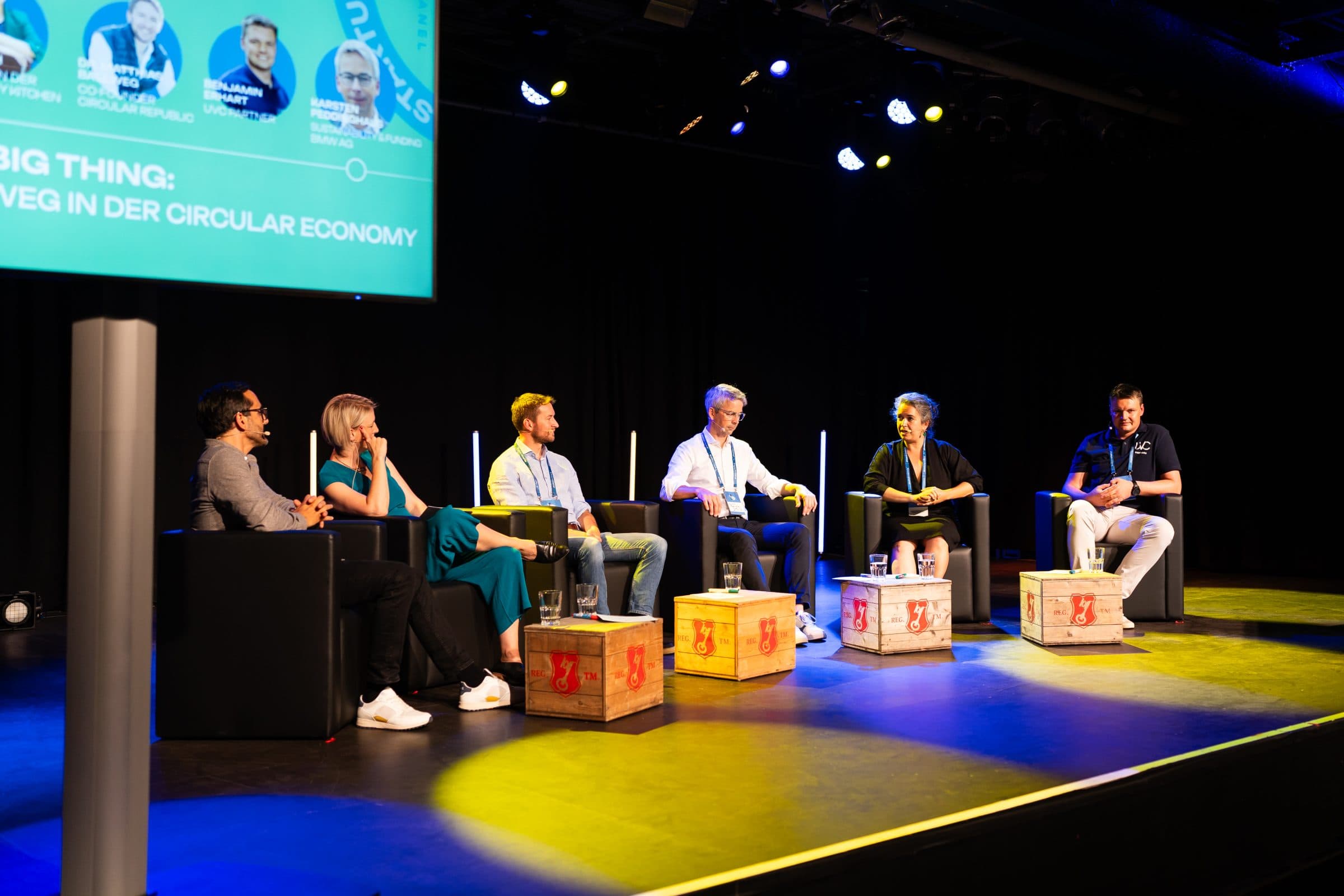

The participants in the circular economy panel started their discussion with a stocktake. The majority agreed: there is still much to be done. Katrin Habenschaden, second mayor of the city of Munich, admitted:
nnnnnnnn“We have only had circularity as a whole in our sights for a relatively short time. But we are also slowly getting moving from the city’s side.”
The founder of Community Kitchen, Günes Seyfarth, put it more dramatically:
nnnnnnnn“In Germany we can always talk well – also about circular economy – but we often lack the joy of doing and learning in practice.”
To achieve circularity, you have to dare to take new paths and be willing to fail along the way.
nnnnOften there is still a lack of understanding for the full range that circular economy demands. Germany is the world champion in garbage collection and the city of Munich is very well positioned on the zero waste issue, noted Matthias Ballweg, co-founder of Circular Republic. But sharing models for everyday items or sustainable product design are still not on many people’s radar. Yet that is precisely what it is all about, said Seyfarth. Every company must ask itself whether it can take responsibility for its product until the end.
nnnnStartups as pioneers of the circular economy
nnnnAt BMW Group, Karsten Peddinghaus is responsible for this as head of sustainability activities. He told of a custom-designed measurement system that BMW uses to track the proportion of secondary materials in new vehicles and has set itself high targets in this area. For circularity, it is especially important to rely on collaborations – also with startups. This was also confirmed by Benjamin Erhart of UVC Partners. The now existing pressure for change reveals problems that companies can solve. Startups can contribute their new ideas and positively influence material flows and recycling processes.
nnnnTo do this, startups need not only capital, but also appropriate infrastructure and large corporate partners, said Ballweg. Industry must broadly move towards accommodating these startups. BMW is trying to do this through various initiatives such as the Startup Garage. Peddinghaus said:
nnnnnnnn“Not every startup becomes a long-term business partner here, but accompanying young companies on their way can also be a contribution to a better, circular future.”
The final question of the round was what areas are still lacking on the path to a circular economy. Besides city subsidies for sustainable business practices and municipal initiatives, greater emphasis must be placed on education on sustainable development, for example through campaigns, said Habenschaden.
nnnnnnnn“As a city, we can set a best-practice example with seemingly small things like sustainable canteens.”
Erhart considered it particularly important to make developments that emerge in the local scene bigger and take them to the international stage – also with international capital. Nevertheless, the fundamental pressure for sustainability and fundamental availability of entrepreneurial talent is already there. He emphasized:
nnnnn“I am confident that it will take at most another five years before we see the first circular unicorn on the Munich Startup Festival stage.”