
Munich Startup: What measurable difference does your solution make today?
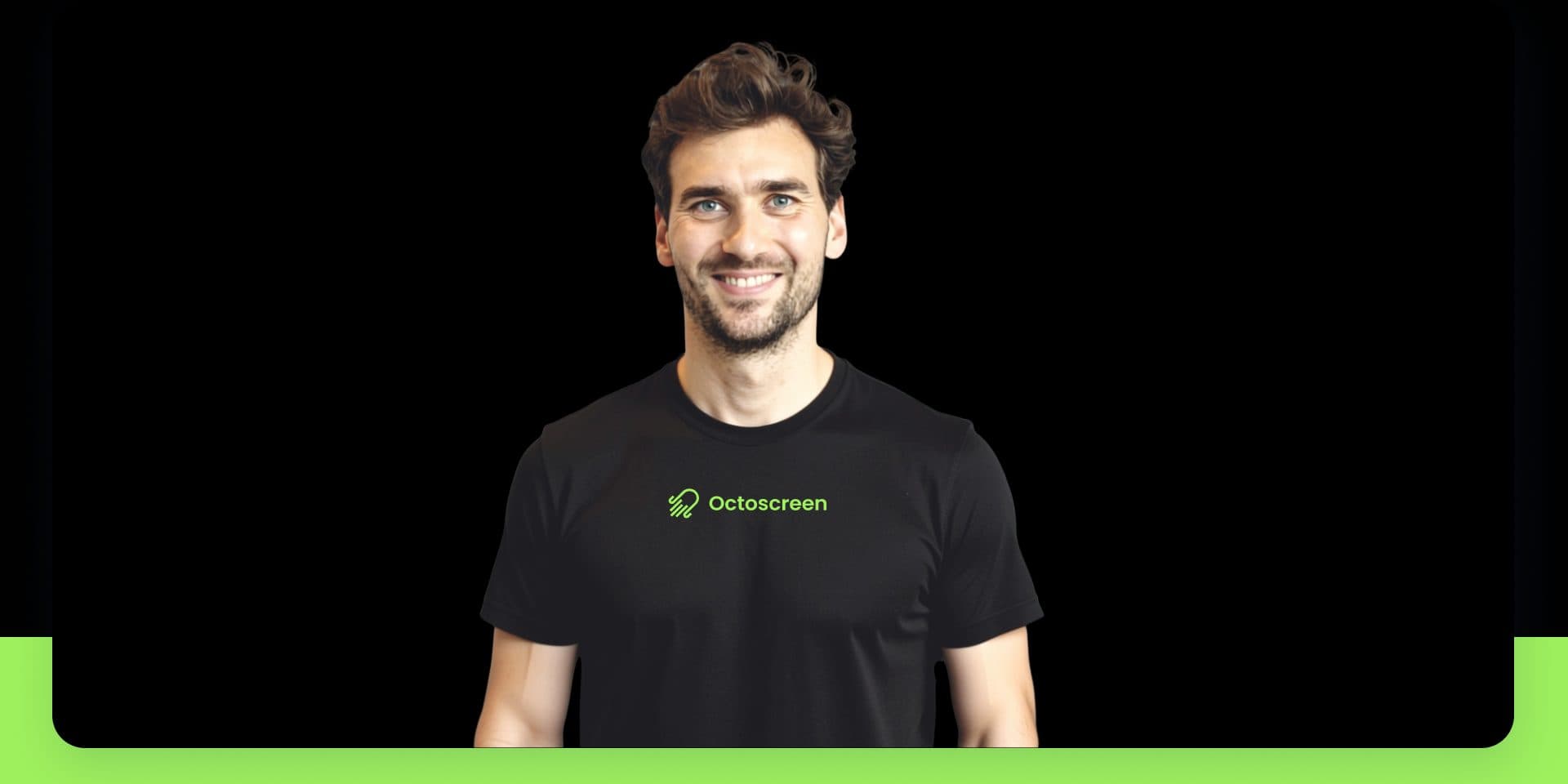
Julian Freese, CEO and Co-Founder: Retail and real estate are undergoing fundamental change: investments no longer work quasi-automatically profitably as they once did, every new location and every project must now be carefully analyzed and calculated. Municipalities and cities are also under pressure: if you want to prevent gentrification and maintain vibrant, mixed city centers – and not just hip coffee shops on every corner – you need reliable location data as a basis for decision-making. Octoscreen operates right in this field of tension.
Expansion and location teams at retailers, project developers, asset managers and banks still spend huge portions of their working time manually searching through thousands of council information systems, official gazettes and municipal portals looking for location information that makes a decisive difference: which construction projects are in planning? Which developments affect footfall, building rights or competition? What opportunities and risks lie hidden in municipal sources that no one can fully oversee today?
That’s exactly where we come in: we monitor over 35,000 sources daily – municipal documents, development plans, competitor activities, demographic changes – and condense this into decisions that our customers previously either couldn’t make at all or could only make with months of delay. The numbers speak for themselves: 95 percent time savings compared to manual work, three times more cost-effective, five times more accurate and changes detected up to three months earlier. Concretely: companies like Edeka, dm Drogeriemarkt, Norma, Gpep, Ratisbona and NKD use Octoscreen to base expansion decisions, location assessments and analyses, and competitive monitoring on real-time data. Where an appraisal previously took several weeks and a team was tied up several days a week with pure research, our platform provides the answer in minutes – comprehensively, transparently and not as a static PDF but as an ongoing early warning system.
Intelligence layer instead of individual reports
Munich Startup: Why are you faster, better or braver than established providers?
Julian Freese: The established players sell data. We sell decisions. An important reason for this: we don’t come from the real estate industry and that’s exactly why we look at our customers’ problems from a completely different angle. Where traditional providers deliver tables, maps and reports and leave interpretation to the customer, we’ve built a genuine intelligence layer: a layer that not only shows what’s happening but why it’s happening and what consequences follow. Added to this: while most competitors only cover individual pieces of the puzzle, we’re the only ones offering a comprehensive suite that accompanies retailers, project developers, asset managers and banks along their entire value chain – from market screening through location assessment to ongoing portfolio monitoring. And we have a data foundation that no one else has today: over 80 million collected and AI-analyzed documents from more than 12,000 municipalities.
Munich Startup: What decision was most important so far?
Julian Freese: The decision to focus on enterprise customers from the start rather than pursuing a broad SMB model. That forced us to build a product that’s truly mission-critical – not “nice to have”. With customers like Edeka, dm Drogeriemarkt etc. on board, every feature, every data source and every service level has to deliver on its promise. This discipline shaped us as a team and makes our product what it is today.
True market understanding as the biggest challenge
Munich Startup: Which phase caused you the most growing pains?
Julian Freese: The biggest challenge was truly understanding the market and our customers’ problems in depth and translating that understanding into clean, scalable automation. Enterprise customers always bring individual requirements and special requests – that goes with the territory. The art was to maintain this depth for major accounts while building a business model that actually scales. Add to that the sheer complexity of data processing: capturing, structuring, semantically understanding and making available in real-time over 80 million municipal documents from more than 12,000 sources – that’s a technical challenge you shouldn’t underestimate. Solving these three things simultaneously – market understanding, individual enterprise requirements and highly complex data processing poured into a scalable product – was the most demanding phase. But precisely this step now makes us effective and capable of internationalization.
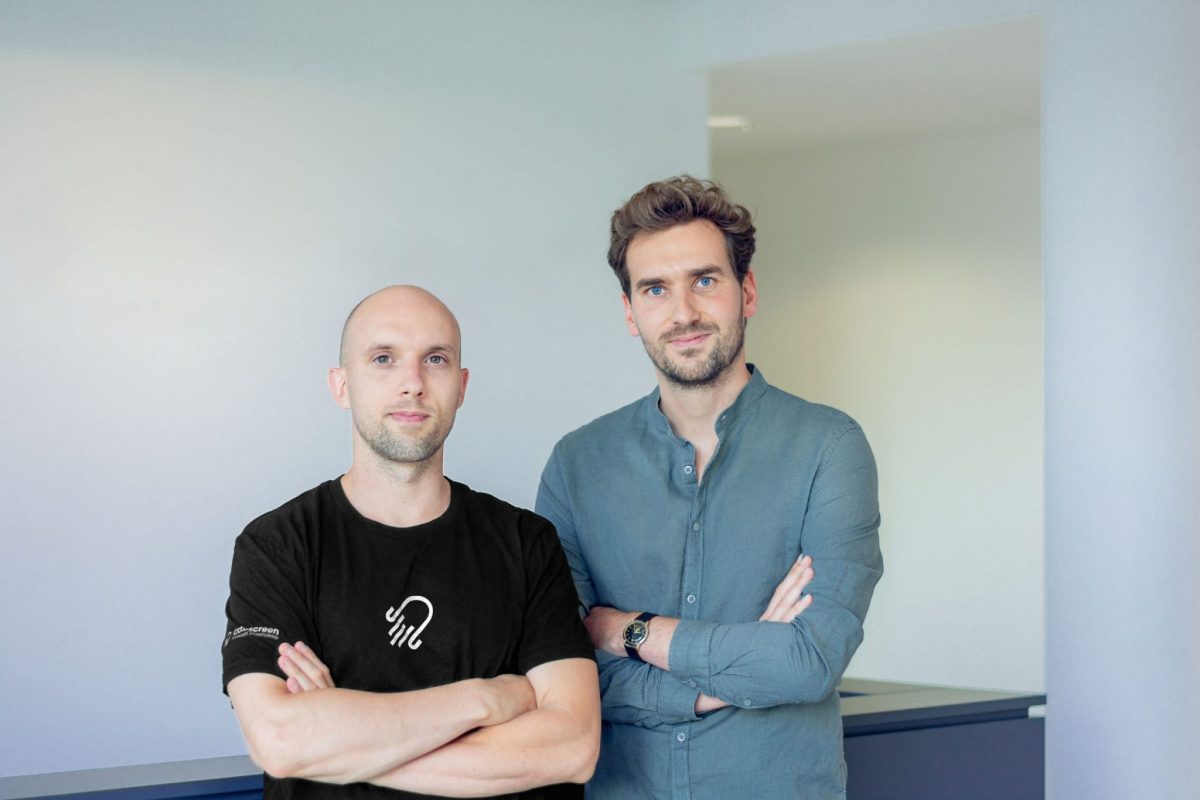
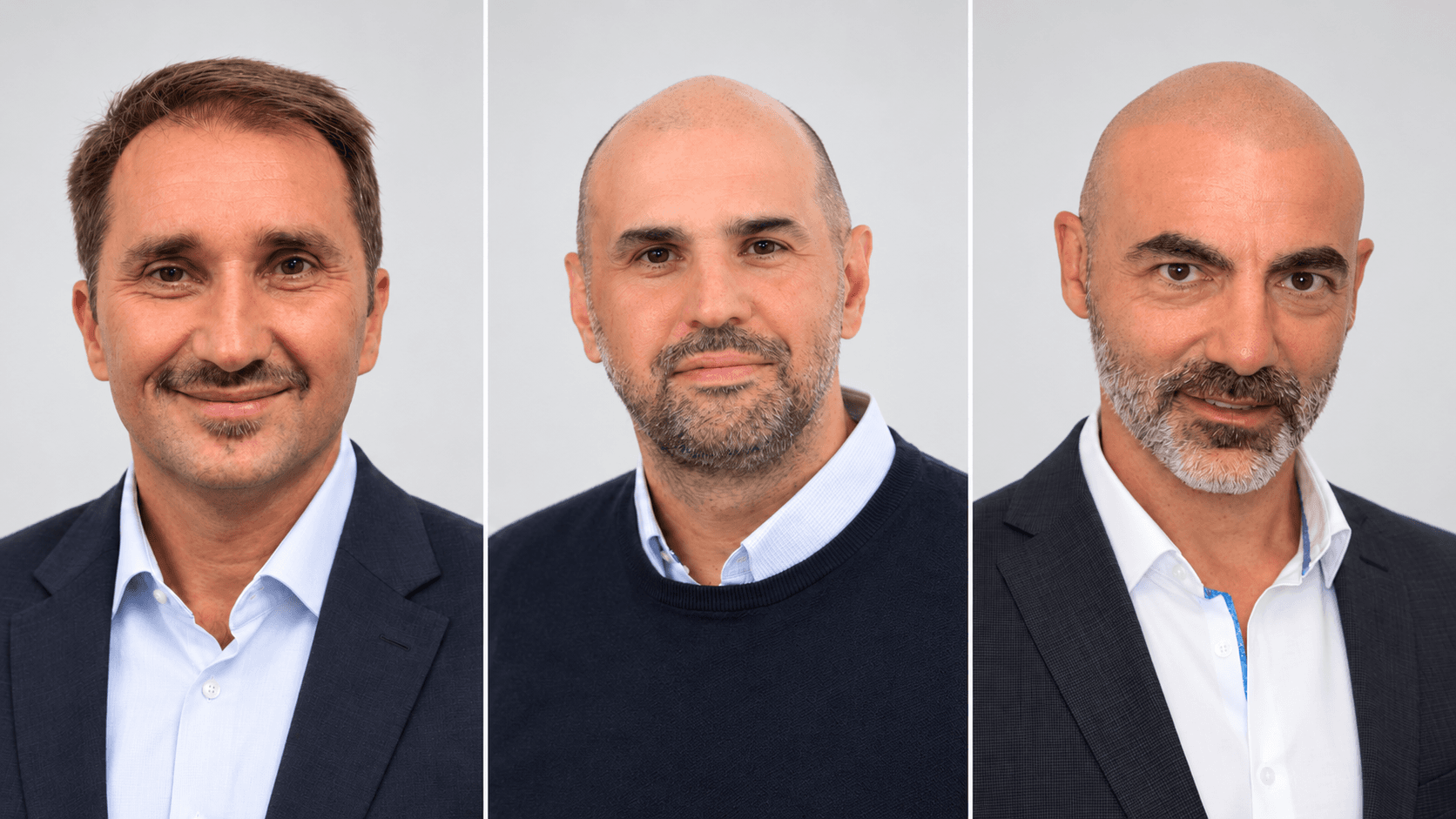
Octoscreen was founded in 2021 by Julian Freese and CTO Barna Kovacs. The startup develops an AI-powered intelligence platform for location, expansion and investment decisions in retail, real estate and financial services.
CEO Julian Freese completed a master’s in entrepreneurship at the University of Liechtenstein. In 2015, he founded Reachbird, an influencer marketing platform that was acquired by Adesso SE in 2021. Immediately after, the idea for Octoscreen emerged.
Munich Startup: Where do you want to be in five years and what has to happen by then?
Julian Freese: In five years, Octoscreen is Europe’s leading location and retail intelligence platform – beyond retail also in residential, logistics and office. For that to happen, three things must happen: first, internationalization into at least nine European markets. Second, expansion into new asset classes. And third, we must maintain our commitment to being the fastest and deepest data partner in the industry.
More courage for risky investments
Munich Startup: What works particularly well in the Munich startup ecosystem and where would you like more support?
Julian Freese: Munich has a lot to offer as a startup location: excellent access to employees and talent, plus an extremely vibrant ecosystem with virtually unlimited offerings – from accelerators to events to networks across all industries. When you build enterprise software like we do, proximity to industry and corporations is a real advantage, the decision-makers are right on the doorstep. Where I’d like more: less conservatism on the capital side. Compared to Berlin, London or the US, Munich is still hesitant when it comes to riskier business areas. And especially with AI-driven companies that are building the next generation of platforms today, I would have wanted more focus and more courage for investment. There’s room for improvement and Munich actually has all the prerequisites to play a leading role in Europe here.
Munich Startup: Remote team or office culture?
Julian Freese: Hybrid with a clear preference for office. We’re a small, focused team and believe the best ideas come from personal interaction – especially in the phase we’re in right now. At the same time, we work with international talent and leverage the benefits of remote where it really makes sense. I think dogma in either direction is nonsense.