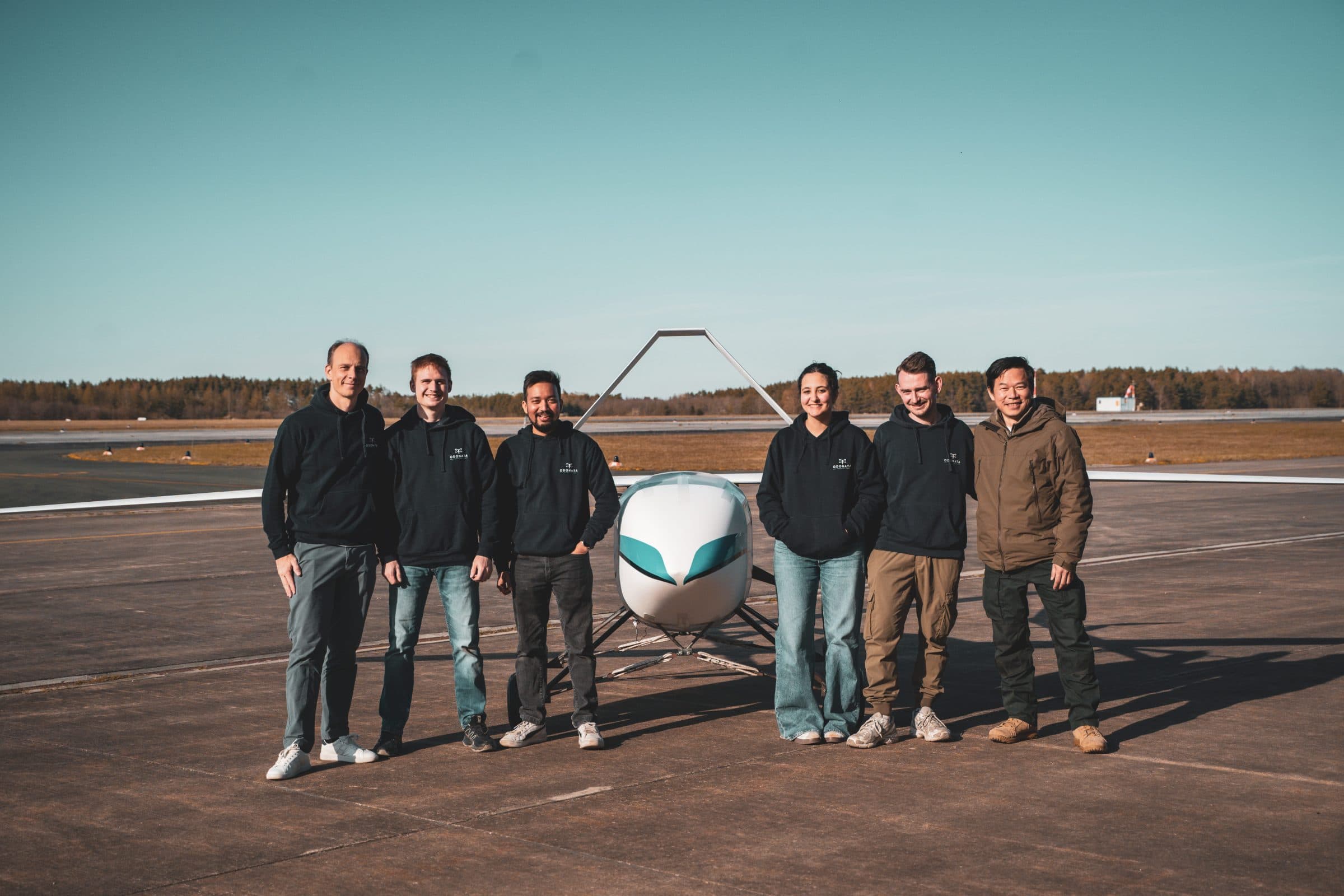

Munich Startup: What problem does your solution address?
Dennis Furchheim, CEO: We address a clear problem in modern logistics: many time-critical transports, such as spare parts, medical goods, or deliveries to remote regions, are currently too slow, too expensive, or dependent on existing infrastructure. At the same time, e-commerce is driving demand for more flexible logistics solutions. That’s exactly why we’re developing Odonata, an autonomous VTOL platform that fills the gap where traditional systems reach their limits.
Munich Startup: What can only you do today?
Dennis Furchheim: Our strength is the combination of relevant payload, long range, vertical takeoff and landing, and a modular platform design. Many solutions only cover individual aspects of this. We’re developing a system that should enable economically viable logistics missions while also offering dual-use potential.
Deliberate pivot towards unmanned platform
Munich Startup: What triggered your founding?
Dennis Furchheim: The origins date back to 2020, shortly after the first eVTOL wave (Editor’s note: eVTOL stands for an electrically powered aircraft that can take off and land vertically) in Germany. We looked at this topic very early in 2020, especially from an economic perspective. It quickly became clear that a viable business model only works with sufficient range and capacity. This initially led to an eVTOL concept around a hybrid hydrogen powertrain. When our 1:8 model showed in 2024 how challenging capital requirements are in this field, we deliberately pivoted towards an unmanned platform. That’s how Pantala was created with its unique selling points.
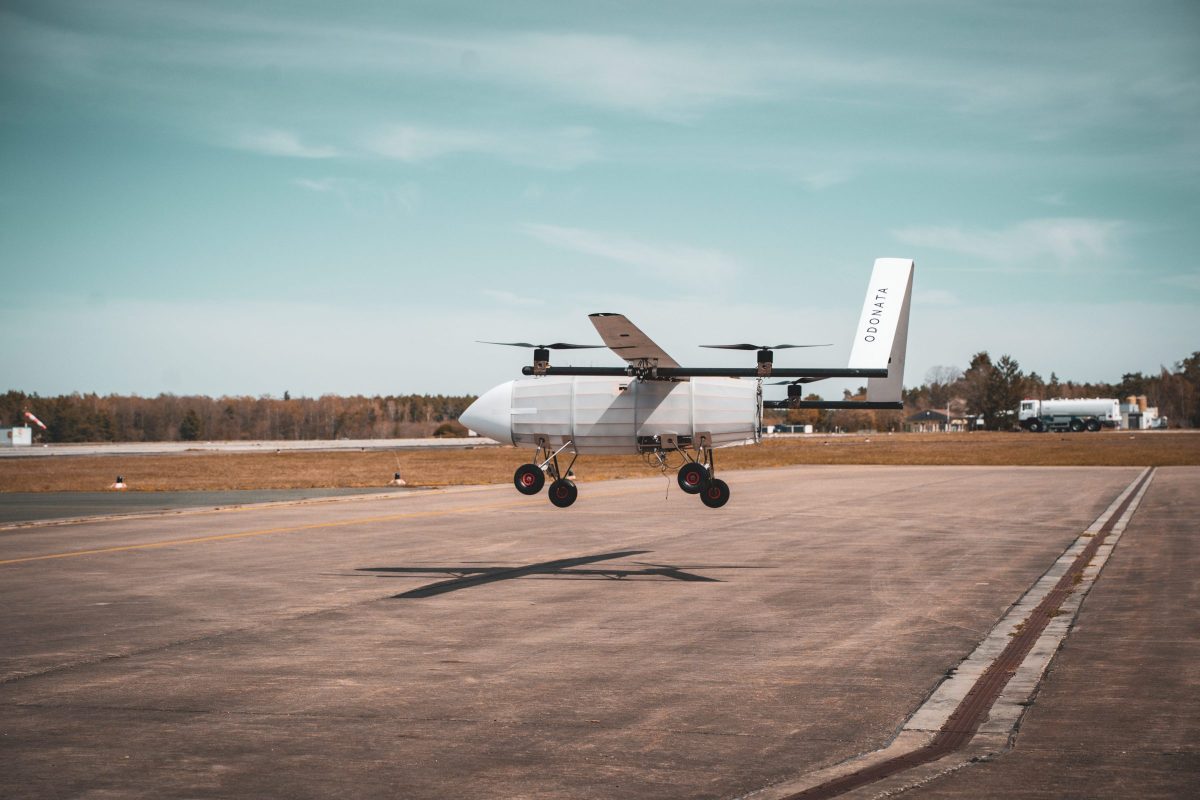
Odonata develops with Pantala an unmanned, hybrid VTOL drone for versatile logistics and industrial applications. The system takes off and lands vertically like a helicopter and flies efficiently like an airplane.
With a wingspan of nearly 8 meters, up to 80 kilograms of payload, over 1,000 kilometers of range, and more than ten hours of flight time, the platform is designed for time-critical transports.
Due to its modular design, Pantala is suitable for different deployment scenarios ranging from logistics to security-relevant applications.
Munich Startup: Was there a moment when you thought about giving up?
Dennis Furchheim: There were definitely phases that were extremely challenging. Especially in a hardware and aerospace project, there are always moments when schedules slip and financing processes take longer than planned. That’s part of the reality. But we’ve never seriously considered giving up. Rather, we’ve focused on how to keep moving forward despite all the setbacks.
From technology to traction
Munich Startup: What would show you in one year that you’re on the right track?
Dennis Furchheim: When technology becomes real traction: successful test milestones, concrete pilot projects, and genuine market interest. Then we’ll know we’re not just building something that flies, but something that’s actually needed.
Munich Startup: Would you found again in Munich and why?
Dennis Furchheim: Yes, definitely. Munich offers a strong environment for deep tech, aerospace, and industrial technologies with good access to engineering and industry.
Munich Startup: Focus or diversification?
Dennis Furchheim: Clear answer: focus. At the beginning, the core platform must be convincing both technologically and economically. Diversification is exciting, but only once the foundation is solid.