
Munich-based startup Planqc is launching the QIAPO research project together with Saarland University, BMW, and Infineon. The project is being funded with 2.3 million euros by the Federal Ministry of Education and Research. For Planqc, the project is another step in testing its own technology on concrete industrial applications.
At its core are complex optimization problems, such as those that arise in the production and distribution of cars or semiconductor chips. Such tasks can often only be solved approximately with classical computers. At the same time, the calculations sometimes require significant time and computing power.
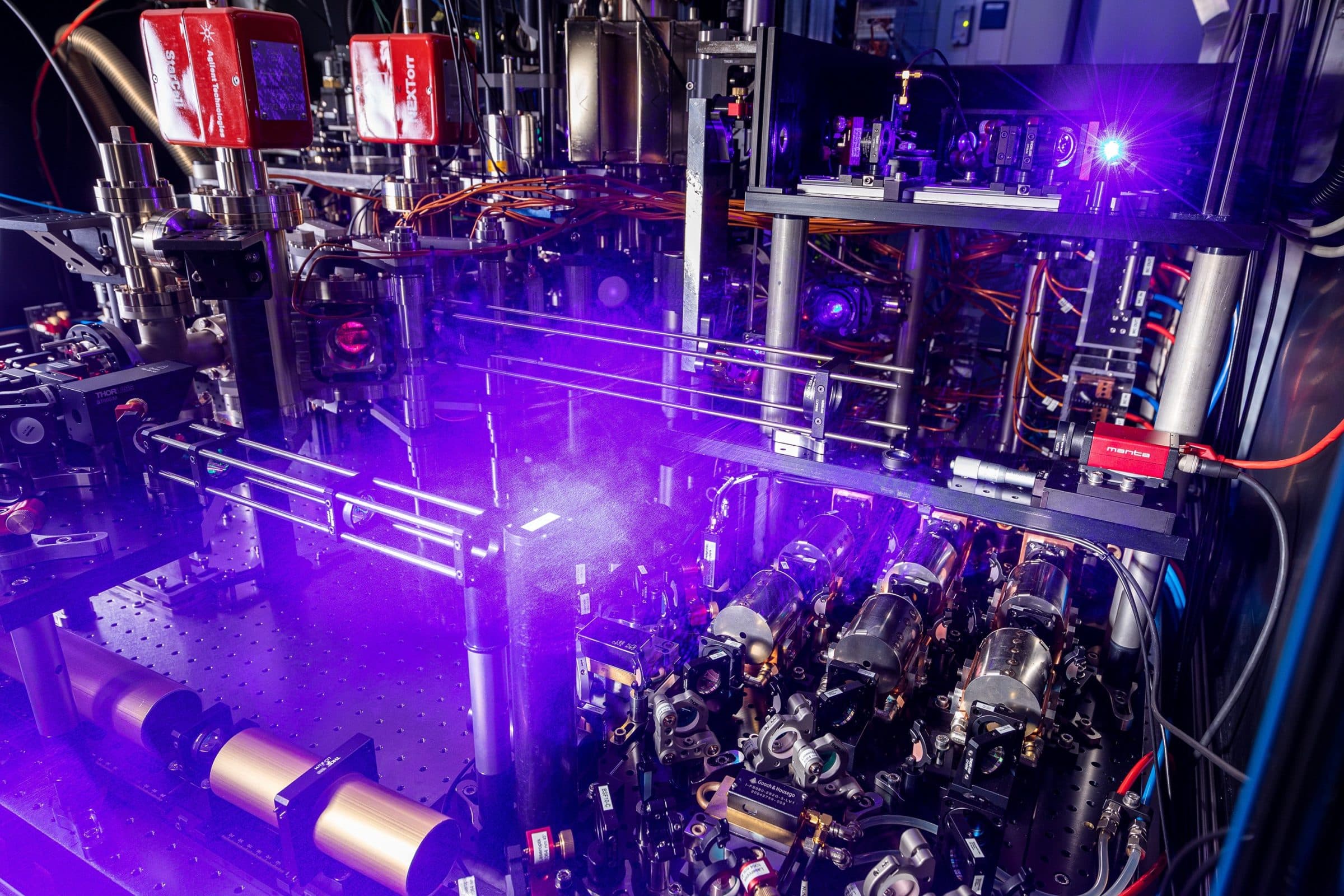
Planqc is developing a neutral atom quantum computer in Garching, which will be used in the project. For the startup, this is not just about research, but also about the question of whether its own hardware can be practically used for real industrial problems.
Hybrid meets classical
QIAPO relies on a hybrid approach combining quantum computers and classical computing power. The quantum computer is intended to prepare particularly difficult parts of a problem so that classical computers can subsequently process them better. The goal, therefore, is not to replace classical methods, but to complement them.
The benefit from Planqc’s perspective: The startup can demonstrate what contribution quantum computers could actually make in industrial processes. This is not just about performance in the laboratory, but about potential real-world applications.
Peter P. Orth, professor of theoretical physics of quantum information at Saarland University, explains:
“Algorithms that are theoretically slower than others can still be faster in practice.”
Step by step in the right direction
QIAPO does not aim to solve industrial problems exactly in every case. Instead, it focuses on better approximate solutions. The background: Many of these tasks are so complex that even a hybrid approach cannot solve them completely exactly. However, if results improve or can be achieved faster, that would already represent practical progress.
Expectations are cautious for now. Over the next three years, the project should clarify whether the approach is fundamentally suitable for addressing such tasks.