
There are diseases where antibiotics are ultimately the only option. However, antibiotic resistance is increasingly becoming a problem in this context. That’s why continuous research in this field is essential. Smartbax is one startup that is doing exactly that. And now research can move forward in leaps and bounds, as the Munich biotech startup has now expanded its Pre-Series A financing round to a total of €6.3 million. With the fresh capital, the company aims to develop its lead program licensed from Aicuris against multidrug-resistant gram-negative bacteria through to IND filing and simultaneously expand its own antibiotic pipeline.
Smartbax is pursuing several novel mechanisms of action against antibiotic-resistant pathogens – one of the biggest unsolved problems in global healthcare. While many classical antibiotics target well-known points of attack, the Munich biotech is betting on innovative molecular strategies designed to overcome resistance or prevent its emergence.
Pre-Series A grows to €6.3 million
With the second closing of the Pre-Series A financing round, the total volume increases to €6.3 million. The additional financing comes from a single family office from Frankfurt.
Already participating in the financing round are Anobis Asset, Bayern Kapital, Boehringer Ingelheim Venture Fund (BIVF), HTGF (High-Tech Gründerfonds) and UnternehmerTUM Funding for Innovators.
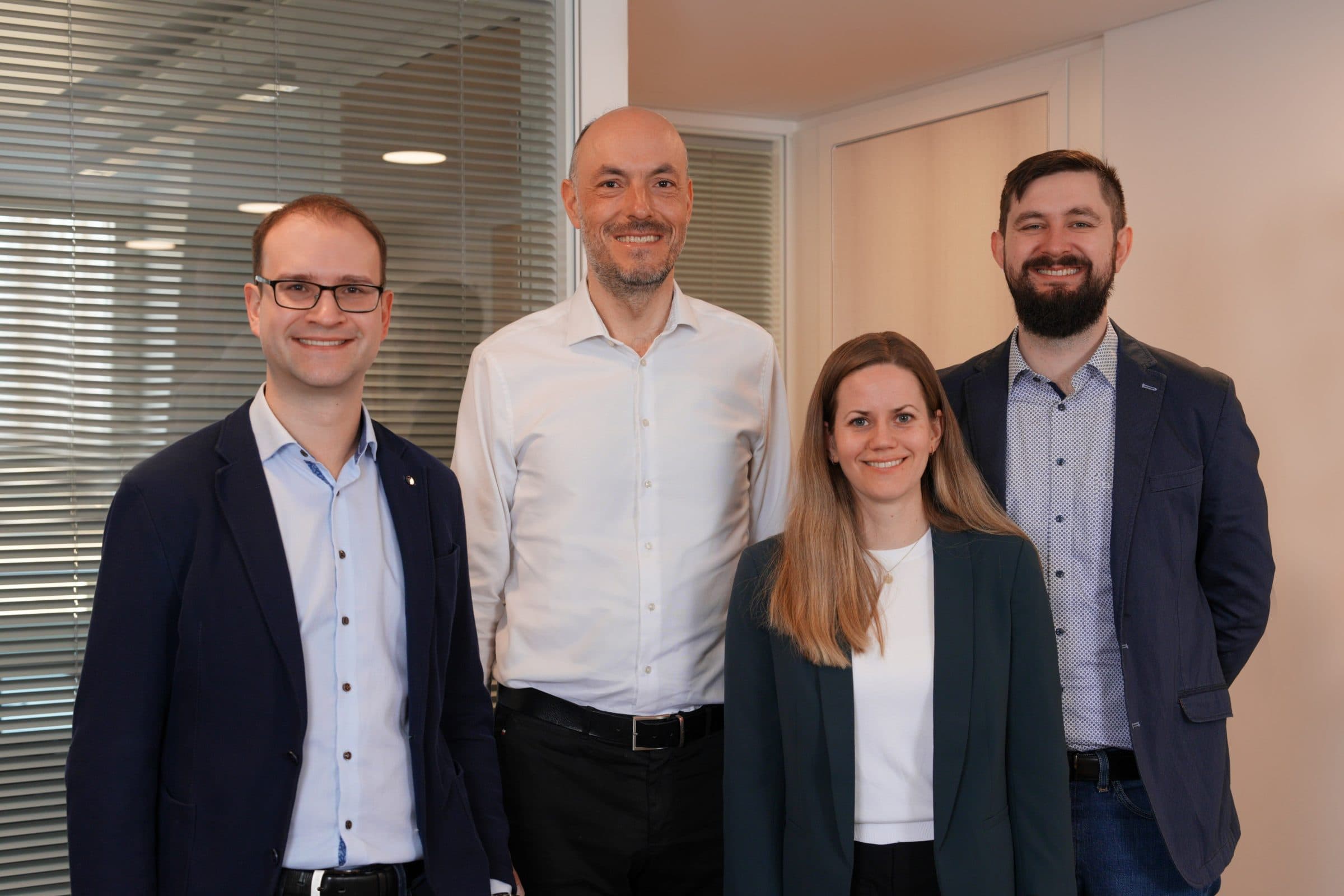
Dr. Robert Macsics, CEO of Smartbax, explains:
“With this additional investment, we can advance our lead program through to IND filing and thus achieve an important step in the further development of our pipeline. At the same time, we are continuing to invest in our proprietary enzymatic activators, which pursue a fundamentally different approach to combating bacterial infections. Together, these programs support our goal of addressing the growing challenge of antimicrobial resistance.”
Lead program targets previously untapped point of attack
The capital is primarily intended to finance the further development of the lead program through submission of an Investigational New Drug (IND) application. With a successful IND submission, a drug candidate can receive approval in the US to initiate clinical trials.
At the center of the financing is an active pharmaceutical ingredient program that Smartbax recently licensed from Aicuris. The small-molecule compound targets a previously therapeutically unexploited step in lipopolysaccharide (LPS) biosynthesis. These form a central component of the outer cell membrane of gram-negative bacteria and represent an attractive target for new antibiotics.
According to the company’s own statements, the program has already demonstrated its efficacy in vivo. The major breakthrough here: even against multidrug-resistant pathogens. Additionally, there is potential for oral administration, which could significantly ease later use.
Proprietary pipeline relies on bacterial self-destruction
In parallel, Smartbax is developing its own pipeline of innovative antibiotics. The company is primarily working on two drug candidates that activate bacterial hydrolases. Rather than attacking the pathogens directly, they trigger autolysis of the bacteria – a novel mechanism of action that differs significantly from established antibiotic classes.
The drug programs are characterized by several promising properties. They are intended to be effective against both gram-positive and gram-negative bacteria and are also able to combat bacterial biofilms. Furthermore, no resistance development has been observed to date. The small-molecule structure is also intended to facilitate further development and later application of the substances.
Should these results be confirmed in further development, the programs could make an important contribution to combating antimicrobial resistance.