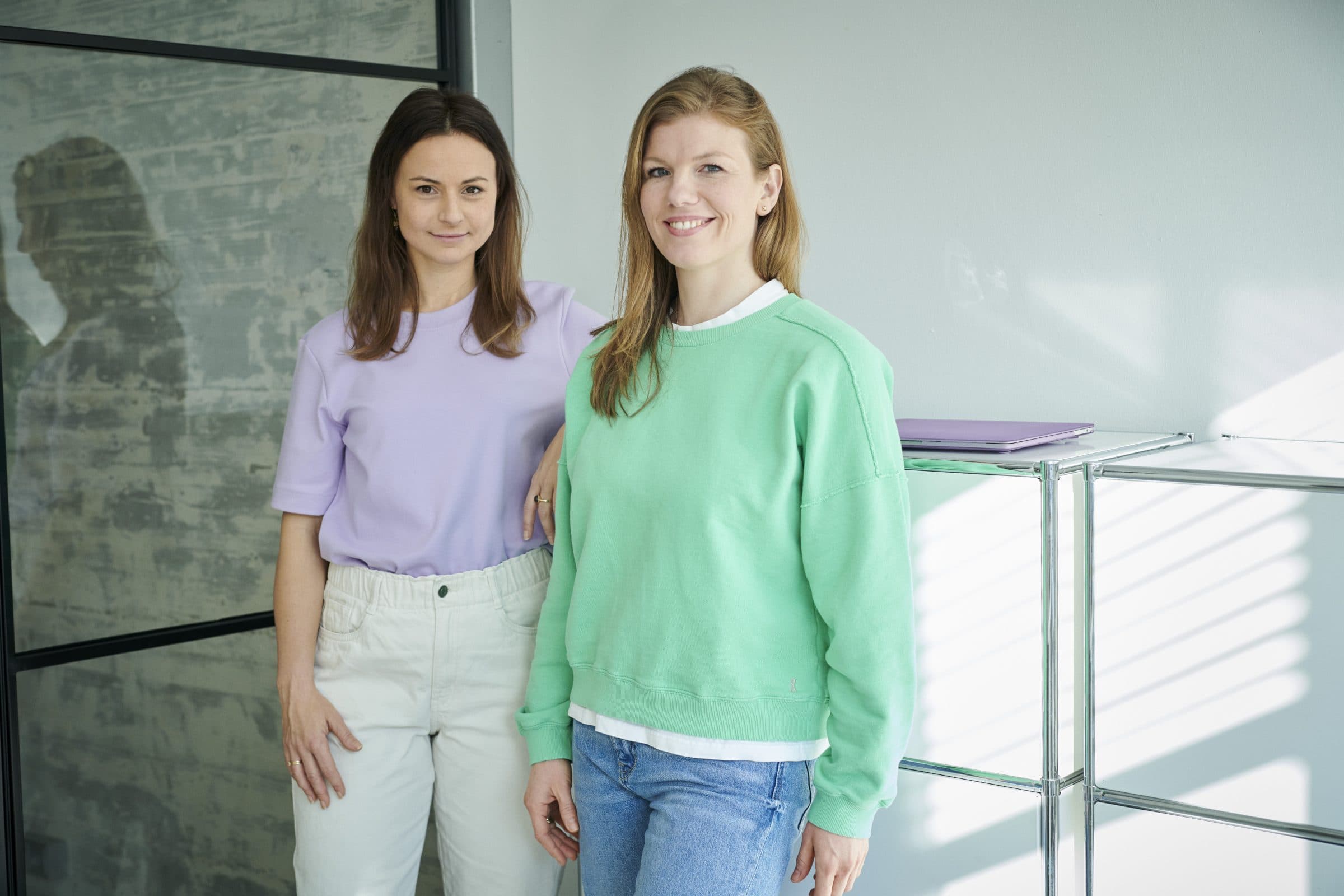

Munich Startup: What motivated you to found Tildi?
Doris Schoger: I wanted to create an alternative model to the linear economy: conserving resources instead of exploiting them. I’ve been a fan of the idea of circularity from the start. Since 2019, I no longer work in e-commerce, but in re-commerce. One letter makes such a difference! Because everything that happens behind it is so much different.
Sofie Morber: Founding Tildi is, for me, a connection between a personal need – I have a six-year-old daughter – and my passion for entrepreneurship, which has always accompanied me. The recommerce market certainly offers great potential, but also many challenges, such as lack of transparency, user-friendliness, and efficiency. That motivated me to create a platform that also clearly stands out in competition – with a focus on innovation, sustainability, and real added value for users. This is how the vision of setting a new standard in recommerce was born.
Tildi founder Doris Schoger: “If you know too much, you might not do it.”
Munich Startup: What would you have liked to know before your first founding?
Doris Schoger: I think if you know too much, you might not do it. There are many pitfalls for founders that might discourage you from founding if you know about them.
Sofie Morber: Similar to becoming a mother: you can know so much about it or prepare for it, but reality is full of surprises, challenges, and growth moments that you can’t imagine beforehand.
Munich Startup: How has Tildi been financed so far?
Doris Schoger: We’ve received initial investments from angels. Beyond that, we’re currently fundraising. We invite everyone who wants to be part of the change to speak with us.
Circular economy as a team sport
Munich Startup: When and where do you get your best ideas?
Doris Schoger: Exchange, exchange, exchange. Circular economy is a team sport, and you have to listen to and meet everyone who can contribute to it. Many ideas come from conversations, from an exchange ping-pong – and much of it already exists, it can be thought through further.
Munich Startup: What are your 3 favorite work tools?
Doris Schoger: Well, I suspect that because I use them daily and don’t change them, I like them: Figma, GitHub, and Google Drive.
Munich Startup: Your top tip on “pitching”?
Doris Schoger: Every audience needs their own pitch. Otherwise, I have no tip, because we ourselves still need to be on many more pitch stages with Tildi.
Munich Startup: Does it seem like a good time to found a company right now? Why?
Doris Schoger: Generally no. But the issues that lead us into the future can’t wait. Markets are saturated, companies are focusing on their crises, subsidies are cut or uncertain, and investors are holding their money close. On the other hand, innovations and concepts that fit this new situation are needed now more than ever. Probably founders need to bring more resilience than they did a few years ago.
Positive influence on the world
Munich Startup: What technology or industry would you focus on for your next founding?
Doris Schoger: I would dive deeper into financial flows. I think circular economy needs new ways of thinking here too. Because often a product is an economic total loss and can no longer be sold for that reason alone. Or I would go into the field of new materials. We need to move away from materials that end up as waste and replace them with new, harmless substances.
Sofie Morber: I honestly can’t think about that right now. But another founding would generally need to have societal added value for me. Something that positively influences the future and at the same time is economically sustainable and successful.
Munich Startup: What could be improved at Munich as a startup location, in your view?
Doris Schoger: I personally would like more spaces to test concepts. Otherwise, I’m quite happy here.
Munich Startup: Which founder would you like to meet in person? And what would you ask them?
Doris Schoger: Not an easy question. I would like to ask Dirk Rossmann how he made the decision to open a store despite price fixing that didn’t comply with it, and just betting that it would fall in the next days. Since I heard his story, I keep asking myself: How much of that was naive courage, and how much was calculated risk?
Sofie Morber: I can’t think of anyone specific right now. Dialogue with other founders, regardless of company size, is incredibly valuable. However, particularly successful founders are a great inspiration for me. I find it exciting to learn: Which decision was crucial for your success in retrospect? And what mistake should every founder make at some point to learn? And what mistake should you definitely avoid?