
PITCH & PEOPLE Folge 41: Voiceline
Voiceline is now one of the most exciting AI startups in B2B sales, but the path to get there was anything but straightforward. In a conversation on Pitch & People, founder Nicolas Höflinger talks about a painful pivot, laying off much of his team, and the realization that even good technology can fail without clear focus.


When Nicolas Höflinger and his co-founder Sebastian Pinkas founded Voiceline in 2020, they were convinced of one thing: speech is massively underestimated in everyday work.
nnnnThe idea emerges from Höflinger’s time as a management consultant. Constantly on the road, constantly in client meetings, constantly confronted with information that needs to be documented or processed later. For him, it quickly becomes clear: speech is often the fastest way to capture knowledge – but existing systems are not designed for it.
nnnnToday, Voiceline develops an AI-powered platform for field sales. Sales staff can document information by voice after customer meetings, create tasks, or update CRM systems. But before the company finds its current focus, several years pass full of uncertainty.
nnnnThe grand vision was initially too broad
nnnnAt the beginning, the founders pursue a much broader approach. Speech should work equally for consultants, marketing teams, agencies, product managers, and executives. The product is offered for free, and users are supposed to provide feedback and help find the right market.
nnnnInterest is there. The breakthrough doesn’t come.
nnnnAround 400 teams and companies test the solution. Despite this, no real product-market fit emerges. Looking back, Höflinger describes this phase in the Pitch & People videocast as a typical founder mistake.
nnnnnnnnn“We wanted to do voice for consultants, for marketing teams, for product managers, for agencies, for managers, so for everybody and his uncle. And it didn’t work. We then realized: Hey, we’ve been at this for a year, a year and a half, our initial funding is running out. It’s too broad, it’s not flying.”
n
While the product continues to be developed, the funding environment simultaneously deteriorates. Available resources become scarce. For Voiceline, the most difficult phase of the company’s history begins.
nnnnWhen everything suddenly was at stake
nnnnThe team has already grown to nearly 20 employees at this point. But without a clear market and without sufficient capital, the founders must make a tough decision.
nnnnVoiceline shrinks drastically.
nnnnMuch of the team must leave the company. In some cases, founders and remaining employees can temporarily no longer pay themselves salaries.
nnnnnnnnn“We had built the team up to nearly 20 people back then and then we just had to say: Hey, this doesn’t work. Unfortunately, we have to scale back down to five or six people. And sometimes we couldn’t even pay salaries to us as founders and the employees who stayed. But the belief in us as founders and in all the colleagues who were there from the beginning was simply: Hey, there’s something to voice.”
n
Despite the crisis, the team never loses faith in the technology. It’s not the basic idea that seems wrong, but the target audience. Hanging in the office back then is a banner with two words that later become the company’s guiding principle: Brutal Focus.
nnnnThe pivot that saved Voiceline
nnnnThe decisive insight comes from conversations with users.
nnnnAmong the hundreds of test users are field sales staff. They are already using the technology to capture conversation notes and create summaries for CRM systems. There, Voiceline encounters a pain point that is significantly larger than in all other target groups.
nnnnField sales staff spend a significant portion of their working time on documentation, CRM maintenance, and administrative tasks. This is exactly where speech can play its greatest advantage.
nnnnThe consequence: a radical cut.
nnnnVoiceline abandons its broad vision and concentrates exclusively on field sales. Instead of free usage, the startup focuses on paying customers, direct sales, and a single core use case.
nnnnnnnnn“We stopped doing online marketing and product-led sales and focused on real outbound sales. We reached out to customers on LinkedIn and called them, went to trade shows to speak directly with our users. We only did field sales, only voice-to-visit-report, so really that one workflow that every field sales person has. We implemented it and made it really awesome. And then we realized: Okay, now we’re getting traction.”
n
More than just time savings
nnnnToday, Voiceline promises its customers not just less administrative work. The company speaks of “Field Intelligence.” Behind this lies the idea of making the knowledge usable that emerges daily during customer meetings. Field sales staff provide information about customer needs, competitors, or market trends that were often lost before. This data is structured and made analyzable for sales, marketing, or product management.
nnnnThe immediate benefit, however, becomes apparent elsewhere first: According to Höflinger, the solution saves up to 80 percent of manual documentation effort. Information can be captured directly after the meeting or on the go by voice, instead of entering it into CRM systems later.
nnnnToday, Voiceline works with industrial companies, machinery manufacturers, and large corporations. At the beginning of the year, the startup closed a funding round of ten million euros. The capital is to flow primarily into product development, customer success, and further growth.
nnn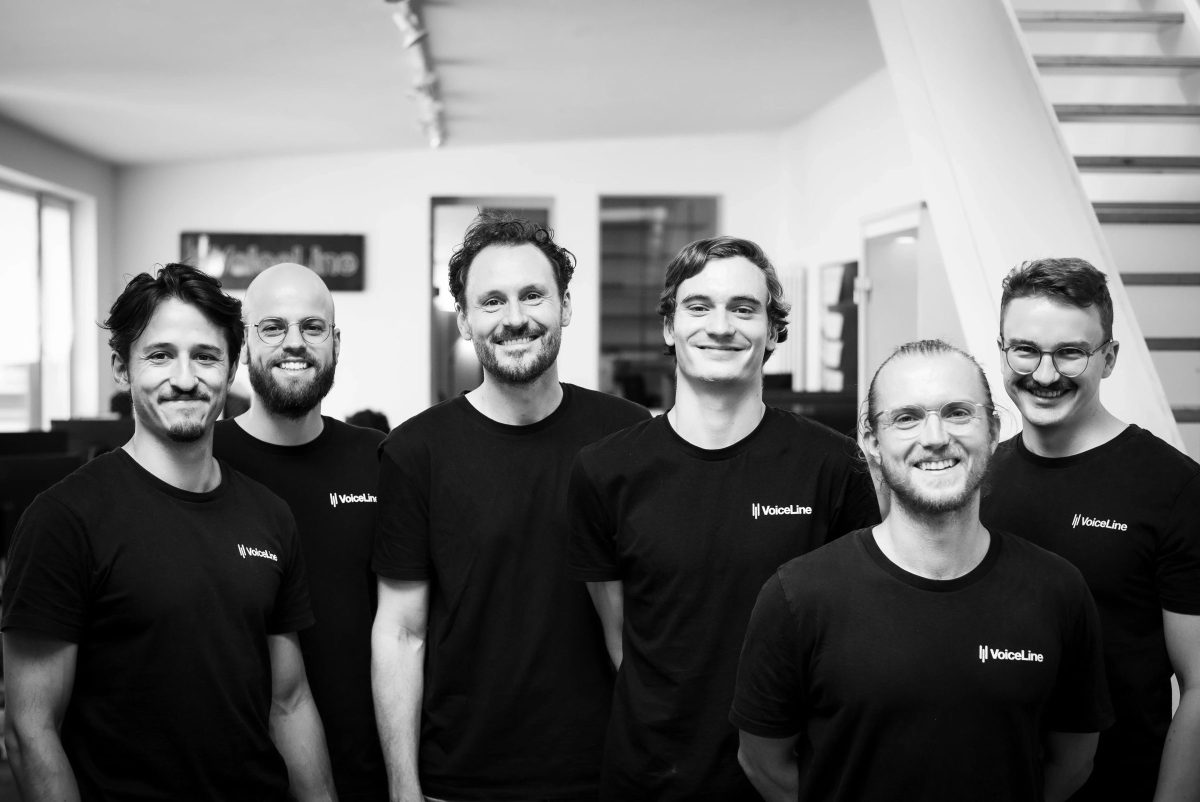
Voiceline is a Munich-based AI startup founded in 2020 by Nicolas Höflinger and Sebastian Pinkas. The company develops a voice AI platform for field sales: sales staff document customer meetings via voice input, while the AI automatically creates visit reports, CRM entries, tasks, and other follow-up processes. The goal is to significantly reduce administrative effort in sales while making valuable customer and market data usable for companies. Customers include industrial companies and corporations from various industries. At the beginning of 2026, Voiceline secured Series A funding of ten million euros to further develop the platform and drive growth.
nn“It’s incredibly fun”
nnnnPitch & People moderator Kyrill Ring asks Höflinger about his most important learnings as a founder.
nnnnnnnnn“In a startup you just get a punch in the face every two weeks or every two months. And that’s just how it is. You have to know that. But if you accept that, then it’s one of the coolest jobs in the world. It’s incredibly fun to do. I can’t imagine doing anything else.”
n
The story of Voiceline shows that successful startups don’t always have to stick to their original idea. Sometimes growth only happens when founders are willing to let go of almost everything else. For Nicolas Höflinger, that was exactly the toughest moment of his founder career – and in retrospect, the most important one.
n