
PITCH & PEOPLE Folge 9: Virtonomy
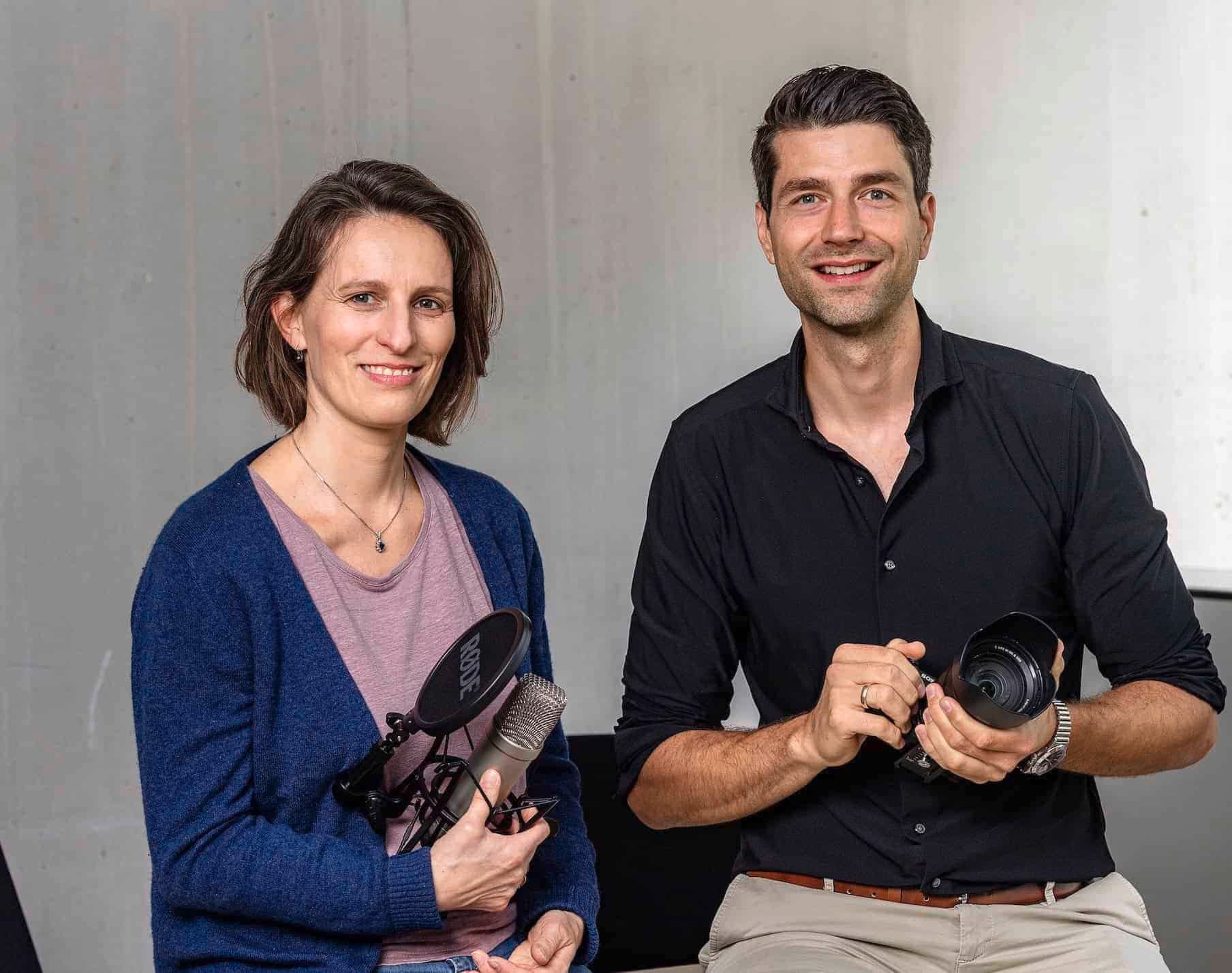
The development of new medical devices often takes years, costs millions, and too frequently fails at clinical trials. Munich-based deep tech startup Virtonomy wants to change that – and is saving lives in the process. In the video podcast Pitch & People, founder Simon Sonntag discusses the digital twin as the key to faster, safer, and more ethical medtech innovation.


Simulation instead of animal testing
Seven years of development time, over 100 million dollars in investment volume – that’s how long and expensive the development of a new medical product typically takes on average. The biggest hurdle is clinical trials, as Simon Sonntag, co-founder of Virtonomy, explains in the Pitch & People video podcast:
“Many fail due to basic costs, long timelines, or simply because they are not feasible.”
This is exactly where Virtonomy comes in: Using digital patient twins based on real clinical data, implants and medical devices can be tested and optimized virtually.
The result: costs and development time plummet dramatically, animal testing and clinical trials are reduced – with regulatorily actionable results. Industry giants like Medtronic, Boston Scientific, and Johnson & Johnson are already using Munich-based technology.
How Virtonomy saves lives
What has long been standard in the automotive industry is now revolutionizing medical technology. But for Virtonomy, it’s about more than efficiency – it’s about saving sick people’s lives.
A particularly striking example of the difference Virtonomy’s technology can make is the case of a severely ill heart patient. He was supposed to receive a new heart valve repair system, but the regulatory authority initially refused approval because data on durability was missing. Simon Sonntag recalls:
“Experimentally, that would have taken half a year. The patient wouldn’t have survived that because he had at most three weeks to get the implant.”
The Virtonomy team simulated the test on the computer, checked durability and safety, and created a comprehensive report.
“The report was submitted, accepted, and the patient could be treated. We saved another life.”
Help for the littlest ones
Virtonomy’s approach is particularly important in pediatric medicine. For complex heart surgeries in children, access routes to the heart are planned digitally in advance.
“The whole thing can be tested on the computer before implantation, and then the best access route is evaluated together with the clinicians.”
For young patients, this can mean the difference between life and death.
Deep tech made in Munich
Behind Virtonomy is a team of around 20 experts with strong roots in the Munich tech scene. After studying applied mathematics and earning a doctorate in cardiovascular engineering, Simon Sonntag founded the company in 2019 together with Wen-Yang Chu, formerly of Philips Healthcare.
Supported from the start by programs from UnternehmerTUM and international investors such as Holzbrinck Ventures, Accenture, and Honeystone Ventures (Palo Alto), Virtonomy is today a globally growing medtech company. Interest is growing rapidly, especially in the USA, where the FDA is increasingly promoting in silico methods.
A market that’s just emerging – but will be huge
Sonntag is convinced: the market for virtual clinical trials is just beginning.
“If you look at how much money flows into clinical trials today, you can imagine what it means if we save just a few years of development time.”
The Munich startup is demonstrating how digital technologies can transform medical technology and create real added value for patients.