
PITCH & PEOPLE Folge 30: Klaus Sailer
Many startups are written off early – but according to Klaus Sailer in the Pitch & People video cast, that’s often where the greatest potential lies. The SCE CEO explains why uncertainty is a competitive advantage, what Europe’s startup ecosystem still lacks, and why the continent urgently needs to find its own entrepreneurial USP.


Anyone searching for success in the startup ecosystem often orients themselves by clear patterns: strong teams, scalable business models, convincing pitches. Yet it’s precisely this logic that Klaus Sailer questions. The head of the Strascheg Center for Entrepreneurship (SCE) in Munich has observed a very different dynamic for years and brings it to the point in our video cast Pitch & People:
“We’ve found that many startups that no one believed in become the best. So we can’t know at the beginning whether a startup will be successful or not.”
This perspective is the foundation for Sailer’s work and a clear alternative to an ecosystem that tries to predict and standardize success as early as possible.
Uncertainty as a principle
For Sailer, uncertainty is not a problem but a prerequisite for innovation. His own background as a physicist taught him exactly that – and this way of thinking runs through his work with founders to this day.
“As a physicist, you quickly learn that sometimes things are different than you think. You live with uncertainty, but the state of uncertainty also brings many opportunities with it.”
This attitude fundamentally changes how we view startups. Rather than minimizing risks, it’s about working with them. Rather than forcing quick results, it’s about allowing developments to unfold. Especially in the early phase, this means above all one thing: patience and a willingness to give even imperfect ideas space to grow.
Europe’s missing USP
While the SCE deliberately focuses on openness and diversity, Sailer sees a structural problem at a larger level – particularly in Europe. In global comparison, he sees a lack of clear positioning.
“The US has found its USP. They say we focus on the individual entrepreneur. China has also found its way, they think completely differently. And I believe that here in Europe we always oscillate between the US – we need more venture capital – and the question of whether we should control it more through the state.”
According to Sailer, this very oscillation prevents an independent model from developing. Instead of leveraging its own strengths, Europe orients itself towards existing systems – without fully having their prerequisites. His demand is therefore clear: Europe needs its own USP in entrepreneurship.
And this could lie precisely where Europe has traditionally been strong – in the interplay of different actors. Sailer is thinking of a system in which startups, established companies, politics, and universities are more closely interwoven and jointly drive innovation. Entrepreneurship thus becomes not just an economic instrument but a social lever.
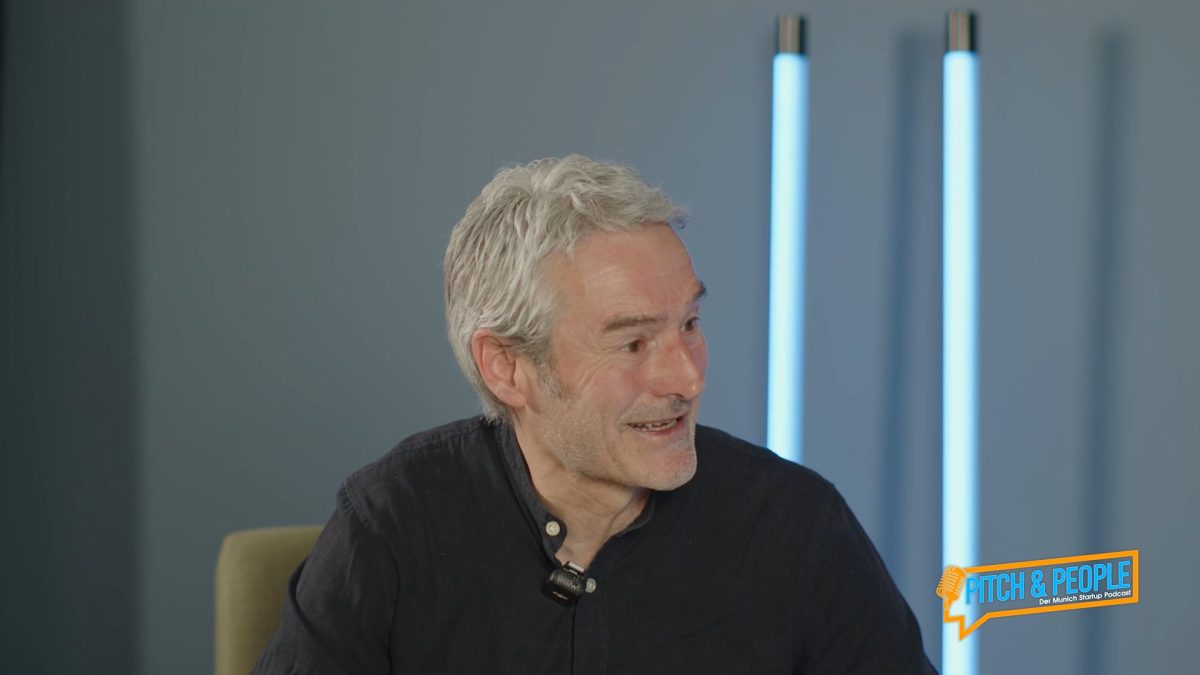
Prof. Dr. Klaus Sailer is Professor of Entrepreneurship at the Hochschule München and Managing Director of the Strascheg Center for Entrepreneurship (SCE). The PhD physicist started his career in industry at Infineon before founding and leading several companies himself. For around two decades, he has significantly shaped startup promotion in Munich. In addition to his work at the SCE, Sailer is involved in various initiatives and networks to strengthen entrepreneurship and is considered one of the central figures in the Munich startup ecosystem.
Responsibility for the future
For Sailer, entrepreneurship doesn’t end with economic success. It’s always also about impact – and about responsibility. Especially in times of major challenges like climate change, he sees entrepreneurship as a decisive factor for developing sustainable solutions.
“If you already have such a powerful tool as entrepreneurship, you also have to take responsibility. What can you change in society? Is it something good or something bad?”
This perspective also connects the two seemingly opposing worlds of deep tech and social entrepreneurship. For Sailer, they are not opposites but two sides of the same coin – technological progress and social benefit must be thought of together.
In the end, everything comes down to one central insight: neither startup success nor economic future can be fully planned. Those who want innovation must allow uncertainty – and those who want to succeed as a continent need more than just copies of existing models. Europe’s chance lies in finding its own path. And perhaps also in giving precisely those ideas a chance that no one believes in today.