About Teratrace GmbH
TERATRACE enables public mobility service providers to measure passenger flows in real time and predict network utilization. Challenges: The trend toward urbanization and the desire for sustainable mobility solutions are increasingly leading to congestion in public transport networks. These cause annual costs in the double-digit millions range in major cities. Furthermore, customer satisfaction suffers from lack of comfort, insufficient reliability, and increased security risks. The continuous improvement of service quality for subways, buses, streetcars and other modes therefore represents a major and urgent challenge for public transport operators. To optimize utilization and operate the transport network efficiently and with a customer focus, it is essential to understand the dynamics of passenger flows in public spaces. Currently, this relies on manual passenger counts, personal interviews, and historical data on traffic flows. This is labor-intensive, inefficient, does not allow for real-time action, and does not leverage the innovation potential of digital technologies. Artificial intelligence for reliable, safe, and sustainable urban mobility: TERATRACE uses artificial intelligence to analyze information from different data sources, enabling accurate real-time measurement of passenger flows. This involves collecting sensor data, such as from WLAN access points and infrared scanners, and combining it with external data sources such as weather services or municipal event calendars. This makes it possible not only to observe current use of the mobility offering, but also to predict bottlenecks in the network in a timely manner. Customer benefits: • Significant reduction of congestion situations through better distribution of passengers, optimized schedules, and real-time passenger management. • Improved passenger satisfaction through reliable passenger communication and route planning. • Savings of up to eight figures annually by reducing manual passenger surveys, through optimized data-based investment decisions (e.g., modernization, vehicles), and by minimizing ongoing operating costs.
Discover more articles, startups, and events from the ecosystem
Munich Startup Recap 38/26
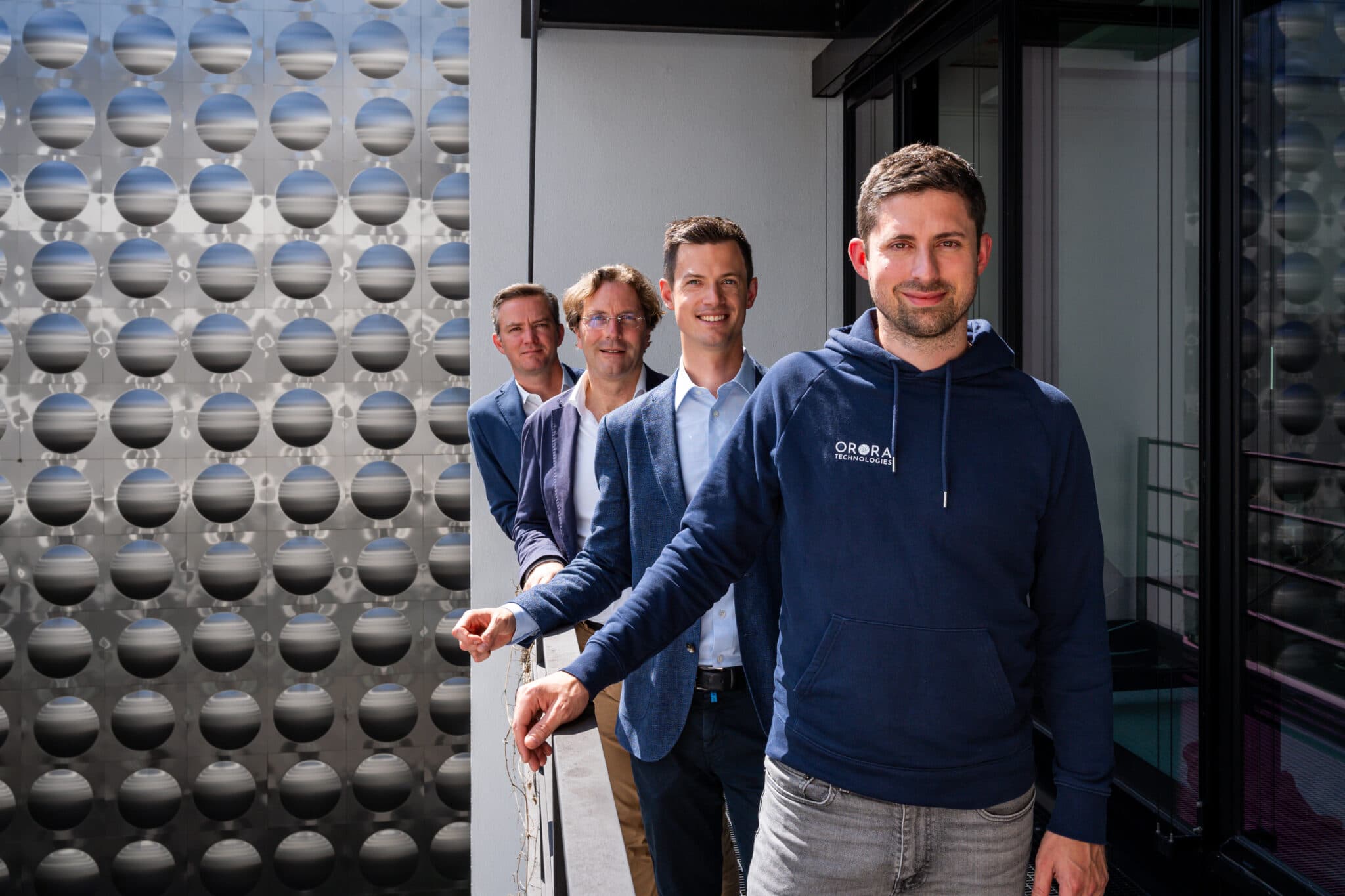
Faster Wildfire Detection: Ororatech Partners with Eutelsat
Project-S Uses Radar to Ensure a Safe Orbit

Futuring Ideathon – What is the Future of Creativity and Innovation in Munich?