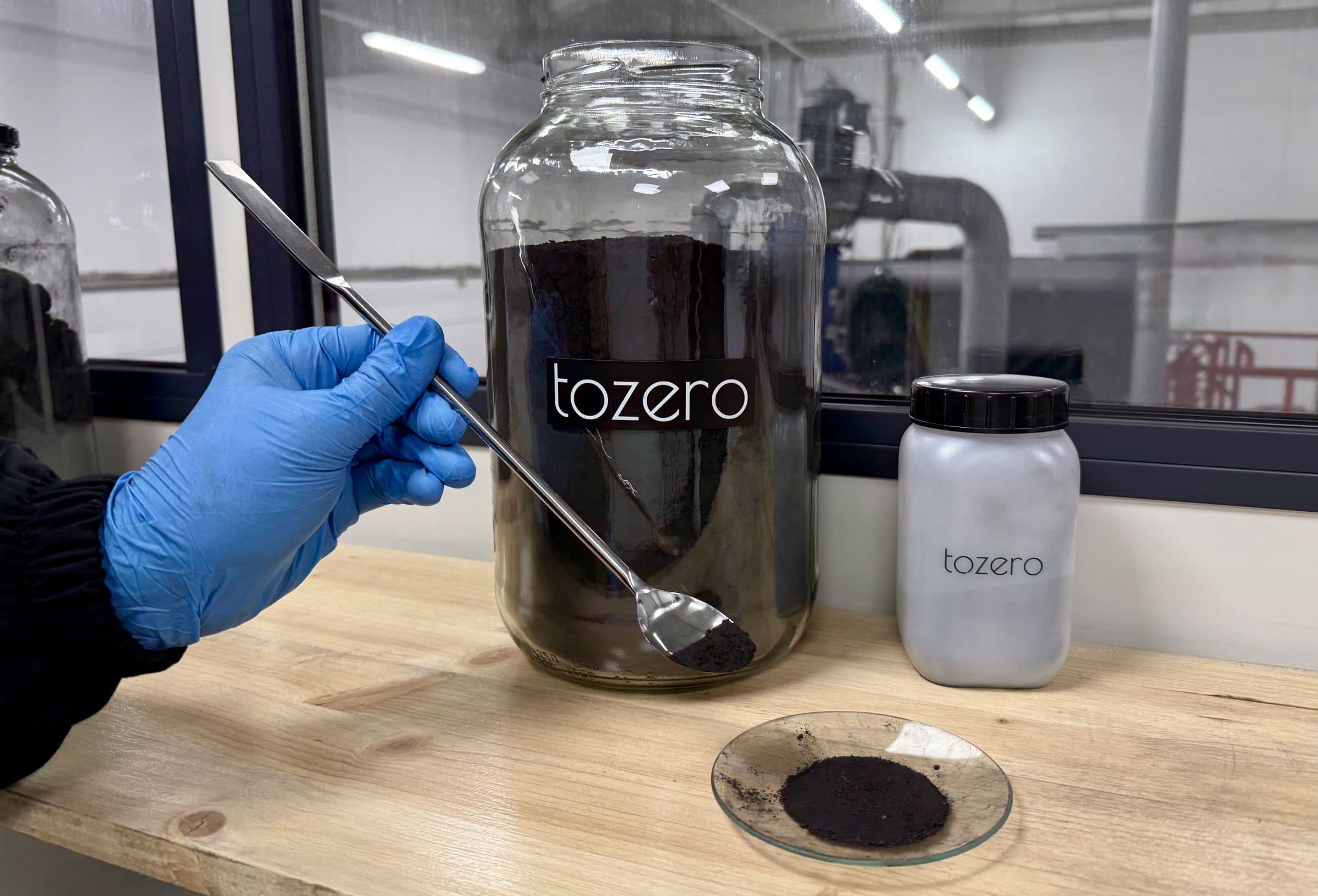

Tozero has achieved an important breakthrough in the production of recycled graphite in battery quality at industrial scale. For the first time, the material has been successfully used in the production of battery cells. For the startup, this demonstrates its suitability for commercial application.
Conventional recycling processes often burn graphite or dissolve it with strong acids, causing it to be lost. Tozero’s process is designed to enable the recovery of over 80 percent of graphite while preserving its morphological integrity. This allows the material to be processed back to battery quality. The successful cell test confirms performance comparable to a battery cell made from virgin graphite.
Sarah Fleischer, co-founder and CEO of Tozero, comments:
“This is a milestone not only for Tozero, but for the entire European battery industry. We have already seen our recycled lithium successfully return to the European supply chain, and now we are proving the same for graphite. Although graphite is essential for battery stability, it is often overlooked in recycling – it is largely considered non-recyclable – even though it is even more critical and geopolitically vulnerable than lithium.”
With its facility, the startup can recover even more critical materials and help companies with decarbonization, securing local supply chains, and transitioning to a true circular economy, according to Fleischer.
Adham Raslan, hydrometallurgy engineer at Tozero, adds:
“By optimizing our recovery methods, we have unlocked the full potential of recycled graphite. We are giving graphite a second chance – we are bringing it ‘Back to Black’.”
Founded in 2022, the company aims to close the supply gap for recycled batteries in Europe. At its pilot facility, opened in summer 2023, Tozero already operates at industrial scale and recovers lithium and graphite from battery waste. By 2027, the startup plans to produce more than 2,000 tons of recycled graphite. By 2030, it aims to produce over 10,000 tons. To build a circular supply chain for lithium and graphite, the startup also collaborates with battery waste suppliers in more than ten countries. This is intended to further reduce Europe’s dependence on imports and the carbon footprint of battery production.