
The award-winning startup Inveox is insolvent. The reason is a financial crisis triggered by an unexpected failure to secure financing from its shareholders. The Munich Regional Court has accepted the insolvency petition and appointed attorney Marc-André Kuhne as provisional insolvency administrator. In cooperation with M&A consulting firm Falkensteg, he has already initiated a structured investor process. The goal is to preserve the company’s technology and as many of the 20 jobs as possible.
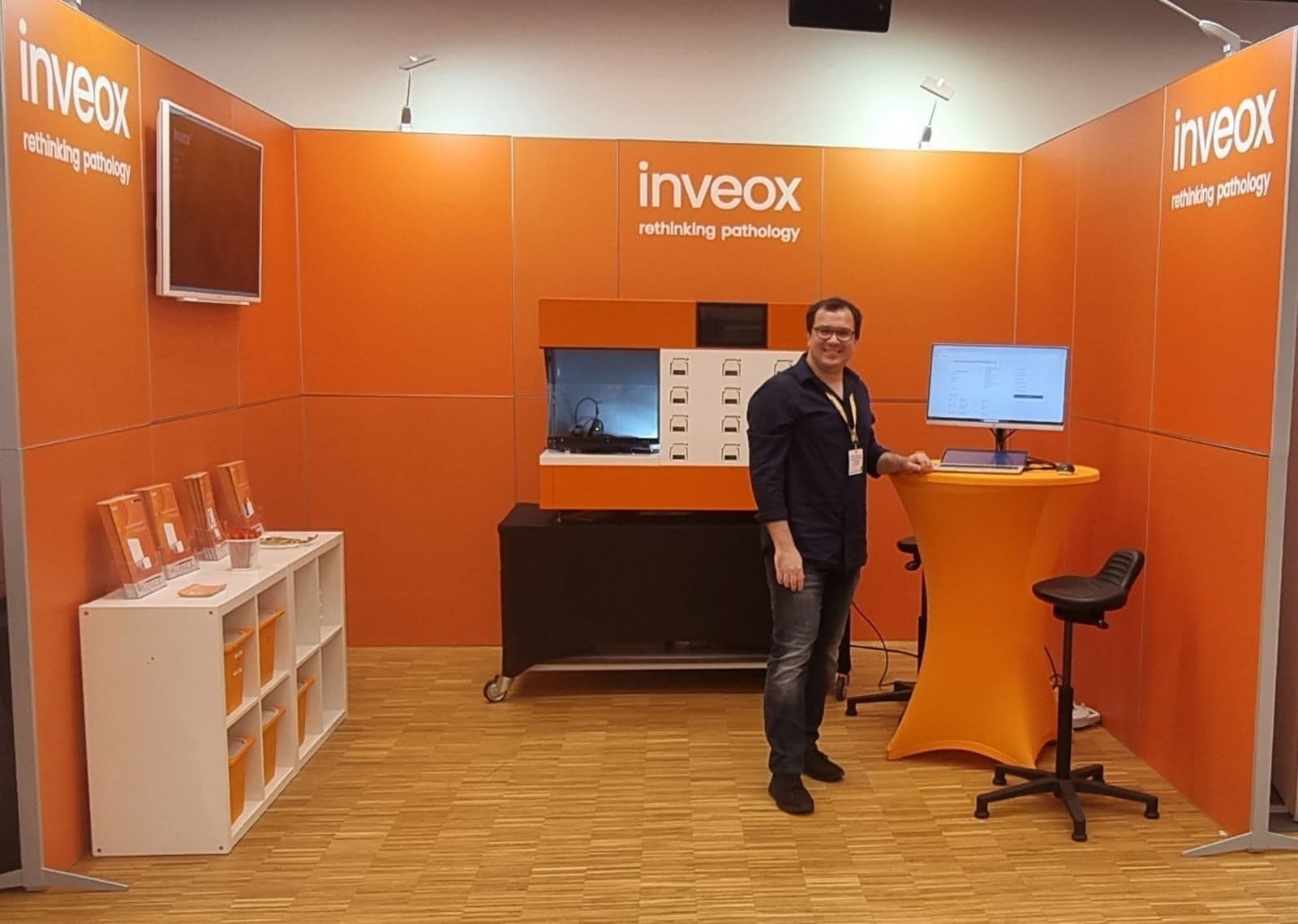
Since 2017, Inveox has been working to improve the processing of tissue samples, particularly for cancer diagnostics, through innovative technology. The healthtech’s software digitalizes sample shipping and receiving in the laboratory. A smart sample container and an automated sample processing system are designed to make the entire process safer, faster, and less error-prone. Ultimately, it’s about automating tissue sample processing, digitalizing it, and enabling AI-powered diagnostics.
According to the company, over 100 histopathological laboratories in Germany were involved in developing the concept. The device is currently being installed and commissioned in a private clinic. Further investments are required before final market readiness.
“Inveox’s technology is highly innovative, and there is undoubtedly a market for digitalizing pathological laboratory processes. For this reason, I am optimistic that we will find a sustainable long-term solution for this very exciting company,”
explains attorney Kuhne, provisional insolvency administrator at the law firm Dkr Kuhne Dr. Raith in Munich.
Numerous awards for Inveox
Inveox was named startup of the year by Forbes in 2018. The same year, the healthtech also won the Munich Startup Award. In 2019, the company made the finals for the German Innovation Prize, and in 2020, it was honored by the Ministry of Economics as Digital Startup of the Year.
Founder Dominik Sievert is also confident:
“Our technology has proven itself, and we see strong customer interest in a market that desperately needs digitalization and efficiency improvements. We have already demonstrated that our system works.”
Co-founder Maria Sievert adds:
“Our mission is to make cancer diagnostics safer and faster. The urgent need for digitalization and automation in pathology is unmistakable.”