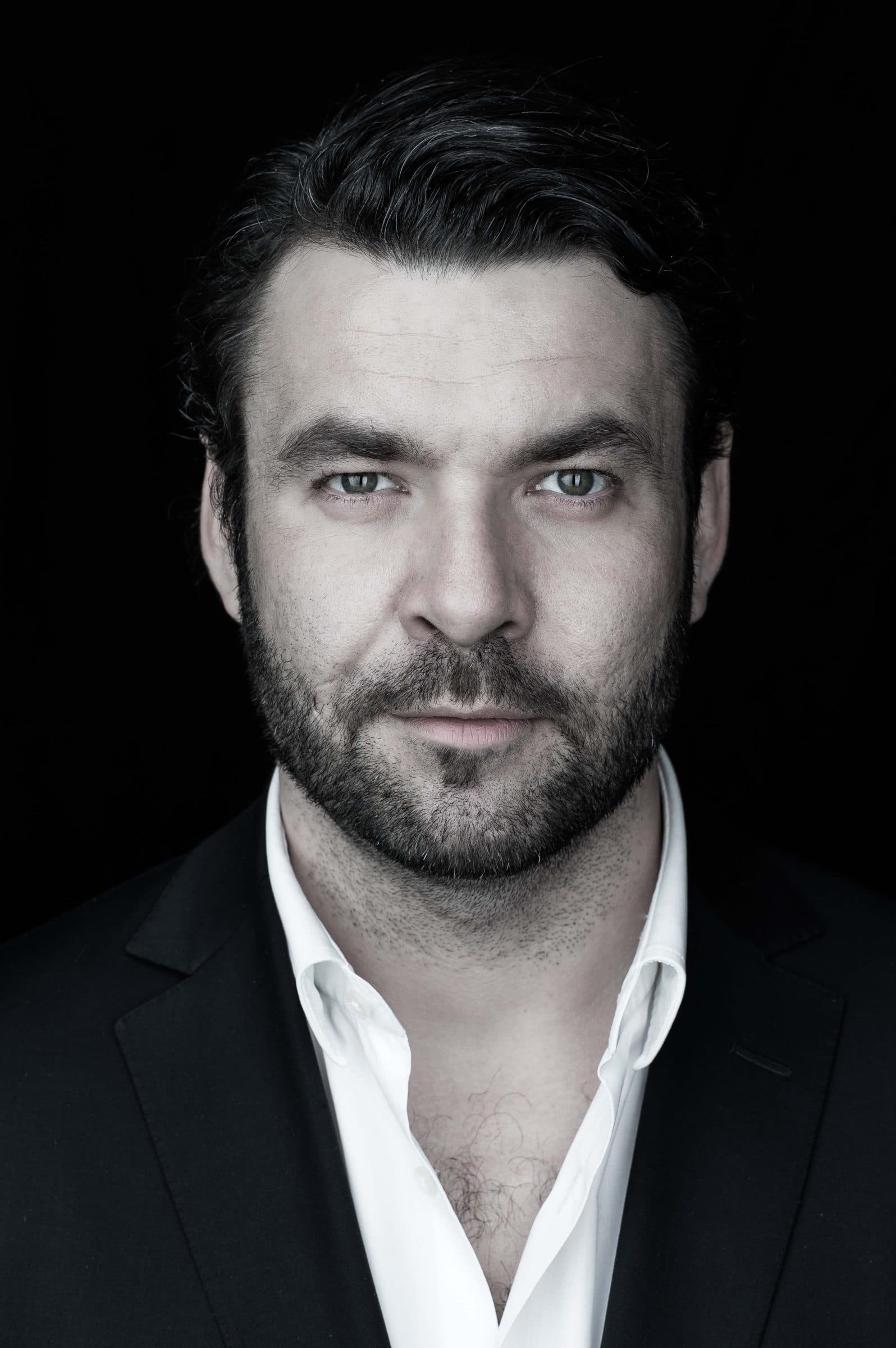

Munich Startup: You were a founder yourself before you founded Muzungu Capital and became an investor. What motivated you to take this step?
Ronald Paul: Exactly, I like to say that after the exit comes the next exit, but after my first major exit I switched sides. I became an investor after founding the performance agency Quisma, building it successfully on an international scale, and selling it to GroupM/WPP. Since then, I see myself as a founder for founders.
I love driving innovation forward and see the unique characteristics and requirements of the different sectors we invest in as an exciting challenge. I know from my own experience what it’s like to found a company and what an emotional rollercoaster it is. Investors who have founded companies themselves can be valuable partners. They have a good network, know many successful founders, and have important contacts in the startup scene. They are mentors rather than just money providers.
Munich Startup: Are former startup founders better investors?
Ronald Paul: Whether former founders are better investors is debatable. What’s certain is that former founders have a very good understanding of where a startup stands and what it needs. They’ve made mistakes themselves and can help other founders avoid pitfalls. But they also know what works and can give practical advice. As an investor, I’m a sparring partner for founders. I don’t just provide startup capital, but also support them with expertise and access to a global network of partners and experts. Especially for companies in the early phase, advice and connections are at least as important as secured financing.
“For me, the team behind a startup is the most important thing”
I only invest if I’m convinced I can help the startup beyond the financial investment. To do this, I need to stay close to my investments both in terms of content and personally, to enable a realistic assessment of the current status and future potential.
Munich Startup: How do startups convince you of their ideas?
Ronald Paul: For me, the team behind a startup is the most important thing, followed by the vision, the market viability of the idea, and whether an actual problem is being solved. I make sure the founding team brings the right balance of technical and business knowledge and is authentic. Once the founding team has convinced me, I analyze the company’s business plan and make sure that a convincing monetization approach is evident from the start. Important milestones, goals, break-even analysis, and the handling of risks and the company’s sustainability must be defined from the outset.
Munich Startup: To be successful, a startup must…
Ronald Paul: …function like a committed kitchen crew. A successful business model is like a good meal: it needs the right ingredients and a balanced mix. An innovative idea forms the foundation, technical know-how and solid business practices are the spices that give the dish its final touch. If you neglect one ingredient or put too much emphasis on another, it will fail like oversalted soup or undercooked roast. A good founding team is like an experienced Michelin-starred kitchen. Everyone knows the right ingredients, knows how to combine them perfectly, and knows their tasks precisely. With a smart monetization strategy and good risk management, the startup becomes a culinary masterpiece that will excite the market.
Ronald Paul praises Munich for “technical orientation and solid presence”
Munich Startup: How do you assess the Munich startup ecosystem?
Ronald Paul: We’ve surpassed Berlin, my birthplace, as the founder capital last year. According to the Startup Association, 14.5 startups per 100,000 inhabitants were founded in Munich last year, while Berlin’s figure dropped to 13.6. That speaks well for Munich as a location. But let’s be honest: Berlin still attracts the most funding into its ecosystem. However, I’m firmly convinced that Munich attracts a different kind of founder than Berlin, and that gives it a unique selling point. This has a lot to do with the city itself and the infrastructure here. The distances are short and the talent pool is large.
Munich Startup: How does Munich differ from other startup cities?
Ronald Paul: Munich differs from other startup cities through stronger technical orientation and solid presence. The Technische Universität München and Ludwig Maximilians University are ranked in the top 100 or even top 50 in virtually all relevant university rankings worldwide. Both universities produce highly qualified professionals and innovative ideas and contribute to the city’s growth.
In addition, the Free State of Bavaria actively promotes unbureaucratic recruitment of skilled workers. Judith Gerlach, Bavaria’s state minister for digitalization, actively invited tech talents to Bavaria on LinkedIn after the job cuts at Microsoft, Google, and Twitter became known, and pointed them to the central agency for skilled worker immigration. That this is not just a promise is something I experience with the startups I work with. How quickly qualified skilled workers from non-EU countries receive work permits is remarkable.
“Developing innovations hand in hand”
That Munich is an incredibly livable city in the first place doesn’t need explaining to anyone here. Work-life balance is good, the cost of living in Berlin isn’t that much lower anymore, and everything is much closer together. This is also reflected in the density of startup employees. Around 41,000 people work in startups in Munich (Source: Dealroom + Munich Startup: Munich Startup Employment 2023), while Berlin has around 70,000 (Source: Berlin. Startup Report). If we compare the current population numbers of the cities, we get approximately 2,500 startup employees per 100,000 inhabitants in Munich, and approximately 1,800 in Berlin. Speaking of density: The proximity to the larger established companies in Munich and the surrounding area creates an ecosystem in which startups and established large companies can develop innovations hand in hand.
What a perfect ecosystem looks like
Munich Startup: If you could create a perfect ecosystem for startups, what would you focus on?
Ronald Paul: In my view, the three most important points are talent, research, and connection to existing industries. Excellent education, a high density of talent, and easy access for skilled workers are essential. Close collaboration between universities and companies can help identify and nurture talent. Collaboration between universities and companies is also essential for research and development to drive innovation and ensure that startups have access to the latest technologies and insights. Research areas should ideally overlap with or complement existing industries.
Basically, an ecosystem for startups should be in the vicinity of existing industries to facilitate collaboration and connections between startups and established companies. Last but not least, you need a solid investor network and policies that promote research and entrepreneurship without creating obstacles. Investors who feel connected to the location and support startups as they grow enable access to capital and expertise. Close collaboration between government, companies, and universities can help better understand the needs of startups and provide targeted support.
For example: In Munich, WERK1 is one of Europe’s largest startup centers, which promotes exchange and networking through close collaboration with established companies, universities, and other institutions. Such centers can be important hubs in the ecosystem and help founders connect with the scene. Overall, it’s about creating an environment where startups can focus on what matters – advancing their innovative ideas.
Ronald Paul: “Artificial intelligence is definitely a game changer”
Munich Startup: Artificial intelligence is currently on everyone’s lips – how do you assess the topic? Hype or game changer?
Ronald Paul: Artificial intelligence is definitely a game changer, but only if we use it purposefully. Not every product gets better with AI. You might think that artificial intelligence is the solution for all conceivable tasks and will be indispensable in all areas of life in the long term. However, using AI alone is not innovation. True innovation uses AI to develop solutions that were previously not possible. Just as in other areas, most recently in the crypto and Web 3.0 ecosystem, some truly innovative approaches will persist and others will quickly disappear. Currently, what Niko Bonatsos of General Catalyst recently said still applies: “AI is the only area where gravity doesn’t apply right now.”
Munich Startup: Is the Munich ecosystem well-prepared for this in your view?
Ronald Paul: In Germany, we generally always find it a bit difficult with new technologies. Lengthy and bureaucratic reviews and feasibility studies sometimes take the wind out of our sails relatively early. Given that, Munich is very well positioned. Research is the be-all and end-all in the field of AI. With the Munich Center for Machine Learning, a cooperation between LMU and TU München, and the Munich Data Science Institute of the TU München, we’re very well positioned in this field. The state of Bavaria and federal politics support the projects, which gives me cautious optimism. The fact that Nvidia is building its AI-based text-to-video solution on Stable Diffusion, developed in cooperation between LMU and the English startup Stability AI, and that Munich researchers continue to be involved in the project shows how competitive Munich is in this field.
Reducing dependencies through sustainable solutions
Munich Startup: Besides AI, do you see any other exciting trends in the startup landscape?
Ronald Paul: Sustainability is becoming increasingly important in the startup landscape, both ecologically and entrepreneurially. The current economic crisis has shown how dependent we are on external factors and that we need to reduce this dependency through sustainable solutions. This isn’t about green labels or half-hearted marketing strategies, but about making sustainable business practices part of the business model. An example of this is the production of meat from cell cultures, which while currently still expensive, will be both cheaper and more resource-efficient in the long term. As investors, we must also ask ourselves whether rapid growth at the expense of sustainability and economic viability makes sense, or whether slow but long-term growth is the better choice.
Munich Startup: Are you currently looking for new investments? How can startups reach you?
Ronald Paul: I always find it amusing when founders hope that investors will find them, as if we were treasure hunters looking for a lost coin. But seriously, as an investor you also have to do a bit of sector research and actively look for promising projects. That doesn’t mean I’m not always open to innovative and promising ideas. If you want to contact me, you can do so via the website of my venture capital company, Muzungu Capital, or write to me on LinkedIn.