
Munich Startup: What does your startup do? What problem does Planqc solve?
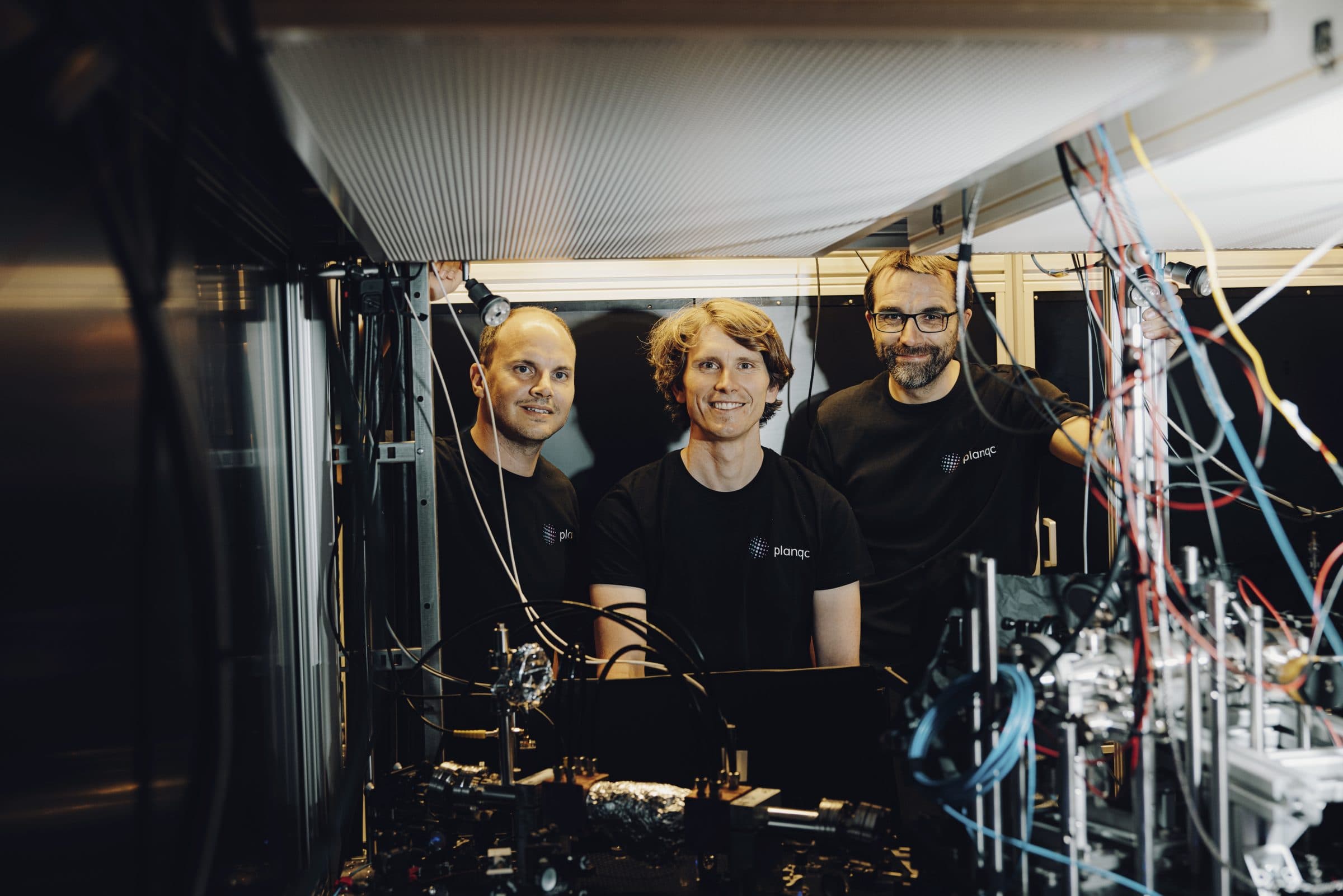
Planqc: Planqc develops highly scalable quantum computers based on atoms in optical lattices, which can also be operated at room temperature. Our vision is to build quantum computers that can be used for economically relevant applications.
Quantum computers are specialized computing machines that use the principles of quantum mechanics for their calculations. Put simply, quantum bits – so-called qubits – can simultaneously be in the state of zero and one, thus allowing computing processes to be parallelized. Quantum algorithms use these properties in clever and highly specialized ways to, for example, efficiently perform prime factorization.
Munich Startup: But that’s been around for ages!
Planqc: Planqc’s unique combination of quantum technologies is the most promising way to scale quantum computers to thousands of qubits and beyond. This is an important prerequisite for “useful” quantum computers. Our quantum computers store information in individual atoms – by nature the best qubits – and arrange them in highly scalable artificial light crystals. To process quantum information, we use quantum gates based on precisely controlled laser pulses. We combine the world’s best atomic clocks, the world’s best quantum gas microscopes, and extremely fast Rydberg gates in our quantum computers.
Once powerful, error-correcting hardware becomes available, common RSA encryption methods can be cracked. However, this will take some time, and fortunately there are already methods that are immune to quantum computer attacks. For many long-term planned applications with product cycles of ten to twenty years, it is important to prepare for the error-corrected quantum computers of the future today.
Planqc wants to take expertise “out of the research environment and make it accessible to a broader user base”
Munich Startup: What is your founding story?
Planqc: Planqc was founded in April 2022 with the vision of commercializing years of successful fundamental research in the field of neutral atoms at the Max Planck Institute for Quantum Optics (MPQ) and the resulting expertise, taking it out of the research environment and making it accessible to a broader user base.
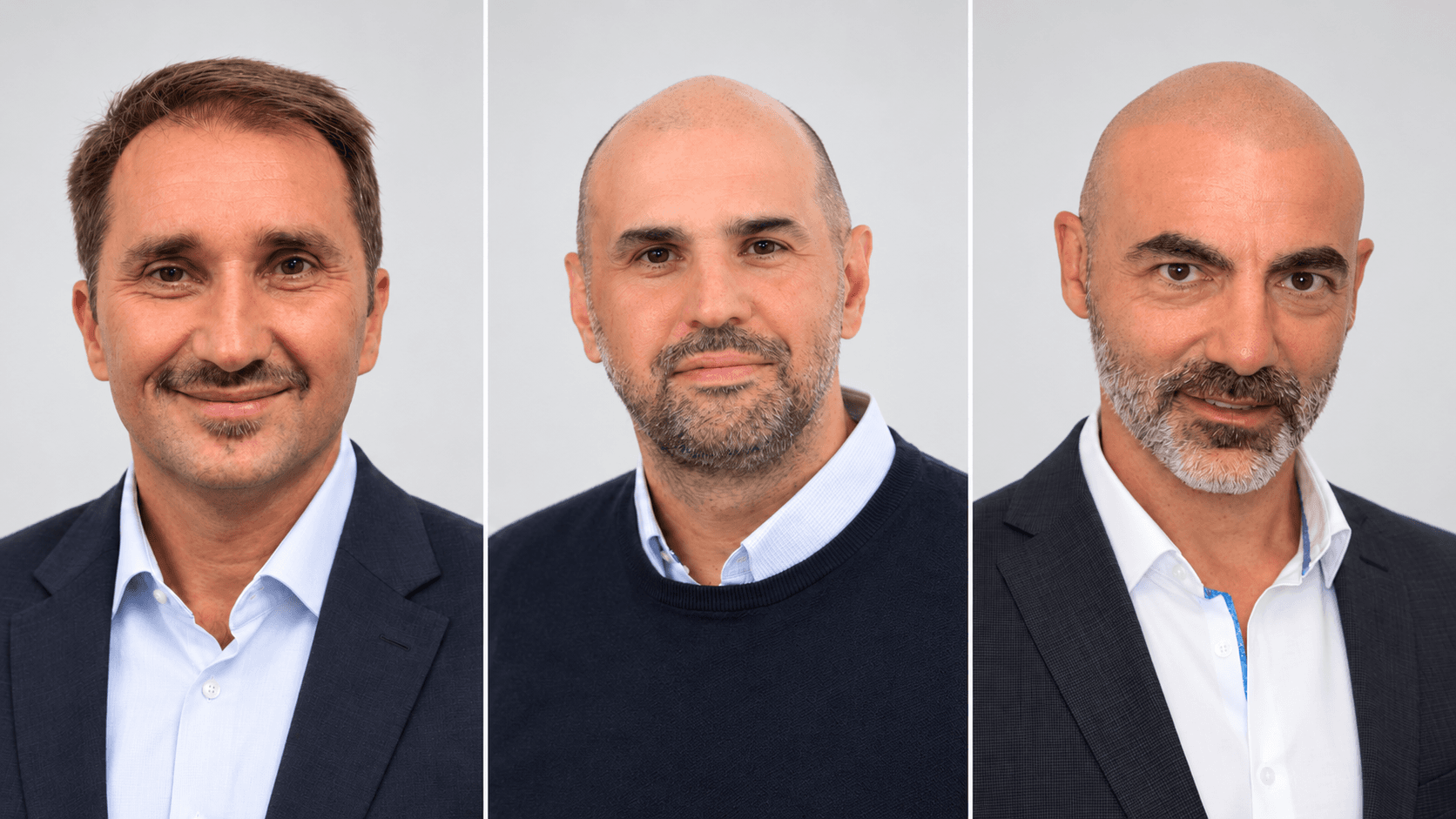
The founding team of Planqc consists of Alexander Glätzle, Sebastian Blatt, Johannes Zeiher, and Lukas Reichsöllner, who all have extensive experience in the international field of quantum computing and quantum metrology with neutral atoms. Already during his doctoral studies, Alexander Glätzle researched methods to realize novel computing architectures for quantum computers using neutral atoms. After a postdoctoral stay in Oxford and Singapore, he worked for several years at an international management consulting firm in the field of applied blockchain, where he also acquired the necessary business and economics background knowledge during an MBA program to lead Planqc as CEO.
Sebastian Blatt completed his doctorate at the University of Colorado in Boulder before joining MPQ as a group leader in 2015 after a postdoctoral stay at Harvard University. As a doctoral candidate, he was instrumental in developing the first strontium atomic clocks, which are currently the most accurate clocks in the world. At MPQ, he has since developed technologies for scaling quantum simulators and quantum computers based on neutral atoms.
Johannes Zeiher already conducted research on Rydberg atoms in optical lattices during his doctoral work at MPQ, working on the conceptual foundations of the technology used in MQV and Planqc. After a postdoctoral stay in Berkeley, he has been a group leader at MPQ since 2020 and develops new experimental platforms in the field of quantum computing with neutral atoms. Lukas Reichsöllner researched ultracold quantum gases in Innsbruck and Amsterdam and worked in recent years for a leading laser and photonics company in Germany.
Strong support for the founding team
The founding team is complemented by multi-board member and finance expert Ann-Kristin Achleitner as well as serial entrepreneur Markus Wagner, founder of i5invest. Planqc is supported by scientific advisors Immanuel Bloch and J. Ignacio Cirac. Both are directors at MPQ and known for their pioneering work on quantum simulation and quantum information. Additionally, quantum algorithm expert Dieter Jaksch, professor of physics at the University of Oxford and the University of Hamburg, was recruited as an advisor.
Munich Startup: What have been your greatest successes so far?
Planqc: One of Planqc’s greatest successes is certainly winning over tech visionary Hermann Hauser. Dr. Hauser is one of the world’s most renowned entrepreneurs and venture capitalists and has a long history of founding companies in various technology sectors. These include Acorn Computers, ARM – the world leader in microprocessor technology, found today in 95 percent of all mobile phones – and Solexa (now Illumina), where he laid the foundation for the ongoing revolution in synthetic biology with technologies for reading human DNA. He is also an important member of Cambridge’s science and technology community and a trusted innovation advisor to the British government and the European Union.
Another important milestone for Planqc is the 29 million euro contract from the German Aerospace Center (DLR) for the construction and installation of a scalable neutral atom quantum computer. Planqc was selected by the German Aerospace Center (DLR) to develop a digital quantum computer hardware and software platform based on neutral atoms that is scalable and can demonstrate quantum algorithms for real-world problems. This is the first sale of a digital quantum computer based on neutral atoms in Europe.
“We stand for realistic statements about possible applications”
Munich Startup: Where do you want to stand in one year, and where in five years?
Planqc: We stand for realistic statements about possible applications, the performance of the hardware, and the timeline on which quantum computing will develop substantial practical relevance. At the same time, we are pushing ahead with building our scalable hardware platform to fully exploit the potential of quantum computers as quickly as possible. Currently, we are working with several partners, particularly to explore customer-specific application areas for neutral atom quantum computers. However, we are very interested in getting in touch with companies around the world that are interested in quantum computing and quantum sensors and can benefit from a long-term partnership.
Munich Startup: How have you experienced Munich as a startup location so far?
Planqc: Planqc was founded by a team of scientists from the Max Planck Institute for Quantum Optics (MPQ) and Ludwig Maximilians University Munich and is the first spinoff of the Munich Quantum Valley (MQV), one of Europe’s leading centers for quantum technology. The close connection to the research of these Munich institutions was an important location advantage over international competitors in the field of quantum computing, especially at the beginning.
Through close ties to the worldwide unique interdisciplinary research in the MQV and in particular the collaboration with MPQ, we as a company want to ensure that the results of fundamental research are utilized. This is intended to close the gap that frequently exists in Germany between fundamental research and commercial exploitation in the field of quantum computing, in order not to fall behind in this future field in international comparison.
Munich Startup: Quick exit or long-term commitment?
Planqc: Our vision at Planqc is the development of powerful quantum computers that provide added value to customers. This task requires long-term commitment and continuous improvement of the underlying hardware.