Munich Startup: Please sketch out the most important milestones of your professional career for us.
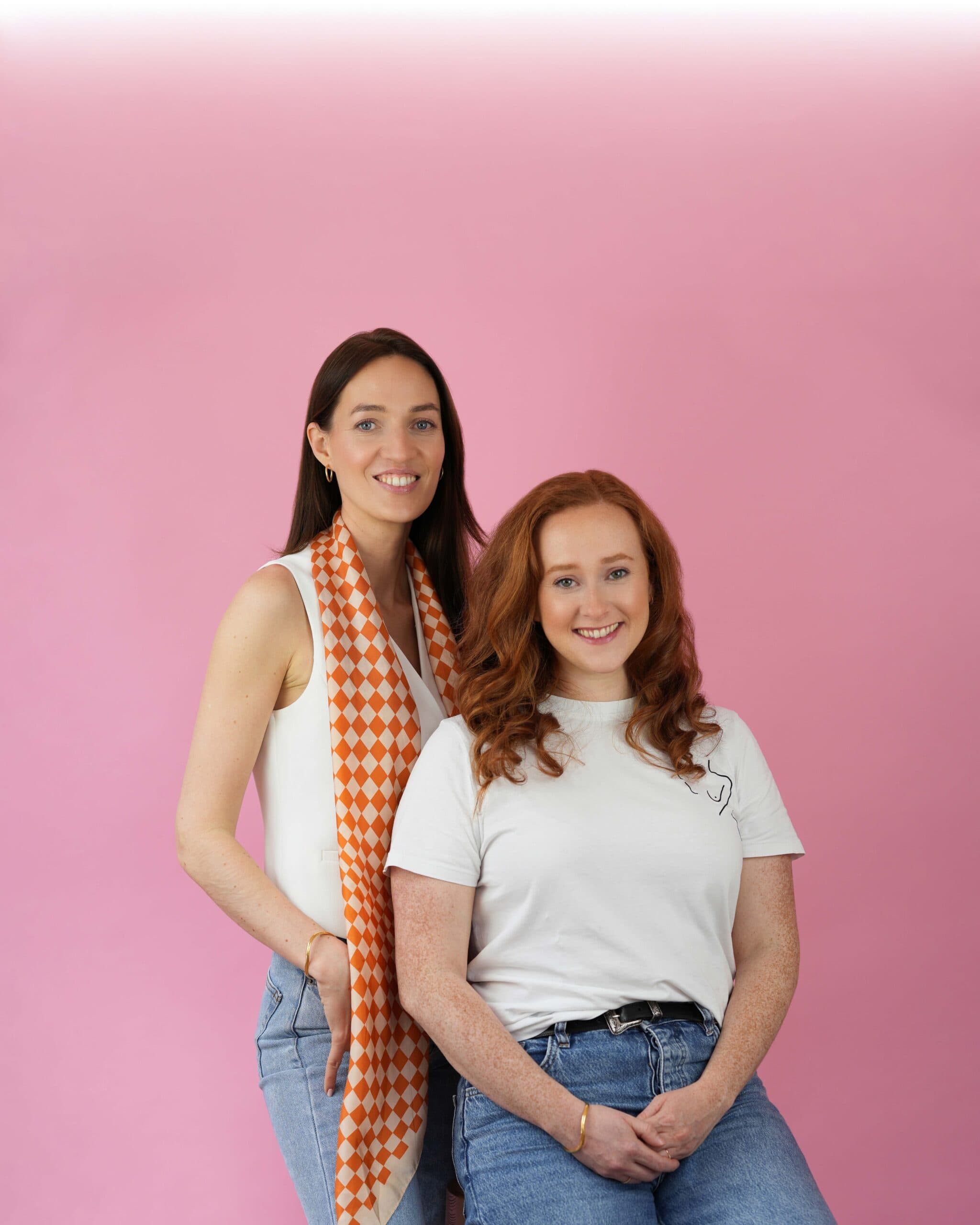
Sohaila Ouffata: I work as Director of Platform in the global team of BMW i Ventures. In this role, I ensure that our portfolio startups are strategically developed and achieve greater growth. The focus of these activities is on successfully closing strategic partnerships – both between the startups and BMW Group as well as with partners outside the industry. All “value-add” activities of our venture platform aim to promote both the financial development of the portfolio companies and strategic added value. Since 2016, I have also been managing director of the European business unit of BMW i Ventures. Before joining BMW i Ventures, I spent several years in management consulting and the telecommunications industry, working extensively on the evaluation and development of digital business models.
Munich Startup: The second, $300 million fund from BMW i Ventures focuses – alongside transport, production, and supply chain – also on sustainability. Why is this topic given such prominent positioning?
Sohaila Ouffata: The use of innovative and disruptive technologies offers tremendous opportunities for the sustainable development of all economic sectors toward greater efficiency. This can include more efficient use of resources, building a circular economy, reducing CO2 emissions, or better energy utilization in industrial manufacturing. An example is our investment in Boston Metal. This US company has found a way to produce steel with lower CO2 emissions by eliminating the use of coal and instead using electrolysis. This benefits not only the mobility industry but all sectors that cannot do without steel. The effect can be enormous: approximately two billion tons of steel are produced annually, which accounts for about ten percent of global carbon emissions. Accompanying such technologies on their growth journey excites me every day. Given the global challenges we face, I am convinced that we will see many more disruptive solutions in this area in the future.
Innovations for transformation in the mobility industry
Munich Startup: What solutions are you looking for?
Sohaila Ouffata: We are interested in solutions that drive transformation in the mobility industry through technological and sustainable innovations. A look at our portfolio shows which companies excite us. These include, for example, ONE – our next Energy, which has developed hybrid technology to improve battery safety and range. Or Lilac Solutions, which has developed an environmentally friendly process for lithium extraction, as well as BComp with its natural fiber composite materials made from flax, which can be used in vehicles, aircraft, or ships. Many of the technology companies we invest in often have applications in other industries as well, allowing us to drive innovation across sectors. Our target markets are currently Europe including the UK, Israel, and the USA. We are primarily interested in startups that are usually in Series A or Series B funding rounds.
Munich Startup: Which technology or industry do you find particularly interesting right now?
Sohaila Ouffata: Our search field overall is extremely dynamic; we constantly examine promising technologies. If I had to choose, it’s currently solutions in the circular economy space that help make the entire value chain and supply chain more sustainable, as well as the entire field of battery technologies. There will certainly be some innovative developments in this area in the coming time.
Munich Startup: What makes a good pitch for you?
Sohaila Ouffata: A good pitch immediately shows that a relevant problem in a large market is being solved with an attractive business model. Anyone who wants to pitch well must be able to tell a “good” story and be well-versed in conversations with investors. A convincing criterion for me is often the competence of the founders and the team. If the foundation is right here, that’s a good prerequisite. Because from experience, we know that the business model can often change or shift in the process.
A systemic problem
Munich Startup: There are still significantly fewer female investors than male investors, and according to the German Startup Monitor 2021, the share of female founders in Germany is less than 18 percent. Do you see a connection between both aspects?
Sohaila Ouffata: I firmly believe that access to capital for female founders is strongly correlated with the number of female investors. This is a systemic problem that must be addressed from both sides – both the next generation of female founders and future female investors need to be deliberately developed. We could lay the groundwork for this already during education. Currently, neither entrepreneurship nor financial literacy is taught in our schools. On the investor side, I see high potential among established businesswomen who could be introduced to investing through angel programs, for example. Through targeted regulation, investments in women-led business models could be tax-incentivized to create additional investment incentives. A particular concern of mine is the perspective on female founders with migration backgrounds. This target group is severely underrepresented, and while investments in “minority founders” are already a relevant topic in the USA, this is not yet on the agenda in Germany.
Munich Startup: What advantages do you think diversely composed founder teams bring?
Sohaila Ouffata: Several studies have shown that diversity and inclusion in companies contribute to a company’s economic success. From my experience, the teams that are most successful are those that are diverse both in terms of competencies and with regard to gender distribution and the backgrounds of team members.
Munich on the international startup map
Munich Startup: What could be improved at the Munich startup location from your perspective?
Sohaila Ouffata: “Double-down on our competences” – that means we need to invest much more in our competencies, especially in the greentech sector. When I started engaging more intensively in Munich’s startup ecosystem about 13 years ago, the region was not on the international radar. In the meantime, Munich stands as “Isar Valley” for deep tech competence in Europe. If we also manage to build competencies in the “green industrial tech” sector, then Munich will be indispensable on the international startup map in the future. In this context, the ecosystem must continue to be developed by all stakeholders involved – universities with relevant degree programs, investors in both early and late stages with a local presence, as well as targeted government funding programs and formats.
Munich Startup: Which investor would you like to meet in person? And what would you ask them?
Sohaila Ouffata: I’d like to answer that question somewhat differently, as I usually find people truly interesting only after getting to know them, rather than just following them from a distance. This year, I met Lubna Olaya at a small event in Davos. She is a Saudi Arabian businesswoman and investor who has been “first” in many areas. She spoke incredibly authentically about her career path and her personal motivation.