Europe Has Everything – Only Execution Is Missing: What Celonis Founder Bastian Nominacher Calls For
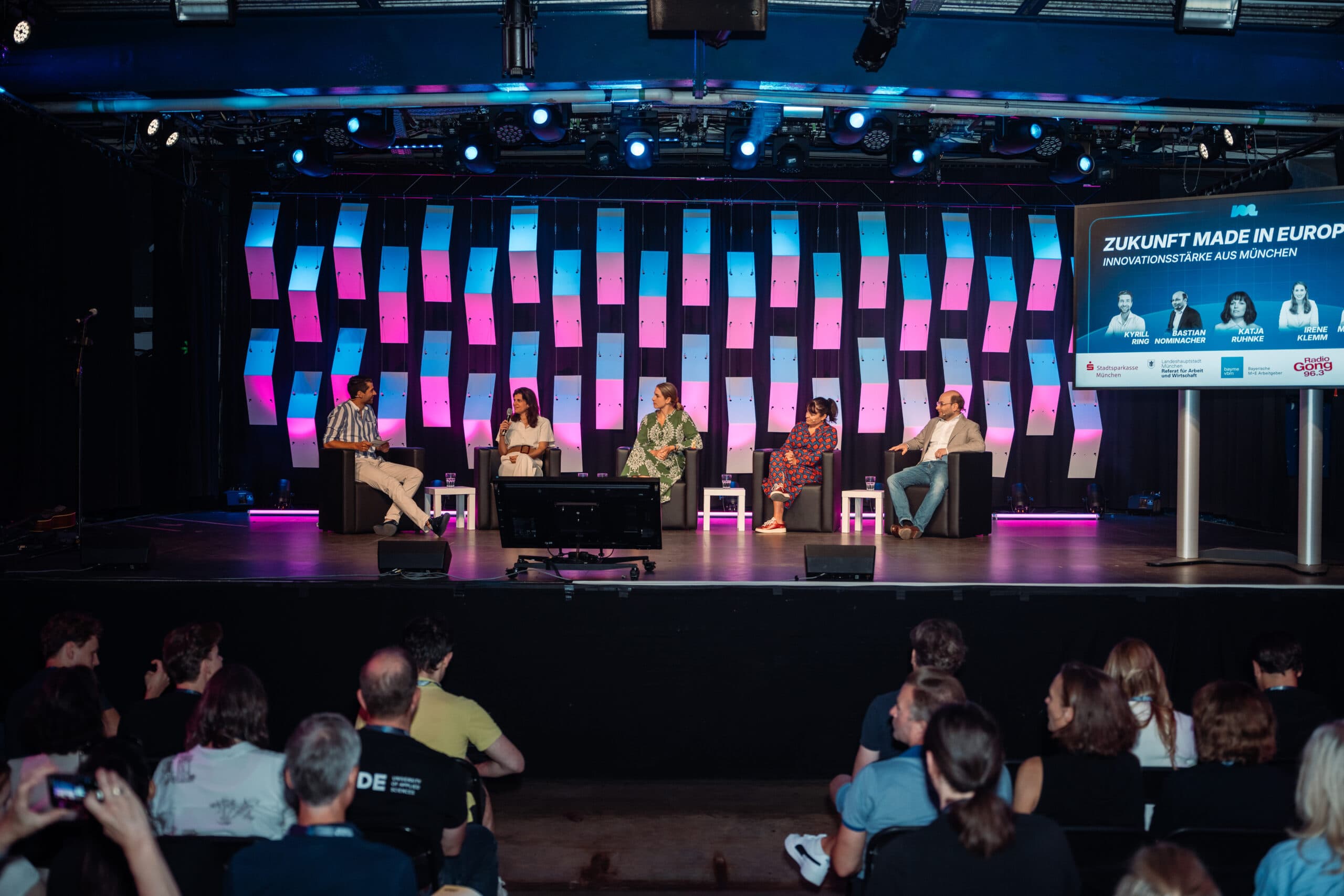
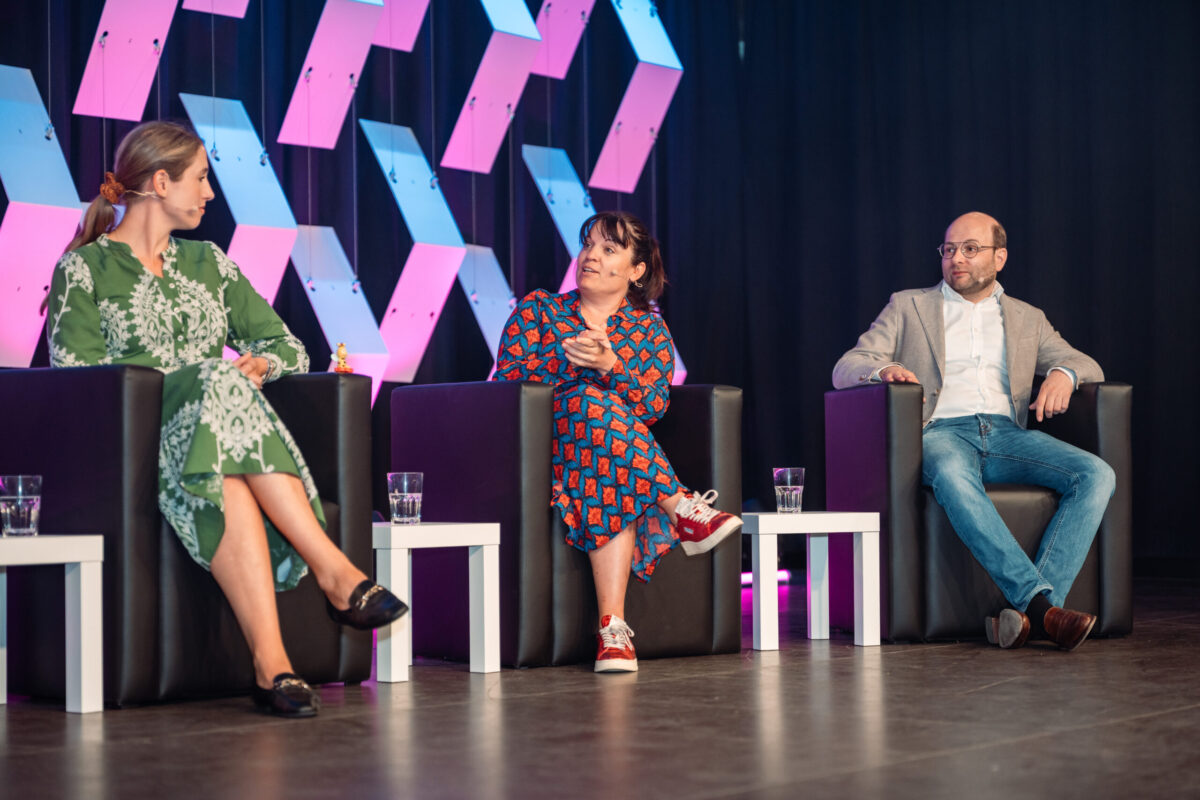
At the Munich Startup Festival panel “Future made in Europe – Innovation strength from Munich”, (from left to right) Kyrill Ring, Magdalena Oehl, Irene Klemm, Katja Ruhnke and Bastian Nominacher […]
At the Munich Startup Festival panel “Future made in Europe – Innovation strength from Munich”, (from left to right) Kyrill Ring, Magdalena Oehl, Irene Klemm, Katja Ruhnke and Bastian Nominacher […]
Kyrill Ring
Europe boasts cutting-edge research, strong companies, and excellent talent – yet too few global technology leaders are created here. At the Munich Startup Festival, Celonis co-founder Bastian Nominacher, CK Ventures investor Katja Ruhnke, Edurino co-founder Irene Klemm, and entrepreneur Magdalena Oehl discussed why Europe has so far failed to systematically leverage its innovation potential and what role Munich can play in the process.
Why do the biggest tech companies still emerge primarily in the US or China? For Bastian Nominacher, co-founder and co-CEO of Munich software company Celonis—whose software helps companies worldwide analyze and optimize business processes, and which is now one of Europe’s most valuable private software companies—the problem is not a lack of ideas or talent. On the contrary, as he explained on the panel at the Munich Startup Festival 2026, “Future Made in Europe – Innovation Power from Munich.”
“The immense talent, the industrial base, this know-how, and the many potential anchor customers—we have a lot of approaches for relevant problem-solving. If we combine that with our cutting-edge research, we can build companies that can compete on the global market.”
The Celonis co-founder believes Munich is already on the right track. The startup ecosystem continues to develop steadily. The decisive factor now is scaling this success—not just for Munich, but for all of Germany.
Magdalena Oehl, founder of Talent Rocket and a long-time voice of the Startup Association, also sees Europe’s greatest strength in research. Many technologies are waiting to make the leap from laboratories into successful companies.
“We have a huge amount of technology that is really just waiting to hit the road—in other words, to be turned into successful companies. That’s precisely what we’re still doing far too little of.”
Katja Ruhnke, Managing Partner at CK Ventures and Chair of the Board of Business Angels Deutschland e.V., agrees. In her view, Europe lacks neither excellent universities nor capital or successful companies.
“We are sitting on a real treasure trove, on an incredible amount of potential. But we aren’t really managing to transform it the way other countries do.”
Why Munich Offers the Best Conditions
Nominacher explains why Munich of all places has become one of Europe’s leading startup hubs through the interplay of several factors: top-tier universities, international corporations, and an increasingly experienced founder ecosystem.
He finds one figure particularly impressive.
“Stanford trains around 1,500 computer science graduates at a world-class level each year, while TU München trains 7,000. You can make of that figure what you will—but it simply shows the potential we have.”
In addition to the universities, he points to the high density of industrial companies and global market leaders in the region.
“We have many global market leaders across diverse sectors. Especially in the B2B sector, this offers enormous opportunities because startups can work directly with large corporations.”
Irene Klemm, co-founder of Edurino, also highlights the Munich ecosystem. After founding Edurino during the COVID-19 pandemic, the startup moved into its first office at Werk1.
“I really had the feeling that this spirit of optimism in Munich was very palpable. The network is very close-knit, and you can practically always find someone who can open the door you need.”
For Ruhnke, Munich’s success is no coincidence either. She considers the long-term strategy of the Free State of Bavaria, strong institutions such as UnternehmerTUM and Bayern Kapital, and a professional investor network to be crucial.
Successful Scaleups Create Tomorrow’s Founders
A functioning startup ecosystem thrives not only on new startups, but also on successful scaleups. They produce experienced talent who later go on to launch their own companies.
Nominacher observes precisely that at Celonis:
“More than 20 startups have emerged from Celonis by now. Of course, I’m always sad when someone leaves the company. But when someone founds a startup or moves to a customer, that’s a positive development.”
With every successful company, knowledge grows within the entire ecosystem.
“Fifteen years ago, when we started, it was completely unclear how to build an international software company. Today, there are established standards and templates that founders can use right away.”
The State as First Customer Instead of Biggest Brake
Alongside expanding the startup ecosystem, Nominacher sees one lever in particular that Europe has hardly utilized so far: the state as the first customer of innovative companies.
“The state as an anchor customer is potential we need to leverage much more. In the US, the first customer for many tech companies was the American government. That was used very strategically to develop and advance technologies.”
Especially in areas such as aerospace or future technologies, Germany could act much more boldly.
“The money is being spent anyway. It’s our tax money. So it should also be used to build innovative companies and give them the opportunity to develop their solutions.”
In his view, there are two crucial levers:
“You can talk a lot about bureaucracy. But if you have a good idea, you’ll still get it implemented. What matters is having customers and capital.”
Bureaucracy Costs Europe Speed
Katja Ruhnke takes a very different focus. For her, bureaucracy is one of Europe’s greatest competitive disadvantages.
“Time is our ultimate opponent. Both Asia and America are much faster in many things.”
She illustrates just how slow processes still are today using an example from her own experience.
“We founded a company in April and still don’t have a tax number. The commercial register entry and opening a bank account took twelve weeks. That is simply too long.”
She has high hopes for the planned EU Inc., which is intended to simplify company formation across Europe.
“We urgently need a common European standard for startups. Otherwise, we will continue to lose speed.”
Magdalena Oehl also calls for better framework conditions. Although more startups were founded in the first half of 2026 than ever before, Germany must cut red tape and accelerate the incorporation process to sustain this trend.
“We still spend too much time on administrative issues instead of developing ideas further and acquiring initial customers.”
More Early-Stage Capital
In addition to faster business incorporations, Ruhnke primarily calls for stronger incentives for business angels.
“74 percent of initial investors in startups are business angels.”
Early-stage investments are particularly high-risk and at the same time immensely important for developing new companies.
“Being a business angel doesn’t mean wiring money and checking in after six months. You work intensively with the founders.”
She points to the UK as a role model, where tax incentives have significantly boosted investment volume in young startups.
Europe’s Future Begins Earlier Than Expected
While politics and financing often take center stage in the debate, Irene Klemm drew attention to another aspect: education.
“The competition actually starts in early childhood education.”
With Edurino, she therefore focuses on children as young as two and a half to three years old.
“Problem-solving skills, resilience, creativity, and social skills are the abilities that prepare children for whatever the future holds.”
At the same time, the education system must also change.
“The best teachers today assign tasks that integrate and critically examine AI. It is precisely these skills that will be crucial in the future.”
Europe’s Opportunities Are Greater Than Often Assumed
Despite differing perspectives, there was consensus on one point during the panel moderated by Kyrill Ring: Europe does not lack ideas, talent, or research. Rather, it is about more consistently translating existing strengths into successful companies.
For Bastian Nominacher, the path is clear.
“We have great ideas, we have the right customers. Now we finally have to get them on the road.”
Munich in particular could play a pioneering role here. With its universities, successful scaleups, investors, and international corporations, the hub already possesses many of the conditions needed to foster the next generation of European tech leaders.
Newsletter
Stay in the loop
Want to know what's happening in Munich's startup scene? Get the highlights straight to your inbox.
More like this
Related Articles to Read Next
Ecosystem
Slush 2026: Four Munich Startups Set to Take Off in Helsinki
10.11.26
5 Min.
Ecosystem
Munich Startup Recap 45/26
08.11.26
2 Min.
Ecosystem
From Austin to Helsinki: Munich Haus Heads to Slush
03.11.26
3 Min.
Ecosystem
TUM Files 103 Patents and Leads German University Ranking
03.11.26
2 Min.
Ecosystem
Munich Startup Recap 44/26
01.11.26
2 Min.
Ecosystem
ESA Space Investor Forum in Munich: Vyoma and Talos Plan Satellite Expansion
30.10.26
6 Min.
Ecosystem
Munich Founder Award 2026 Goes to On7, Mybacs and Julius Brantner
29.10.26
3 Min.
Ecosystem
Head to SXSW 2027 with Munich Startup
28.10.26
2 Min.
Ecosystem
Munich Startup Recap 43/26
25.10.26
2 Min.
Ecosystem
GoCircular Munich: A Map for Munich’s Circular Economy
23.10.26
3 Min.
Ecosystem
Maternity Protection for Female Founders: Bitkom Calls for Legal Coverage