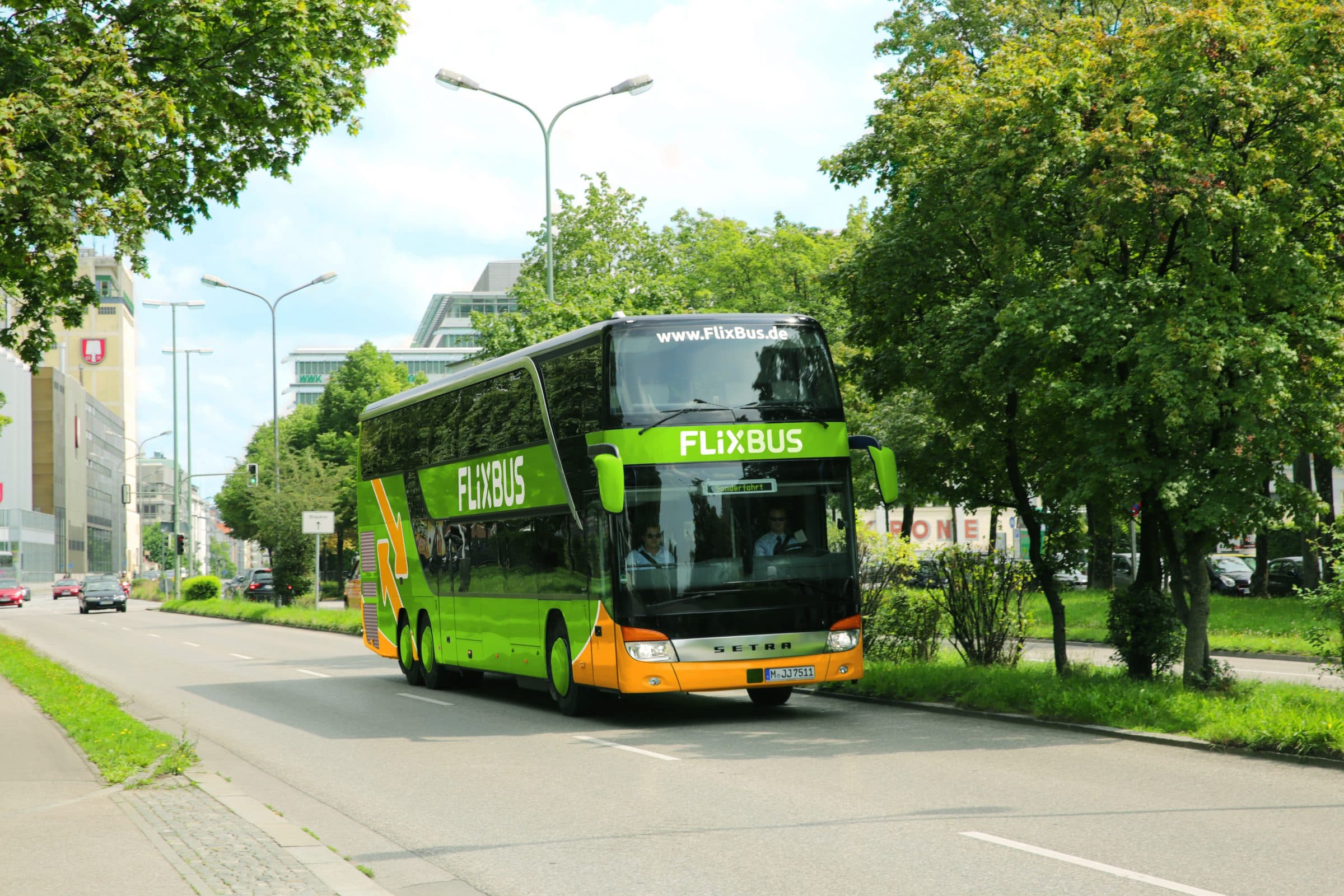

After completion of the four-year project, the electrically powered buses are to be brought to market on a regular basis. In addition to Flix, the Karlsruhe Institute of Technology (KIT), the University of Mannheim, and the Rhineland-Palatinate Technical University Kaiserslautern-Landau are involved in the development. Daimler Buses is leading the project.
An electric drive is being tested on two prototype buses under real-world conditions. The pilot project is intended to provide insights for planning cost-effective production and assembly processes for electrically powered long-distance buses. Flix will continuously evaluate the performance and determine in real-time whether all necessary requirements are being met. The goal is to deploy the technology in the Flixbus fleet in the long term.
“We believe in the future CO2 neutrality of bus travel as a solution for complete decarbonization of travel. Since the founding of Flixbus, we have been working to continuously reduce our environmental impact by researching alternative drives in order to offset our carbon footprint,”
says André Schwämmlein, co-founder and CEO of Flix.
“Reshaping mobility is the main driver to offer environmentally friendly, technology-driven, and yet affordable travel solutions for everyone.”
Electric bus projects already in testing
The greatest challenges for deploying electric drives in long-distance buses are ensuring charging options and guaranteeing sufficient space for passengers’ luggage.
In the pilot project, a concept phase will first examine a modularly designed drive kit with respect to energy consumption, range, driving performance, and battery life. Subsequently, costs, environmental impact, and the possible integration into existing operating concepts of bus companies will be analyzed. Prototypes developed on this basis will then be tested under real-world operating conditions in Flixbus long-distance buses.
Flix is already testing various emission-free drive solutions for its buses. Initial electric bus pilot projects have been conducted in France, the USA, and Germany. The company also tested solar panels and biogas drives. Flix is also participating in the funded Hyfleet project to develop a hydrogen fuel cell bus. According to its own statements, Flix is technology-neutral and expects to use different technologies in its network in the future.