
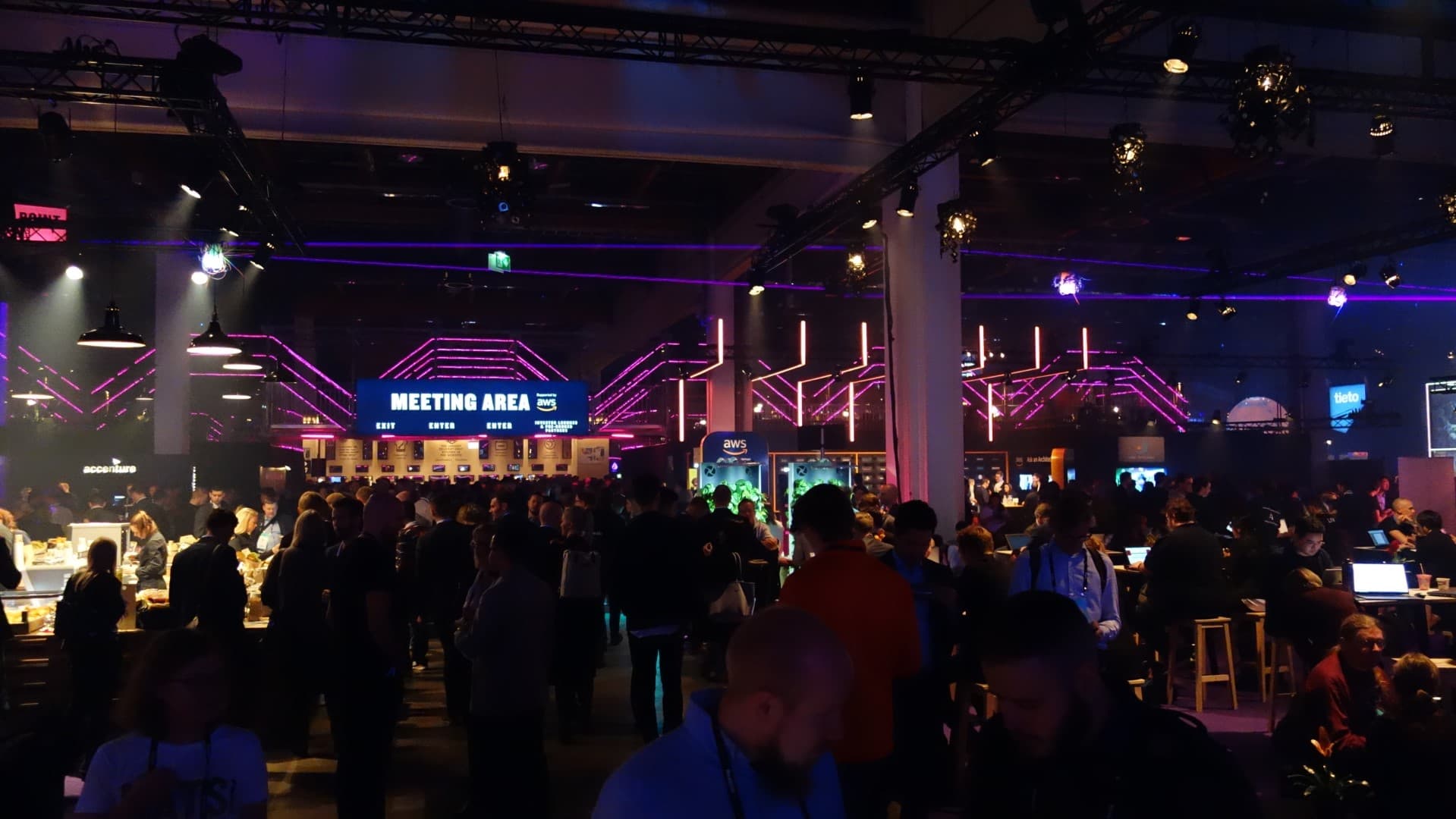

Before Corona, it was easy to spend every weekday evening at one or more startup events in Munich. Typically, startup topics were discussed on a small stage, people networked during breaks, and innovative snacks and local beer were served. Young companies had the opportunity to pitch their business to the audience. You often ran into familiar faces and repeatedly encountered surprising new business ideas.
Since March 2020, all of that has been gone: no networking events with local beer, no pitches on small stages, no meetings with familiar faces. Instead, over the past year, a variety of digital formats were tested that attempted to digitally replicate conventional events more or less precisely – including digital breakout rooms and virtual networking opportunities. After a flood of digital replications of classical events in the first months of the Corona pandemic, such formats subsequently became noticeably rarer. In their place came online events that focus very specifically on a topic: industry workshops, virtual pitch events, and tutorials.
This development is only natural: before Corona, events were an important medium for exchange between founders, investors, and established companies. After the startup ecosystem was forced to suddenly switch from in-person to digital exchange, the boundaries and possibilities of the new medium were still largely unknown. So it initially made sense to recreate familiar analog formats digitally. In the meantime, all participants have learned and deliberately use the advantages of digital gatherings. For example, geographical boundaries can be removed: the well-known and highly valued pitch event Cashwalk took place for many years at Munich’s Ludwig Maximilians University. Participation required participants from outside Munich to travel to the state capital, among other things. The digital version of the Cashwalk has shed its physical constraints and now includes startups from all over Europe.
In my own daily work, a new way of getting to know each other has gradually established itself: instead of relying on chance encounters in networking rounds, new startups contact me on LinkedIn, by email, or by phone. Investors, too, have reportedly become more proactive in reaching out to promising founders.
The startup scene is thriving without events
But has the transition from analog to digital networking harmed the startup scene? Not at all. A look at all available indicators shows that things are booming for startups. In both quarters of this year, Munich startups set new records in raising fresh capital. The Bitkom-Ifo Digital Index, which reflects the business situation of the digital economy and its expectations for the next six months, reached an all-time high in June and surpasses pre-Corona levels across all individual indicators.
So everything is fine without personal contact? The quick adaptation to the new conditions is a good sign of the startup scene’s intellectual and operational agility. But as soon as not only legal restrictions but also habitual unease with on-site events fades, offline events will make a comeback. Certainly, there will not be as many as before, and participants will question their time investment for travel more critically. However, there are event formats that are simply missing and cannot be replaced by a digital version. For example, major events like the Bits & Pretzels. The Slush, in a sense the Bits & Pretzels equivalent in Helsinki, is returning to its old format this December.
Digital competition will remain a factor for classical events even after Corona. Event organizers will have to justify the purpose of travel to participants: ‘Couldn’t we have done this digitally?’ In the best case, this will lead to a hard selection process, and only the most focused, best, and most productive offline events will survive digital competition. This will save everyone a lot of time while enabling moments of personal connection that cannot be replicated digitally. Corona has given the startup scene the opportunity to question cherished habits and supplement them with digital alternatives.
So the answer to the question ‘Do we still need offline events or can we do without them?’ is: both. Personal networking at events will remain irreplaceable in the future. But often, digital events are simply more practical, time-saving, and efficient.