
Munich Startup: What does your startup do? What problem do you solve?
Darius Göttert, Spreadly: With Spreadly, we create digital business cards for companies. Or, to be more precise: We’ve developed software that makes it as easy as possible for companies to switch from paper business cards to digital business cards in the form of a QR code, link, or NFC card.
This solves several problems: On one hand, there’s the classic problem that paper business cards are thrown away almost 90 percent of the time before they’re even saved in contacts. Then there’s the challenge of how to get contacts into your CRM after a trade fair, for example. We solve this by connecting them – for instance, by scanning the other person’s Apple or Google Wallet and having all their contact data directly on your phone. This includes phone numbers and email addresses, but also social media accounts like LinkedIn, Twitter, or Instagram. You also get the office location and even the option to book an appointment. So you have significantly more information about the other person than if you just exchange phone numbers.
Munich Startup: But that already exists!
Darius Göttert: Yes, there are already some players, and the market has developed strongly in recent years. But at its core, we do two things better: First, we make it easier than ever for companies to introduce digital business cards for all their employees. For example, we have an Office or Google Workspace integration, which allows companies to create a template for all employees. Then the employees are connected and instantly have a finished digital business card. This means whether the company has five or 500,000 employees, it takes less than half an hour and everyone has digital business cards.
Companies can fully customize Spreadly’s solution
The second point is that we offer the most comprehensive feature set on the market. Spreadly provides a white-label solution that a company can fully customize. This starts with the corporate design, includes components for text, and goes all the way to references and important information that should appear on the page. And integration is also a key component – for example, we offer connections to CRM systems like HubSpot or Salesforce, or appointment booking directly via Calendly.
We also offer physical cards for those who don’t want to do without them. This can be a paper business card with a QR code printed on it, which links to the Spreadly page. Via the QR code, the other person can directly save the contact information or book appointments. But they can also always visit the page to see the latest information – for example, if their position or phone number changes. So we expand the functionality of the paper business card. But we also offer NFC cards made of wood, metal, or plastic. Ideally, that’s the last business card you’ll ever buy.
Munich Startup: What’s your founding story?
Darius Göttert: Spreadly is the result of a longer process. At the beginning was our CTO Florian, our tech expert. He’s the one who built all the software. He started developing an alternative to Linktree as a hobby – a one-link solution that’s GDPR compliant, because Linktree isn’t. When the software was largely complete, he approached me, because we already knew each other from Academy Consult, a student management consulting firm where startups like Celonis, Presize, Remberg, Vestigas, and various others were founded.
“Studies expect the highest demand for 2026/27”
He asked me if I wanted to join Spreadly and take over the business side. Then we quickly saw that this Linktree alternative had a lot of potential, but the features we had at the base pointed to an even more interesting market. Our research showed that search queries and users for digital business cards have been increasing in recent years, and studies expect the highest demand for 2026/27. We then started talking to many people: potential customers, agencies, friends, and potential investors gave us a lot of input on what an ideal digital business card needs.
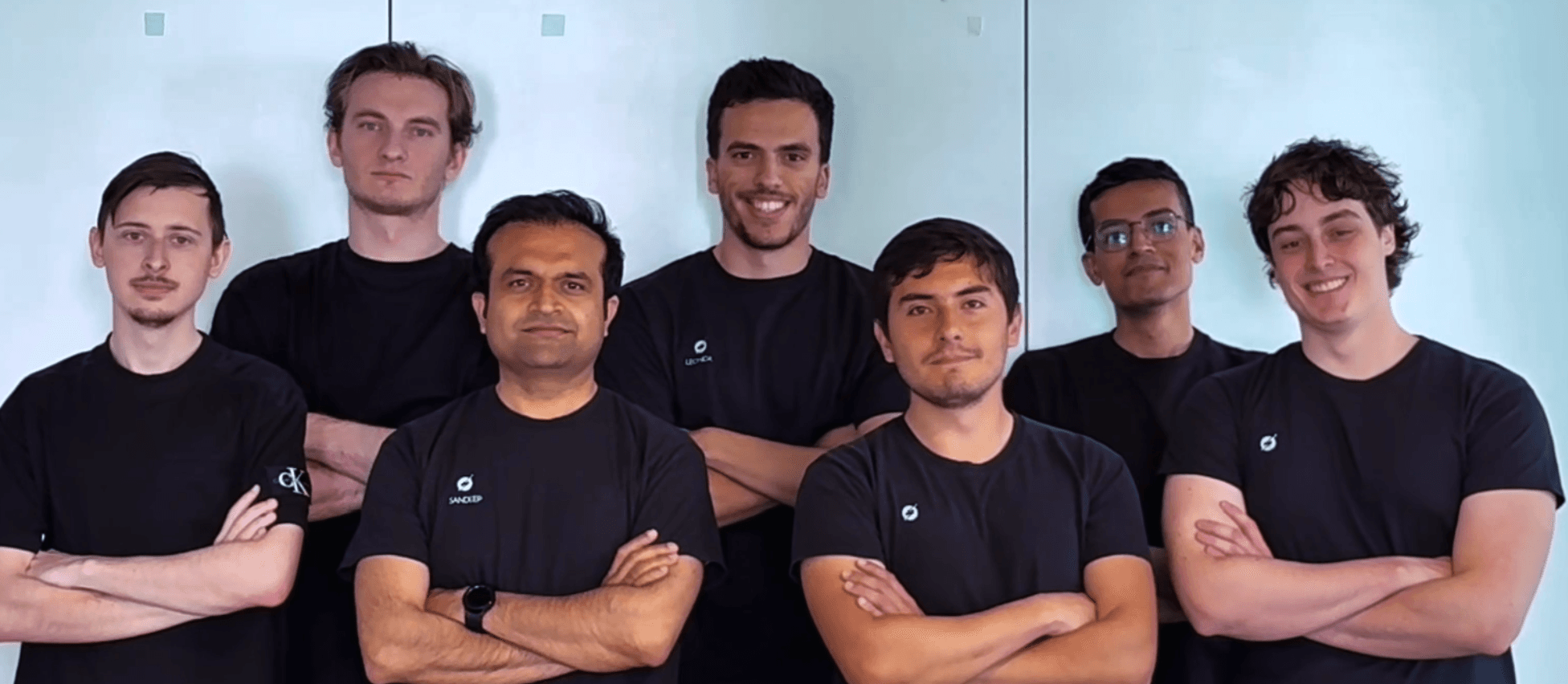
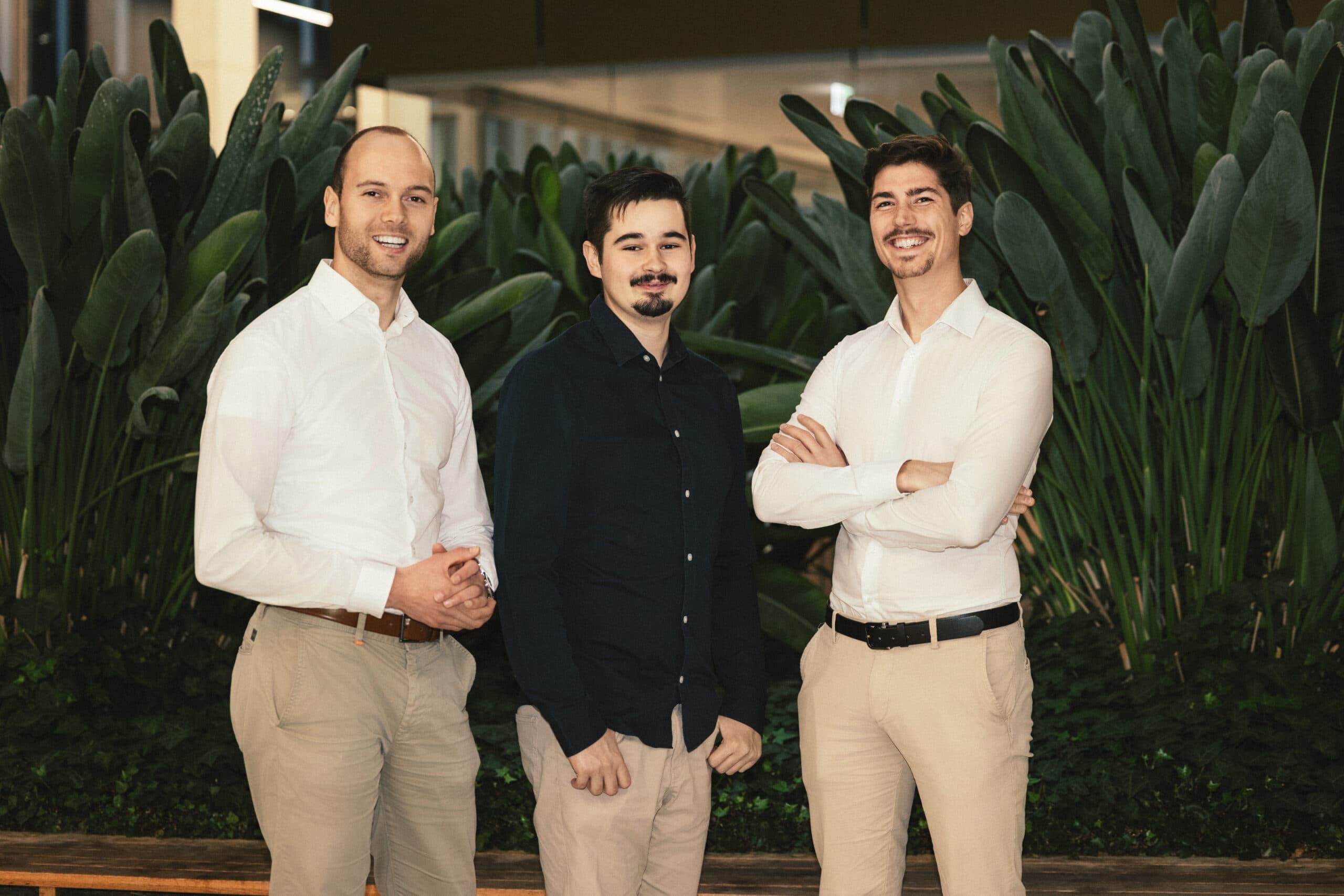
Once we’d built the requested features, we officially launched Spreadly and started focusing on user acquisition. That’s when our current CSO Etienne joined us. We also got to know him through Academy Consult. He started with us as a sales manager and got to know Spreadly’s potential. Since we wanted a third founder anyway, we brought him on board. Now Flo can focus purely on tech, Etienne handles sales, and I can concentrate on all other business-relevant topics.
Spreadly relies on a strong network
Munich Startup: What have been your biggest challenges so far?
Darius Göttert: One major challenge was generating the first users, of course. Not necessarily to make money from it, but above all to get feedback and continuously develop the product. We solved this challenge by proactively reaching out to many people from our network. And thanks to the student management consulting firm, thanks to START Munich, thanks to other startups in Munich that we’re connected with, we were able to ask many contacts for feedback. The nice thing about our product is that when people use it, other people see it too. So new people automatically keep discovering it.
Finding the ideal supplier for our NFC cards was also a challenge – especially when you have three different suppliers because you offer cards made of wood, plastic, and metal. At least initially, that cost us significantly more time than it was worth for a single card.
Munich Startup: Where do you want to be in one year, and where in five years?
Darius Göttert: At the beginning, we thought carefully about where we wanted to take Spreadly. We then clearly decided that we want to grow very strongly and move toward becoming a unicorn. This includes closing a funding round in the low seven-figure range next year. The fact that we’re now in the Master Accelerator program from German Entrepreneurship helps us with this – it’s specifically designed for this.
From digital business cards to networking assistant
In the long term, we want Spreadly to become the world leader in digital business cards. We’re starting in Europe, but we already have customers on every continent except Antarctica. For this, we want to build the first digital networking assistant from our digital business cards. This means we want to develop a personal CRM that helps build better relationships over the long term – for example, by reminding you to call contacts you haven’t spoken to in months or go out to lunch. So that even in ten years, you’ll remember where you first met someone and who you can meet for lunch when you’re in a different city.
Munich Startup: How have you experienced Munich as a startup location so far?
Darius Göttert: For me, Munich is the Silicon Valley of Europe – the city has developed significantly as a startup location in recent years. Munich offers us many opportunities to draw on networks and expertise. For us as students, there are the initiatives here: Academy Consult, START Munich, Manage and More, and the CDTM. Then there are accelerator programs like the Master Accelerator, locations like Werk1, and startup hubs like the Munich Urban Colab, for example. We also get additional support from our universities – Flo studies at LMU, Etienne at TUM, and I at FOM. So I think we can overcome almost any challenge through our network.
For this reason, I also want to say thank you to everyone who has supported us – in the Munich ecosystem and beyond. Spreadly wouldn’t be nearly where we are today without them.
“Spreadly defines the next few years for us”
Munich Startup: Quick exit or long haul?
Darius Göttert: I don’t think we’ll do this until we retire. Not because we don’t see the potential or because we wouldn’t have fun doing it for a very long time. But it’s important to the three of us to build something, and at some point there may come a time when you can’t make such major innovations anymore. Then there’s a zenith where we find other exciting projects and deal with new business cases. But that’s still a way off, and Spreadly defines the next few years for us. But I’m pretty sure we’ll eventually make the exit.