
Munich Startup: In our last interview, Mentessa had just launched as a matchmaking app for mentoring programs. How has your solution evolved?
Tina Ruseva, founder and CEO of Mentessa: We have been developing a technology for skill-based collaboration for five years now. In 2019, we started in the mentoring niche, as it represents a small model of what we do: connecting people on the basis of competencies as efficiently and goal-oriented as possible. With our solution for the same problem, we now serve a range of other use cases that boil down to the same thing: learning from each other and working together.
This ability will be central to the organization of the future, because work is becoming increasingly interdisciplinary, granular, and decentralized – for example through the gig economy, automation, and artificial intelligence (AI). With our significant technological advantage, Mentessa is a leading solution provider for one of the biggest challenges facing modern companies: the transformation of work.
Not just high-tech, but high-human
Munich Startup: Why?
Tina Ruseva: In many companies, there is a lack of clear visibility into the skills of the workforce. This leads to inefficiency, untapped potential, and frustration – both at the individual and organizational level. Especially in a work environment that increasingly relies on collaboration and knowledge sharing, this becomes a critical success factor.
The challenge becomes even greater when it comes to continuously developing employees and promoting talent strategically. Without clear insight into existing skills and development needs, unequal treatment in employee development occurs. For example, employees with similar development goals may receive different support offerings. This impairs equal opportunity. And in turn, this can lead to dissatisfaction and resignations, preventing valuable opportunities for innovation and growth.
For us, it is important not only to solve the technical challenges of diagnostics and matching, but above all the organizational and cultural ones. We are currently in the biggest transformation of work since industrialization. Fortunately, many challenges today can be solved with software and AI. Thanks to social learning, you can develop employees individually and according to their needs while also creating a dialogue culture based on knowledge sharing and collaboration. The time is right.
Munich Startup: There are many offerings in this area. What makes you different from the competition?
Tina Ruseva: Of course, there are many solution approaches here. Upskilling is certainly one of the biggest topics for the future of work. Mentessa stands out through its social learning approach, which specifically supports informal learning and corporate culture. After all, we only learn ten percent in formal training and 90 percent through exchange, observation, or shadowing. Thanks to an AI assistant, Mentessa is the only provider that enables comprehensive, continuous, and personalized employee development – similar to a “mentor at work”. Our goal is to create transparency and promote the networking of knowledge and competencies – from peer consultation to strategic talent development.
Mentessa: recognizing the full potential of employees
Here’s how it works: Our AI-powered platform allows employees to contribute their skills, goals, and interests and discover suitable peers, training, or job opportunities based on this information. As a kind of mentor, Mentessa delivers personalized suggestions for formal further education, social learning, and knowledge sharing. Our solution also helps companies recognize the full potential of their employees, promote talent strategically, and thereby strengthen team culture and innovation capacity.
Furthermore, we approach knowledge in an organization in a radically new way. We acknowledge that most and the most valuable knowledge in the platform economy is in people’s heads. With our social learning approach, we help discover, develop, and apply this hidden knowledge through automated “rituals” and AI – for a future of work that is both high-tech and high-human.
Munich Startup: And how does that look with your own team?
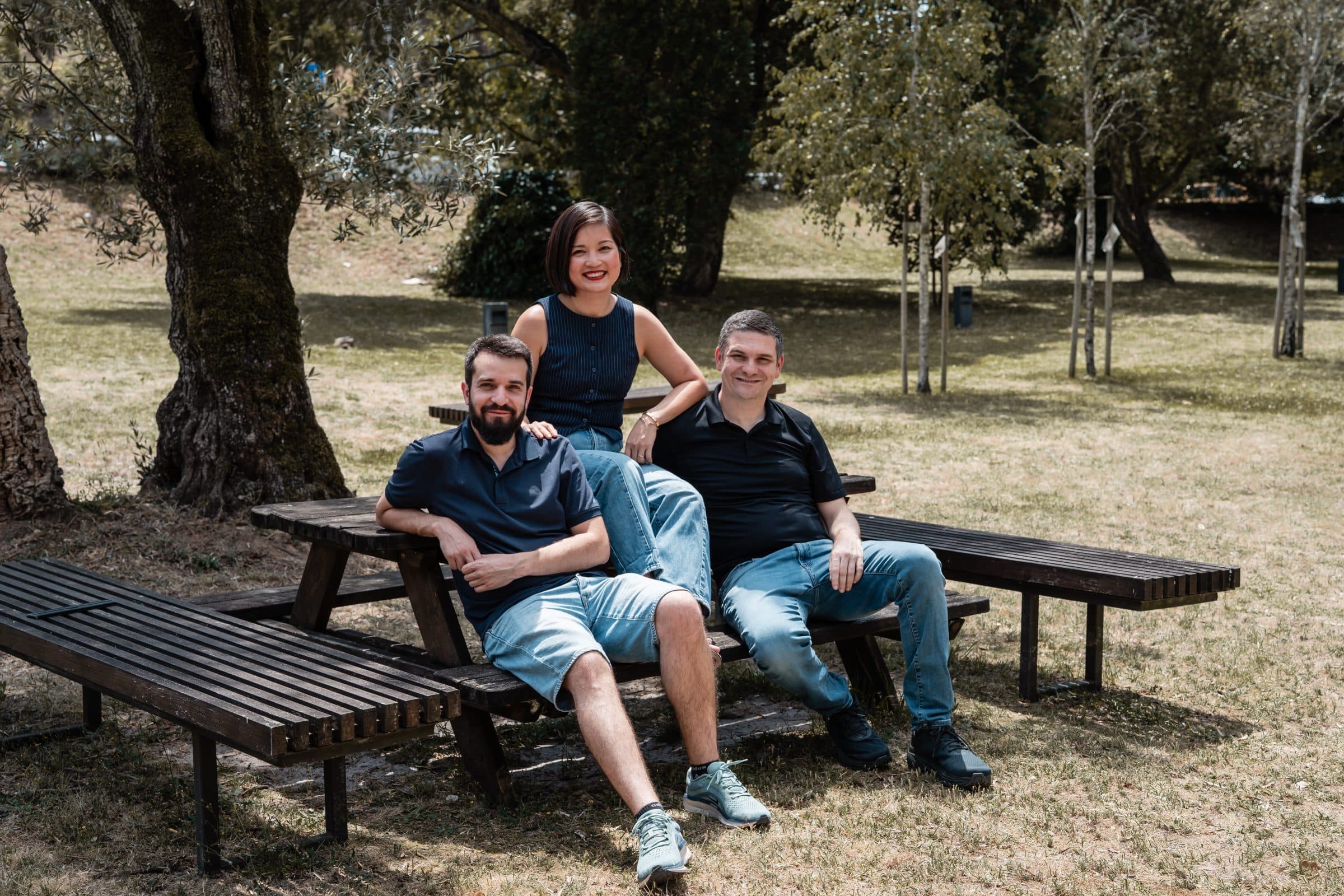
Tina Ruseva: A dialogue culture is also critical for us as a startup. We work 100 percent remotely and experience how difficult it is to ensure sufficient exchange and collaboration – even in a smaller team of ten employees. The first year of team building was the biggest challenge in my career as a founder so far. We were still too small for our own HR department or community manager, but the needs of employees were the same as in a large corporation. Fortunately, we were able to use our own software to create a competency profile for each person with appropriate development opportunities and automate the matching. We tried everything from virtual coffee chats to formal skill-sharing formats. This period was formative for developing our team culture expertise.
Munich Startup: You and Andrey are both serial entrepreneurs. How has that helped along the way?
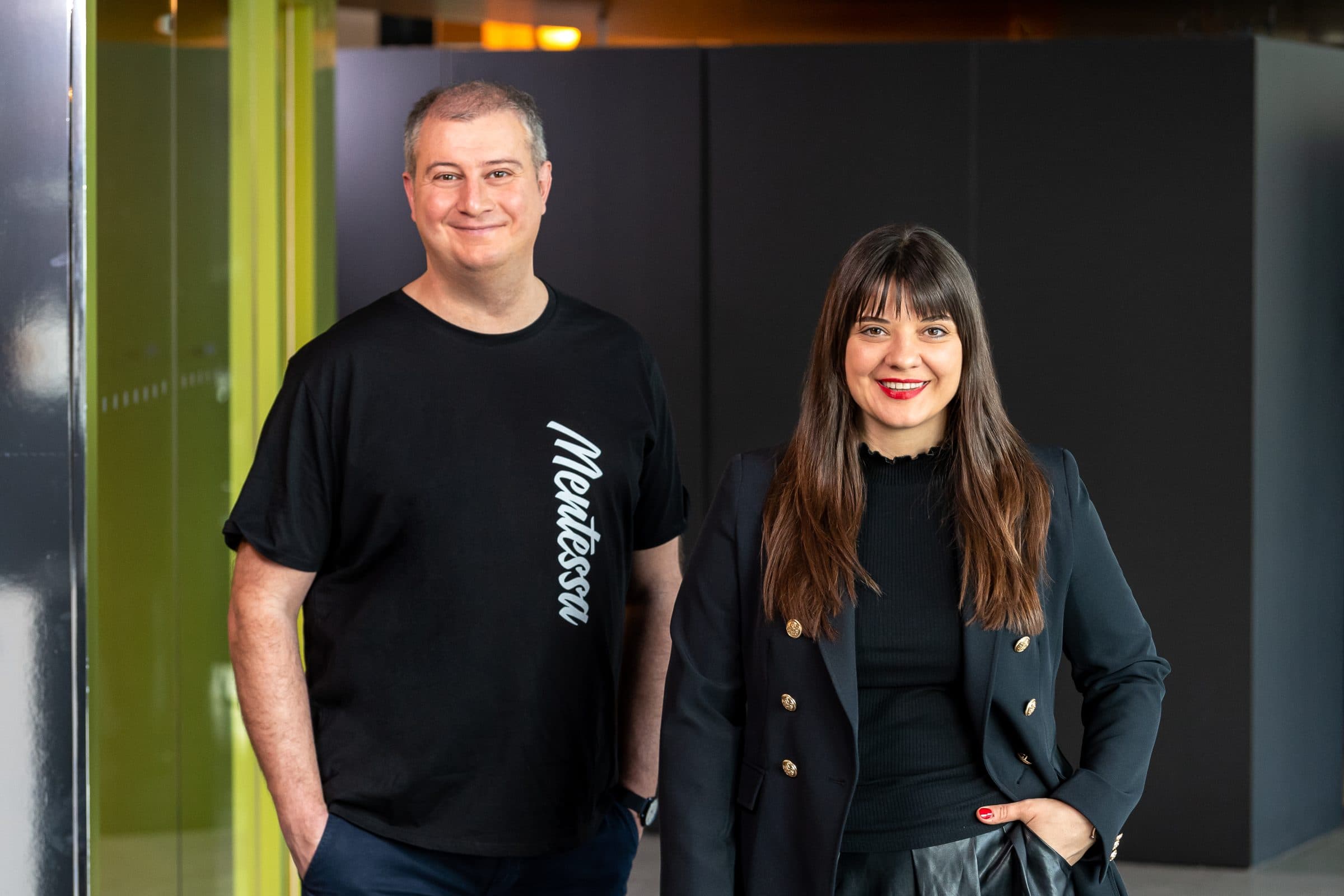
Tina Ruseva: That’s right, we have founded multiple companies and have an interdisciplinary background as well as corporate experience. Throughout this journey, we have repeatedly noticed how little exchange happens between functions and departments, and how individual, cumbersome, and sometimes arbitrary employee development is.
In my last job as Head of Startup Programs at Werk1, I was responsible, among other things, for matching founders with experienced mentors. This made it clear to me that central matching is too slow for the fast-paced reality of startups and requires too much effort. What you need instead is the self-directed – i.e., decentralized – ability to network according to need. The way startups work, many large corporations today also need to develop innovations faster than ever and respond to market changes in a state of continuous transformation. That’s why the topic of skills is so big. When this became clear to me, I got started and founded Mentessa.
Munich Startup: And how do things look financially for you?
Tina Ruseva: We started more slowly than others. I bootstrapped the startup in the first two and a half years. This leads to a lot of overhead, for example for customer customization, but also creates market proximity. This means we developed our product practically hand in hand with our customers. With our first funding round in 2022, we were able to make the technology enterprise-ready to grow faster. This substance made us more resilient and successful even in difficult years, such as 2023. Today, Mentessa has customers on three continents, from Canada to Serbia, and a host of significant awards, such as the “Best of Technology Award” from Wirtschaftswoche. We are using this foundation to accelerate our growth over the next 18 months.
Munich Startup: How have you experienced Munich as a startup location so far?
Tina Ruseva: Munich is a fantastic place to start a startup. As an economic center, the city is home to many potential customers and a well-differentiated startup ecosystem. This offers many funding opportunities that simply don’t exist in other places. Besides that, there are many investors and top universities here where you can find potential co-founders, employees, and innovations.
Unfortunately, the local culture here is very dependent on “connections” in the classical sense. As a woman, “with a migration background”, or with a different skin color, you are quickly sidelined outside the startup scene. The “cronyism” of yesteryear needs to go, because Munich is long since an international metropolis with a high proportion of migrants and alternative lifestyles. Diverse backgrounds are not a weakness but a strength. This is an enrichment and an opportunity, because no one can do everything and everyone can do something. A strong community is built on strong individuals.
Munich Startup: What milestones are you working toward next?
Tina Ruseva: We continue to invest in technology on our path to becoming the central infrastructure for skill-based collaboration. To support our customers on their transformation journey, we are currently founding a consulting practice.